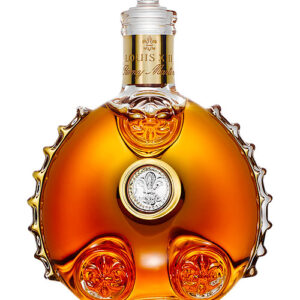
Rémy Martin Louis XIII Cognac The Miniature Edition (50ml)
Origins & Heritage
To understand the Miniature, you first have to understand what Louis XIII is:
- Louis XIII by Rémy Martin is a prestige cognac, created in 1874 by Paul‑Émile Rémy Martin. It is known for blending up to ~1,200 eaux‑de‑vie (literally “waters of life”) sourced 100% from the Grande Champagne cru (the top cru of the Cognac region in France). The eaux‑de‑vie are aged long in oak casks (tierçons), many for decades (some more than 100 years). This gives depth, complexity, nuance, and a heavy premium.
- The craftsmanship is passed down across generations of Cellar Masters, who select eaux‑de‑vie, manage aging, blending, etc.
The Miniature Edition is a faithful miniature of the full Louis XIII: same style of blend, same terroir, same age‑range for eaux‑de‑vie, same ABV (40%), but in a compact format.
What Exactly Is the Miniature Edition (50 ml)
Here are the specifics of the Miniature Edition:
- Size: 50 ml (roughly one‑sixteenth of a standard 750 ml bottle).
- ABV (Alcohol by Volume): 40% (80 proof). (Caskers)
- Blend: Up to 1,200 distinct eaux‑de‑vie from Grande Champagne, aged between ~40 years and over 100 years. (Flaviar)
- Cask / Aging: Matured in oak “tierçons” (special type of cask used by Louis XIII) under conditions of long, slow aging to develop richness. (Caskers)
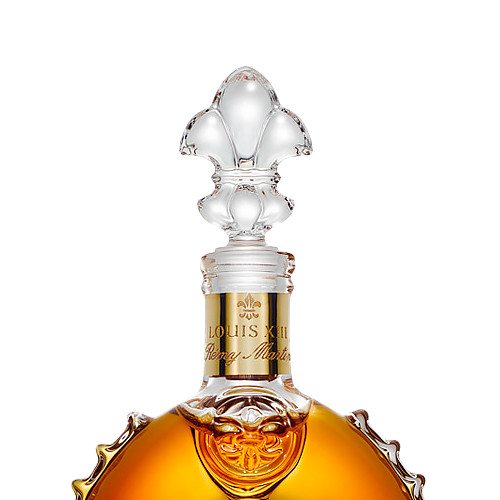
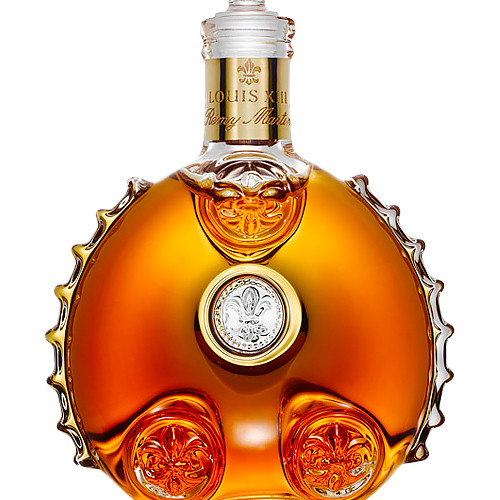
- Decanter / Presentation: Packaged in a miniature version of the classic Louis XIII crystal decanter, with gold accents (20‑carat gold fleur‑de‑lys stopper, etc.), and housed in a special case/display package. The craftsmanship of the decanter is part of its appeal. (Flaviar)
- Limited Production & Accessibility: It is released in limited quantities; less common than the standard format simply due to luxury, cost, and prestige. Some retailers will have very few, sometimes none. (Flaviar)
Tasting Profile
Because the Miniature is essentially the same blend as the full Louis XIII, its flavour profile is similar, though in small sample format. Based on tasting notes from retailers, collectors, and cognac experts:
| Aspect | Notes / Descriptors |
|---|---|
| Appearance / Color | Deep amber / reddish‑copper tones. Rich hue, glowing in the glass. (Flaviar) |
| Nose (Aroma) | Floral bouquet (jasmine, dried rose, honeysuckle), sweet fruits (fig, apricot, dried fruit), hints of honey, subtle leather, wood bark, maybe cigar box, myrrh. Complex; evolves with time in the glass. (Harvey Nichols) |
| Palate (Taste) | Layers: rich fruit (plum, fig, orange peel / orange blossom), honeyed sweetness, warm spices (nutmeg, cinnamon), woody oak influence, vanilla, maybe marzipan or nuts. Balanced but opulent. (Manila Wine) |
| Finish | Very long, evolved, with lingering oak, spice, fruit, perhaps a rancio‑type development (nutty, oxidative aging character). The finish lingers, often revealing more nuances with each sip. (Flaviar) |
Because the Miniature is a small amount, some of those subtleties (especially in finish) might be harder to pick up than with a larger pour, especially if you don’t have time or glassware to savor it properly. But many reviewers say it gives a vivid snapshot of what a full Louis XIII experience is like.
Pricing & Market
Perhaps one of the first things people ask: How much does this miniature cost?
Here’s what current listings and retailers say (not exhaustively, and prices vary widely by country, tax, shipping, rarity, etc.):
| Retailer / Region | Price for 50ml Miniature Edition |
|---|---|
| Harvey Nichols (UK) | ~ £700 (Harvey Nichols) |
| Caskers (USA) | ~ US$703.99 (Caskers) |
| The Barrel Tap | (Not listed in the source, but described as luxury collector’s item) (The Barrel Tap) |
| ALD Shop (Australia) | AU$1,030 approx. (ALD Shop) |
| Fine Philippines / Manila‑Wine | PHP 86,900 approx. (for 50 ml) in some listings. (Manila Wine) |
| Higher end liquor stores occasionally list it for US$850‑900+depending on supply. (Liquor Store Online) |
Key observations:
- Price per ml is extremely high (much higher than regular spirits), reflecting the rarity, age of the eaux‑de‑vie, artistry of decanter, importation, taxes, etc.
- There is a wide dispersion depending on retailer markup, local taxes, shipping, and how many units they have. Some places list as “premium import”, which bumps up price a lot.
- Because it’s limited, sometimes supply is very thin which can drive up prices (resale or collector markets).
“People Also Ask” / Frequently Asked Questions
Here are many of the questions people often Google about the Miniature Edition, with answers.
1. What is Louis XIII Miniature Edition?
Answer: It’s a 50 ml version of the flagship Rémy Martin Louis XIII Cognac. Essentially, all the hallmarks are the same (Grande Champagne eaux‑de‑vie, long aging, up to ~1,200 eaux‑de‑vie, etc.), but in a much smaller, collectible decanter. The miniature decanter is crafted similarly to the classic Louis XIII style (crystal, with gold fleur‑de‑lys stopper) and comes in a special case. It allows people to sample or gift in this smaller format without buying the full size. (Caskers)
2. How old is the cognac in the Miniature?
Answer: The blend includes eaux‑de‑vie ranging from about 40 years to over 100 years in age. Because Louis XIII is not vintage, it’s not about a single year but a blend of many casks of different age. The youngest in the blend is generally about 40 years old. (Flaviar)
3. Is the Miniature the same quality/taste as the full‑size Louis XIII?
Answer: Yes, in terms of blend, terroir, aging, and general craftsmanship. The liquid is the same style. But sensory experience may differ:
- A smaller pour (or bottle) means less liquid to swirl, breathe, etc., so some of the evolving aroma or finish may be more compressed.
- The decanter size affects the perception: smaller volumes warm quicker, surface‑to‑volume ratios change how the aromatics release.
- Also, psychological perception: drinking from a miniature feels different; expectations and ritual may slightly change how you experience it.
Overall though, the taste is—and should be—very close to the full version.
4. How many bottles / how limited is the Miniature?
Answer: The Miniature is released in limited quantities. It is not mass‑market. Specific numbers are seldom disclosed publicly. Many retailers treat it as a prestige or collector’s item with limited allocation. So scarcity is part of what gives it value. (Flaviar)
5. What makes Louis XIII so expensive, especially the miniature?
Answer: Several factors:
- Extremely old eaux‑de‑vie (some over a century) + many different casks (up to ~1,200) blended. Aging involves storage, evaporation (angel’s share), maintenance of cellars, etc.
- The Grande Champagne cru is considered the finest. Doing viticulture, distillation, proofing, etc., in that region has costs.
- The decanter itself is luxury: crystal work, gold elements, ornate stopper. Even though miniature, still handcrafted, with high quality materials.
- Brand prestige, heritage, and the “experience” component add to cost.
- Importation, taxes, shipping, retailer markup also often large for ultra‑premium luxuries.
- Limited supply: only a certain amount of old eaux‑de‑vie qualifies. With each passing year, fewer casks remain that meet high criteria.
6. Where can you buy it?
Answer: Select luxury spirits retailers, duty‑free shops, high‑end online purveyors, specialty cognac dealers. Some stores which carry Louis XIII full bottles also stock the miniature from time to time. Because of high price and limited supply, availability is uneven. Checking directly with Rémy Martin authorized retailers or distributors in one’s country is often the best way. Some online stores (e.g., Caskers, Harvey Nichols, etc.) list it. (Caskers)
7. How should you drink / enjoy the Miniature?
Answer:
- Neat is the classic way: no mixers, no ice (or at most a tiny drop of water if you want, but this can alter the bouquet).
- Use good glassware – e.g., a tulip glass or cognac snifter or any glass that allows aroma to collect and be appreciated.
- Let it breathe: pour, pause, smell, then taste. Because the bouquet is complex, giving it time in the glass to open up helps.
- Small sips, savour. Because it’s precious, many treat it as a sipping cognac rather than something to drink quickly.
- Best enjoyed in a calm environment, where your senses aren’t distracted. Perhaps after food or with small accompaniments (fine chocolate, dried fruits) that don’t overpower.
8. Does bottle size influence quality?
Answer: The bottle size doesn’t change the liquid inside. But there are some practical effects:
- Larger bottles/cases might store differently; small bottles warm or cool faster, which can affect aroma release.
- With small bottles, once opened, the empty space (headspace) increases more quickly relative to total volume, increasing oxidation in what remains; so an opened miniature may lose aroma faster over time than a nearly‑full large bottle.
- Also, handling: the more prestige the item, the more careful one expects packaging, storage, light exposure, etc.
9. Will the cognac improve further in the bottle?
Answer: No, not in the sense of aging like in barrel. Once cognac is bottled, the aging / maturation process largely stops; what remains is preservation and slow chemical changes (oxidation, etc.), which may slightly alter aroma/taste over time — usually not improvements but gradual decline if poorly stored. The real aging (where wood and atmospheric influences shape the spirit) happens only in casks. So the Miniature, once bottled, will retain what it has, but not gain new “wood‑age” character.
10. Is the miniature a good value or just a “status purchase”?
Answer: Depends on what you value:
- For someone who values rarity, presentation, heritage, luxury, the miniature may represent a worthwhile acquisition.
- If you’re seeking maximum flavor for money, there may be other cognacs or aged brandies that give very high pleasure per unit dollar, though not with the same prestige or heritage.
- But the miniature lets one experience Louis XIII without the heavy cost and logistics of buying and storing a full decanter; so in that sense it’s more accessible, yet still premium.
Variants and Comparison
While the Miniature is effectively the same blend as classic Louis XIII, there are other formats and special editions. For context:
- Classic Decanter (700‑750 ml) – the standard full format, iconic decanter.
- Larger formats – e.g. Magnum (1.5 L), Jeroboam (3 L), etc.
- Limited / special editions – such as Rare Cask, Time Series, etc., sometimes with different ABV, decanter design, etc.
Comparing the Miniature to the classic decanter:
- The classic decanter gives more room for aroma development, more pour options, prestigious display.
- The miniature is more portable, less cost, still prestige; good for gifting, sampling, or collectors who want multiple variations.
Cultural, Collectible, and Symbolic Significance
- Collectible Appeal: Many collectors of fine spirits love miniature or special decanters; the Miniature’s craftsmanship, crystal decanter, gold elements, limited availability all add to its collectible value.
- Gifting & Experience: Miniatures make for luxurious gifts. A full decanter or large bottle might be too much for many, but a 50ml miniature is easier to gift, to open, and to share.
- Status Symbol: Owning even a small bottle of Louis XIII is a statement. Much of the value is symbolic: heritage, prestige, luxury branding.
- Marketing & Brand Impressions: The Miniature keeps the brand visible in places where full bottles are too large or too expensive; helps maintain the aura around Louis XIII, allowing more people to “touch” the brand.
Pros & Cons
Here are advantages and challenges of owning/using the Miniature Edition.
Pros
- More accessible entry into the Louis XIII experience than buying the full decanter.
- Easier to gift or transport.
- Less risk: if it does not suit one’s taste, less money is lost than with a large bottle.
- High prestige and luxury in miniature form means strong display / conversation piece.
Cons
- Very high cost per ml.
- Less ability for aging in bottle (as with any cognac) and once opened, small volume means quicker impact of oxidation.
- The ritual / sensory nuance is somewhat compressed: less liquid = less time to explore aroma, slower evolution in glass.
- Availability can be inconsistent; price sometimes inflated due to rarity.
Price History, Market Trends & Retail Considerations
- Over time, prices for Louis XIII (including the Miniature) have tended to increase, especially as old eaux‑de‑vie become scarcer and costs of production / regulation / logistics rise.
- In regions with high tax or import duties, cost rises even more steeply.
- Resale and secondary markets sometimes see higher prices than retail, especially for bottles in perfect condition, with original packaging, etc.
- Fluctuations due to currency, shipping, supply, etc., can make a significant difference. What is “reasonable price” in one country may be wildly expensive in another.
Practical Advice: Buying, Storing, Enjoying
If you consider buying the Miniature, here are practical tips:
- Buy from reputable dealers: Because of high value, counterfeits / misrepresentation happen. Check authenticity, sealed packaging, serial numbers, condition of decanter and stopper, etc.
- Consider shipping / import duty: Import taxes, customs, shipping hazards for crystal bottles matter. These add to final cost.
- Storage before opening: Keep upright, in stable temperature, out of sunlight, with minimal vibration.
- After opening: Because volume is small, try to consume reasonably promptly; after opening, seal well, store in similar conditions; awareness of oxidation is important.
- Glassware: Use something that allows you to sniff and taste properly (snifter, tulip, etc.). Don’t rush; let aroma evolve.
- Pairings: As with many premium spirits, minimal / subtle accompaniments—fine dark chocolate, dried fruit, perhaps a clean cheese—if any. Usually best enjoyed on its own.
Q&A: Additional Questions
Here are answers to more nuanced questions found when people search.
Q: Is the miniature decanter made of the same crystal & craftsmanship as the full size?
A: Yes, from what is publicly described, the decanter is a scaled version of the classic crystal decanter, with a genuine crystal body, decorative gold (20‑carat) elements, and the fleur‑de‑lys stopper. It is designed to replicate the artistry, just in a smaller form. (Flaviar)
Q: How does using a miniature affect aroma release vs a larger decanter?
A: Because a smaller decanter means less empty space and smaller amount of liquid, the surface area to volume ratio is higher, which tends to warm the cognac more quickly when handled, which can make aroma release more immediate but possibly also less nuanced over time. Also, because of diminished headspace, once opened, changes from oxidation become more rapid per ml remaining. So to get full sensory benefit, pour and enjoy sooner after opening; treating it with care matters.
Q: Will the smaller size impact the rate at which you can explore aromas in the glass?
A: It might. With larger pours, one can take multiple smaller sips, let the cognac rest in the glass, revisit, etc. With 50 ml total, you have less “spare” spirit to do that. If you’re tasting slowly, you may use up the pour before fully exploring all opening layers. But many note that even small pours of Louis XIII have excellent complexity, even early on.
Q: Are there fake or counterfeit miniatures? What to watch out for?
A: Because of high value, yes, counterfeits or misleading labelling can exist. To reduce risk:
- Buy from authorized / reputable retailers.
- Check that the packaging, decanter, stopper, seal, serial numbers, case are all in excellent condition.
- Often the original box/coffret or display case is important; missing or damaged packaging can reduce both value and credibility.
- Look for documentation or provenance if possible.
Q: Is this cognac collectible / will it increase in value?
A: Potentially, yes, but with caveats:
- Collectibles tend to retain value if kept in pristine condition (sealed, well‑stored, original packaging).
- Because Louis XIII is prestigious and has heritage, demand from collectors is real. The smaller formats like miniatures may be less “liquid” in that resale market (fewer buyers seeking miniatures) but they often attract luxury gift markets or display collectors.
- As supply of old eaux‑de‑vie gets scarcer, prestige increases, and prices may edge up. But one should not assume high returns; condition, rarity, demand all matter.
Examples from Retail Listings
Here are some real listing examples to illustrate how the product is described, priced, and sold.
- Caskers: Lists “Rémy Martin Louis XIII Cognac The Miniature Edition (50 ml)” ≈ US$703.99. (Caskers)
- Harvey Nichols (UK): ~ £700 for 50 ml. (Harvey Nichols)
- ALD Shop (Australia): ~ AU$1,030 for 50 ml. (ALD Shop)
- Fine Philippines / Manila‑Wine: PHP 86,900 for 50 ml. (Manila Wine)
- Liquor‑store listings: Some as high as US$850‑$900 depending on markup. (Liquor Store Online)
These illustrate wide price differences depending on geography and vendor.
Comparison: Miniature vs Other Formats
Comparing the 50ml to other sizes and editions:
| Format | Volume | Relative Cost | Use Case / Best For |
|---|---|---|---|
| Miniature (50 ml) | Very small | Highest cost per ml; high total cost nonetheless | Sampling, gifting, collector display, luxury travel, trying without large commitment |
| Full Classic Decanter (700‑750 ml) | Much larger | Lower cost per ml; huge upfront cost and more storage / display concerns | For reserves, long‑term use, sharing, display, investment in the “full experience” |
| Special / Limited Editions | Varies | Can be even more expensive (or collectible) depending on edition, ABV, decanter design etc. | For collectors, for special events, for distinguishing oneself, etc. |
Prospective Markets / Who Buys the Miniature
- Wealthy spirit enthusiasts who want to try or display Louis XIII without buying the full decanter.
- Collectors of miniature or decorative decanters.
- People wanting luxury gifts.
- Bars / restaurants in high‑end settings offering a tasting pour or a gift set.
- Tourists or duty‑free shoppers who want a luxury memento but can’t carry a large bottle.
Challenges & Criticisms
- Cost vs Quantity: Many will balk at spending hundreds of dollars for 50 ml; this cost seems extreme compared to what ordinary premium cognacs cost.
- Value for sensory experience: Some may feel that since you only get a small amount, you can’t fully experience the full curtains of aroma development, so some aspects of the “full Louis XIII” are lost.
- High markups: Retailers often mark up significantly; shipping, import duties, taxes often make it much more expensive in many countries.
- Resale value for miniatures can be less stable or less in demand compared to classic decanters or prestigious limited editions; many collectors prefer full size or unique editions.
“People Also Ask” — More Questions & Their Answers
Here are more Q&A items (some overlap), based on what people commonly search.
Q: Is the 50 ml authentic Louis XIII or some cut / special variant?
A: It is authentic Louis XIII: same liquids, same blend, same ABV, same material sources (Grande Champagne, etc.). It’s not a “cut” variant in the sense of lower quality; it is simply smaller format.
Q: Does the Miniature have the same aging profile (proportion of older vs younger eaux‑de‑vie) as classic?
A: The published descriptions say yes: the blend is from eaux‑de‑vie aged between ~40 to >100 years. It is unlikely they use substantially younger eaux in the miniature; to maintain the Louis XIII style, the same standard is applied. Though actual proportions may vary from batch to batch, that is part of the cellar master’s skill.
Q: What is the reason for selecting 50 ml?
A: Several practical reasons:
- Makes it more “affordable” (relatively) for those who want to experience Louis XIII without buying full decanter.
- Easier to gift or try.
- Lets the brand reach more people (luxury branding exposure) while preserving exclusivity.
- Display / collectibility: small decanters are often prized as luxury artifacts.
Q: How long will an opened 50 ml bottle hold up?
A: Once opened, oxidation begins. Because volume is small, exposure to air relative to booze is proportionally large. So the flavor/aroma may start to degrade more noticeably after some months. To maximize life:
- Store upright
- Keep cork/stopper tight
- Keep in cool, dark place
- Avoid temperature swings
- Possibly decant to smaller vessel if small amounts remain (but given the size, you may just drink what’s left within a few weeks or months)
Q: What kind of glassware enhances the experience of Louis XIII?
A: Tulip glasses or snifters are traditional, as they concentrate aromas towards the nose. Also, wider bowls can help for swirling. Clean, odor‑free glasses. Some enthusiasts use “glencairn” style glasses or copitas for deeper aroma exploration. Serving temperature around room temperature or slightly below is commonly recommended.
Q: Why do some places list drastically different prices for the same 50 ml bottle?
A: Because of differences in:
- Import duty and taxes
- Shipping and insurance for a fragile crystal decanter
- Retailer markup, especially when item is scarce
- Currency exchange rates
- Local demand and luxury market conditions
- Whether item is in original packaging, new / unused, or stock clearances
Conclusion
Louis XIII Cognac’s Miniature Edition is a fascinating product: it encapsulates the heritage, painstaking craft, and prestige of one of cognac’s most iconic names, yet in a compact, collectible form. For those who value experience, aesthetic, and legacy, owning a 50 ml miniature is a way to touch something rare and storied, without needing to invest in, store, or display a full decanter. It’s ideal for gifts, sampling, display, and sharing small moments of luxury.
However, it is not inexpensive. The cost per ml is very high, and the sensory journey, while rich, can feel compressed relative to a full bottle. If one’s aim is pure flavor per dollar, there may be other cognacs or aged brandies that give more “bang for buck.” But that sidesteps what Louis XIII and its Miniature really represent: time, craftsmanship, rarity, and luxury beyond mere spirit.
If I were advising someone interested in the Miniature: buy it from a trusted retailer, savour it slowly, enjoy the ritual, and treat it as more than a drink — more like a sculptural, sensory experience.
Corgi Garden Party Gin
Hennessy XO x Julien Colombier Cognac 


Reviews
There are no reviews yet.