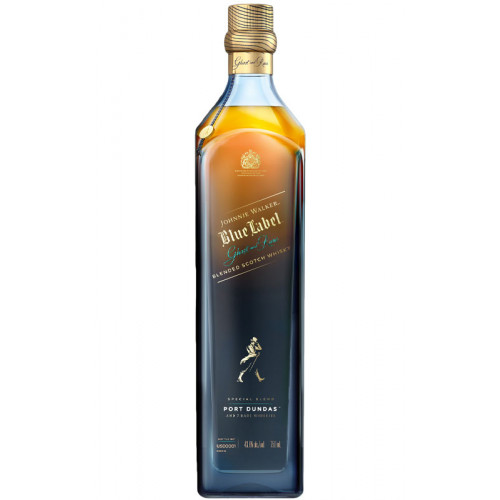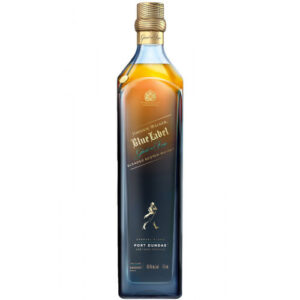
Johnnie Walker Blue Label Ghost & Rare Port Dundas Blended Scotch Whisky
Johnnie Walker Blue Label Ghost & Rare Port Dundas — Full Profile
Basics & Overview
- Name / Edition: Johnnie Walker Blue Label Ghost & Rare Port Dundas. It is part of the Ghost & Rarelimited‑edition series from Johnnie Walker / Diageo. (Johnnie Walker)
- Series: It is the fifth offering in the Ghost & Rare line. (Johnnie Walker)
- Distillery Highlight / “Ghost” Distillery: The key “ghost” in this edition is Port Dundas, a grain whisky distillery in Glasgow which operated for nearly 200 years (founded ca. 1811) before closing in 2010. This edition draws on rare casks from Port Dundas to supply “grain whisky” character. (Johnnie Walker)
- Other Ghost Distilleries / Rare Whiskies in the Blend: Alongside Port Dundas, the blend includes whiskies from Cambus and original stocks of Brora (also “ghost” / closed distilleries), plus other very rare malt & grain whiskies from Cameronbridge, Glenkinchie, Clynelish, Dailuaine, Auchroisk, etc. (Bourbon Central)
Specifications
| Attribute | Detail |
|---|---|
| ABV (Alcohol by Volume) | 43.8% (Johnnie Walker) |
| Bottle Size | 70 cl / 750 ml (Diageo Rare & Exceptional) |
| Colour / Appearance (as per official) | Amber‑Gold; medium/light‑medium body. (Diageo Rare & Exceptional) |
| Region / Type | Blended Scotch Whisky; includes both grain whisky (Port Dundas, etc.) and malt whisky from multiple distilleries. (Diageo Rare & Exceptional) |
| Availability | Limited edition; part of special “Ghost & Rare” releases. Generally premium pricing; likely released globally but more limited supply than core range. (House of Malt) |
What Makes It Special / Selling Points
- Incorporation of rare “ghost” whisky from Port Dundas, which gives grain whisky character that can’t be replicated now that the distillery is closed. (Bourbon Central)
- Use of whiskies from additional ghost distilleries (Cambus, Brora) adds rare malty / smoky / historical depth. (Bourbon Central)
- The blend also includes malt whiskies from open distilleries, but selected for their rarity / age, giving balance between grain sweetness, fruit, oak, smoke. (Diageo Rare & Exceptional)
- Crafted under supervision by Master Blender Dr. Emma Walker. (Diageo Rare & Exceptional)
Tasting Notes
Here are compiled tasting profiles from official sources and independent reviewers.
Appearance & First Impressions
- Colour: Amber gold. (Diageo Rare & Exceptional)
- Nose / Aroma: “Very sweet woody, creamy vanilla, toffee and spiced apple, whisper of wood spice and gentle sweet smoke.” (Diageo Rare & Exceptional)
- Texture: Medium‑light to medium body; creamy grain texture noted in palates. (The Whisky Company)
Palate / Taste
Some of the flavors people detect:
- Vanilla, butterscotch / creamy vanilla tones ‒ often from the grain whisky influence + selected casks. (Diageo Rare & Exceptional)
- Soft smoke, gentle wood spice (oak) ‒ not heavily peated, but a soft smoky overtone, especially from ghost whisky from Brora etc. (Bourbon Central)
- Fruit notes: peaches, berries, apricots, orchard fruit, sometimes red berries. Also stewed apple, spiced apples. (Manila Wine)
- Grain / cereal / honeyed cereal / creamy grain undercurrent; sweet cereal proportions are mentioned in multiple reviews. (Bourbon Central)
Finish
- Long lingering finish with a gentle return of wood spice and soft smoke. (Diageo Rare & Exceptional)
- Finish also features fruit crumble, orchard fruit, sometimes ginger or a warm spice pinch. (Manila Wine)
Overall Balance & Character
- The whisky is described as “sweet and fruity”, “creamy and woody”, with vanilla & soft smoke. Grain whisky plays a prominent role in creating smoothness and sweetness, but the malt components provide fruit, smoke, and aromatic complexity. (Drink Hacker)
- Not heavy or overly aggressive; more on elegant, plush style. Some reviewers call it “velvety” or “silky.” (The Whiskey Wash)
“People Also Ask” Style Questions & Answers
Here are common questions people often search on Google (or likely to search) about this whisky, along with concise answers based on available info.
| Question | Answer |
|---|---|
| What is Johnnie Walker Blue Label Ghost & Rare Port Dundas? | It is a limited‑edition blended Scotch whisky from Johnnie Walker’s Ghost & Rare series, using rare whiskies from the closed Port Dundas distillery plus other ghost and rare malt & grain whiskies. Bottled at 43.8% ABV. (Johnnie Walker) |
| Who makes it / who is the Master Blender? | It is made by John Walker & Sons / Diageo, under Master Blender Dr. Emma Walker. (Diageo Rare & Exceptional) |
| What does “Ghost & Rare” mean in this context? | “Ghost” refers to whisky from distilleries that are now closed (Port Dundas, Cambus, Brora in this edition). “Rare” refers to unusually old, scarce, or otherwise hard‑to‑obtain stocks belonging to Diageo / Johnnie Walker reserves. So the series is aimed at using old, rare whiskies including from “ghost” distilleries. (Drink Hacker) |
| What is the ABV (proof) of this edition? | 43.8%. (Johnnie Walker) |
| What size bottle, and how limited is it? | The standard is 70 cl (750 ml). It is a special / limited edition; availability is more restricted than standard Blue Label. However, the exact number of bottles globally is not clearly published in all sources. (Diageo Rare & Exceptional) |
| What flavours does it have? | Key flavors include creamy vanilla, butterscotch, soft smoke, wood spice, orchard fruits (peaches, apricots, apples), red berries, honeyed cereal, and a grain whisky sweetness. (The Whisky Company) |
| How does it compare to standard Johnnie Walker Blue Label? | This edition emphasizes grain whisky more strongly (especially from Port Dundas), includes ghost distillery spirit, and tends to be sweeter, fruitier, with more creamy texture. It is somewhat more experimental in sourcing / blending than the standard core Blue Label, which is already a premium blend but doesn’t normally advertise specific ghost distilleries. Some reviews say this one is “the most exuberantly sweet Blue Label release I’ve tried.” (Drink Hacker) |
| Is it non‑chill filtered / natural color? | Public sources do not clearly state whether it is non‑chill filtered or natural colour. Many limited editions might include statements, but the major public descriptions focus on ingredients, flavour, origin, and ABV rather than these technical filtration or colouring details. Absent explicit info, assume standard practices of Diageo / Johnnie Walker, which may include chill filtration, but not always disclosed. |
| How should you drink it / serve it? | Best enjoyed neat, so you can appreciate all the nuanced flavours (grain, malt, smoke, fruit, spice). Some suggest a few drops of water to open up aroma. Good glass (Glencairn or similar) is recommended. Some may prefer pairing with light desserts or fruit to complement the fruit/spice profile. (Manila Wine) |
| What is the approximate price / is it worth it? | Price is premium. In the UK for example, listings show about £275 for the 70cl bottle. (Milroy’s of Soho) Whether it’s “worth it” depends heavily on how much you value rare/distressed distillery stock, flavor nuance, premium blending, and rarity. Many whisky enthusiasts consider it a strong, interesting release but not universally a “buy at any cost” dram. Some find the sweetness somewhat unbalanced; others find it delightful. |
More In‑Depth Notes & Community Reviews
Here are observations and nuance from whisky critics and community reviewers.
- Sweetness: Several reviewers comment that this might be one of the sweetest Blue Label releases. Not in an overly sugar‑added sense, but because the grain whisky (especially Port Dundas) and the cask maturation produce strong syrupy, dessert like or fruity sweetness. (Drink Hacker)
- Grain Whisky Emphasis: Grain whisky typically adds lightness, smoother texture, cereal / honey notes. In this blend, Port Dundas grain seems to shape the backbone of mouthfeel and sweetness. Some purists prefer malt forward whisky, but here the grain component is a feature, not a bug. (Drink Hacker)
- Smoke & “Ghost” Distillery Notes: The ghost whiskies (Cambus, Brora) provide soft smoke, subtle peat / smoke undertones, floral malt, distinctive character from distilleries that no longer operate (thus “ghost”). Not overwhelmingly smoky, more gentle, complementing grain and fruity sweetness. (Bourbon Central)
- Fruity Elements: Orchard fruits (apples, peaches, apricots), berries, red fruit; also sometimes “stewed apple”, “fruit crumble” (dessert imagery) in finish. These are often paired with vanilla and spice from oak casks. (Manila Wine)
- Finish / Aftertaste: Several reviewers find the finish smooth, with lingering spice and fruit; soft smoke returns in background. Some mention a warming finish, others comment it is more delicate and not heavily peated. (Whisky Connosr)
Pros & Possible Critiques
Here are what many people see as strengths, and also some of the criticisms or trade‑offs to consider.
Pros
- Rarity & Historical Value: Using whisky from ghost distilleries (especially Port Dundas) gives this release historical depth; whisky lovers often prize “lost” distillery stock.
- Blend Complexity: There is a well‑balanced interplay between grain and malt components; sweetness + subtle smoke + fruit + oak all have roles; the whisky is not one‑dimensional.
- Smoothness & Texture: Grain whisky tends to smooth out blends; many reviewers speak of creamy texture, velvety mouthfeel, pleasant drinking experience.
- Flavor Profile: For those who enjoy dessert‑like notes (vanilla, fruit, baked apple, spice) combined with gentle smoke and subtle oak, this delivers.
- Limited Edition / Collectability: Because it is a premium, limited Ghost & Rare release, there is collectability, prestige.
Critiques / Trade‑Offs
- Sweetness Might Be Too Much for Some: Not everyone enjoys whisky that leans toward dessert‑type sweetness; if you prefer drier, more austere, intensely smoky or peaty Scotch, this may feel too soft. Some reviews mention it is “the most exuberantly sweet Blue Label release” they’ve tried. (Drink Hacker)
- Smoke Not Dominant: While there is smoke, it is subtle / background. If expecting strong peated character, this won’t deliver.
- Price vs Value: For the price you pay, some might feel parts of the blend (amount of rare / ghost whisky, proportion malt vs grain) are not fully transparent. For some, more malt‑forward choices or single malts might provide more for cost.
- No Age Statement: It is NAS (No Age Statement), which means consumers must trust the quality without knowing exact ages of components. For some, age matters.
- Availability & Price Variability: As a limited edition, pricing varies widely; import, duties, local markups will affect how much you really pay. Might be expensive / harder to obtain outside certain markets.
Context: Port Dundas, Ghost & Rare, Blended Scotch
To better understand this edition, some background helps.
Port Dundas Distillery
- Port Dundas was a grain whisky distillery located in Glasgow, Scotland. It had been operating for nearly 200 years (founded ~1811) before closing in 2010. (Johnnie Walker)
- As a grain distillery, Port Dundas produced whisky that goes into blends (rather than being usually bottled as malt alone). Grain whisky tends to be lighter, smoother, sweet, cereal‑driven. In high‑quality blends, grain whisky gives volume and body, and can enhance vanilla / sweetness etc. (Drink Hacker)
Ghost & Rare Series by Johnnie Walker
- The “Ghost & Rare” line focuses on using whisky stocks from distilleries that have closed (so called “ghost distilleries”), combined with rare and old malts and grain whiskies. These special releases are meant to showcase the character of whiskies that are no longer produced, celebrating heritage and rarity. (Drink Hacker)
- Other editions in the series include Port Ellen, Brora, etc. Each edition highlights a different “ghost” and supporting rare whiskies. (Diageo Rare & Exceptional)
Pictures / Visuals (Descriptive)
Since I can’t embed or reproduce copyrighted images, here’s what the presentation and packaging are like, and what you’ll see visually.
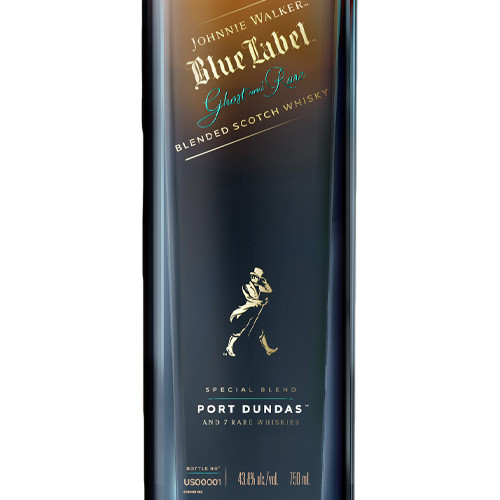
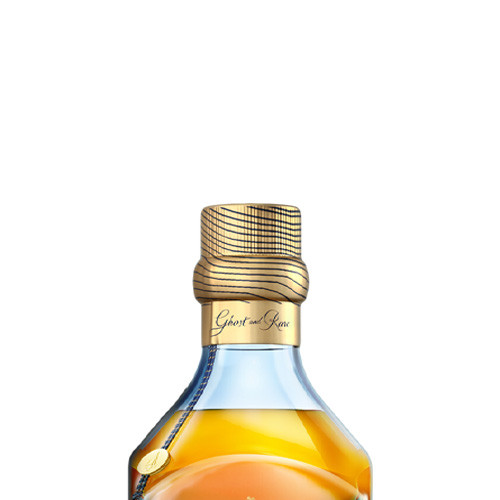
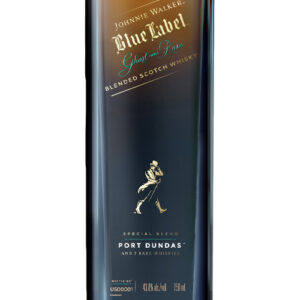
- The bottle is part of the Blue Label line, meaning premium presentation: thick glass, elegant bottle shape. Labeling includes “Blue Label Ghost & Rare Port Dundas”, the ABV (43.8%), and often signage about ghost whisky and select distilleries. (Johnnie Walker)
- Packaging around the bottle tends to be high‑end — possibly gift box, artful design. As a limited edition, presentation is intended to match the premium nature. (Johnnie Walker)
- The color of the whisky in glass: amber or amber gold, showing richness. When swirled, you’ll get medium legs. Clarity is good (no sediment etc.). (Diageo Rare & Exceptional)
“People Also Ask” Additional Questions & Answers
Here are some more questions people often ask, with compiled answers.
| Question | Answer |
|---|---|
| Is Johnnie Walker Ghost & Rare Port Dundas peaty / smoky? | Yes, but subtly. Smoke is present (from ghost distilleries like Brora), but it is not aggressively peated. The smoke tends to be soft, background, giving texture rather than dominating. If you expect heavy peat, this is more refined than that. (Bourbon Central) |
| Does this edition have the grain whisky “character” strongly? | Yes — the grain whisky (especially from Port Dundas) is a major part of the blend. It gives creamy texture, sweet cereal / vanilla body, honeyed notes, etc. Grain whisky is not just filler here; it’s central to the character. (Drink Hacker) |
| What kind of oak / casks are used? | Descriptions mention “second‑fill aged American oak whiskies” and “first‑fill highly charred American oak casks” for some Port Dundas components. These give wood spice, vanilla, char/wood influence. (Drinks365) |
| Is this whisky non‑chill filtered / has natural color? | Public descriptions don’t clearly state non‑chill filtration or absence of added coloring. The sources focus more on whisky composition, flavour, distilleries, ABV. Without explicit statement, one cannot be sure. |
| How does the mouthfeel compare / is it creamy / thick? | Many reviews note the texture is creamy, velvety, unctuous. Drinkers talk about “creamy grain”, honeyed cereal, smooth body. This is one of the attractive features. (Bourbon Central) |
| What’s the finish like? | Lingering; fruit and spice, gentle smoke and wood tones. Warm finish, with orchard fruit (apples, peaches), sometimes red berries, and soft spice (ginger, oak). Not overly dry, not sharply bitter in most reports. (Manila Wine) |
| Is it good to drink neat, or with water / on ice? | Best enjoyed neat so as to appreciate the complexity. Adding a little water may open up aromas. Ice will dilute and may mask subtle flavours, so if used should be large cube or minimal. Reviews suggest neat or with a few drops of water for those who want to explore more. |
Price & Availability
- In the UK, listings show about £275 for the 70 cl bottle for this release. (Milroy’s of Soho)
- Other retailer listings similarly are premium; sometimes more depending on taxes, import, local mark‑ups. (QKAWine)
- Because it is a limited edition, availability is restricted; once stock is gone in many markets, secondary market prices may rise.
Who Will Like It? & Who Might Prefer Something Else
Ideal Drinkers
- Lovers of whisky who appreciate grain whisky expressions as part of blends (not only pure malts).
- People who enjoy sweetness, fruit, dessert‑style notes (vanilla, orchard fruit, apples, peaches), but with balanced spice and smoke in the background.
- Collectors of limited / rare whiskies, especially with historical or “ghost distillery” appeal.
- Those who enjoy Blue Label line and want something different: more rare components, more story, more emphasis on unusual distilleries.
Less Ideal For
- Those who prefer heavily peated, smoky, maritime, or very “Islay‑style” whiskies. This is more subtle in that regard.
- People who want very age‑stated malts (i.e. exact age statements) in their whisky. Ghost & Rare Port Dundas is NAS and doesn’t reveal exactly how many years each component is aged.
- Those who prefer very dry, austere whiskies; this is sweeter, more fruit/vanilla/cream in profile.
- Buyers for whom cost per flavor may matter: for the same money, some might get more malt‑intensive single malts or aged malts with strong character.
Comparison vs Other Similar Whiskies
Here are a few comparisons to help situate this whisky in the whisky world.
- Compared to standard Johnnie Walker Blue Label: This edition offers more of “ghost distillery” novelty, more grain whisky prominence, fruit and sweetness, and more narrative. Standard Blue Label is more of a carefully balanced blend of numerous malt & grain whiskies without highlighting ghost distilleries.
- Compared to other Ghost & Rare editions: Some editions in the series focus on different ghost distilleries (e.g., Port Ellen, Brora). The Port Dundas edition is more grain‑heavy, creamier, more cereal / vanilla emphasis. Other Ghost & Rare may be darker, smokier (e.g. those focusing on Islay malts) or more malt dominant.
- Compared to premium blended Scotch outside Johnnie Walker: There are other premium blends that aim for prestige (e.g. Compass Box high end blends, other Diageo rare blends). Port Dundas edition holds its own nominally, especially for those who appreciate rarity and story.
Pictures & Packaging (Descriptive Notes)
- Elegant bottle, thick glass, label design matching Blue Label aesthetic (deep blue, gold accents). “Ghost & Rare Port Dundas” clearly printed. ABV and bottle size displayed.
- Packaging likely comes with a premium box / sleeve, possibly special design or numbering (Ghost & Rare editions often have collector’s appeal).
- Colour of whisky in glass: amber‑gold. Clarity is good. Under light, warmth in hue.
Common Misconceptions & Clarifications
- The word “Ghost” doesn’t mean supernatural flavour; it means distillery is closed. The whisky itself is matured, well‑aged spirit, not anything eerie flavoured.
- “Rare” does not necessarily mean every component is extremely old; it means rare stocks, limited amounts, possibly older casks, but there is still mystery around proportions and ages.
- The whisky is not a single malt; it’s a blend (malt + grain). Some may expect “ghost distillery malt‑only” but it includes grain whisky (especially Port Dundas).
- ABV is 43.8% — less than many cask strength whiskies, so even though it has rare components, it is not extremely high strength. That ABV is enough to carry flavors but not intended for “blast it open” tasting.
Conclusion
Johnnie Walker Blue Label Ghost & Rare Port Dundas is a compelling whisky for people who enjoy rare whisky stories, balanced sweetness, elegant blending, and a mix of grain + malt components. It offers creamy vanilla, fruit, soft smoke, and warm spice in a refined, polished manner. Grain whisky is a strong backbone, giving texture and an approachable profile, while the ghost malts contribute character and intrigue.
It is not for everyone — those seeking bold, peaty, smoky, malt‑forward, rugged whisky might prefer something else. But if your tastes lean toward smoother, fruitier, rare releases with a story, this edition delivers a rich experience.

Colonel E.H. Taylor Jr. Small Batch Bourbon Whiskey
Hennessy XO Cognac
Brugal 1888 Ron Gran Reserva Familiar Rum
Old Weller Antique 107 Original Wheated Straight Bourbon 


Reviews
There are no reviews yet.