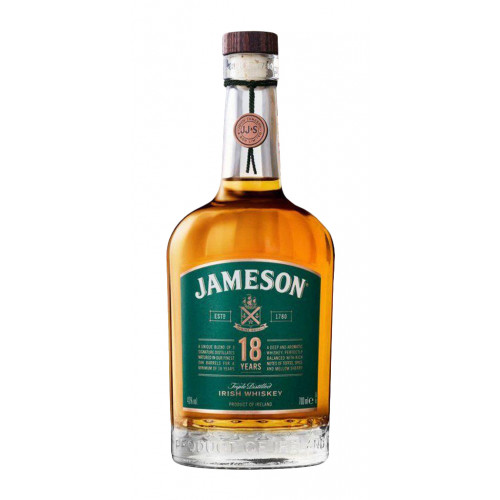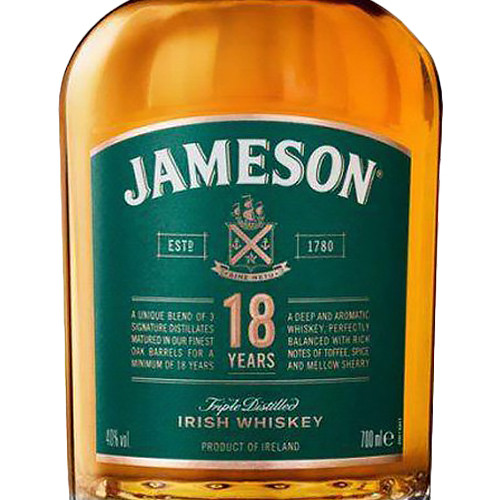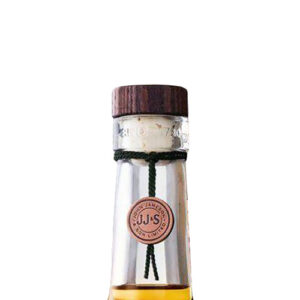
Jameson 18 Year Old Triple Distilled Irish Whiskey
Introduction & Context
When one thinks of Irish whiskey, the name Jameson often arises first. It is one of the most globally recognized Irish whiskey brands. Among Jameson’s higher‑end offerings, the Jameson 18 Year Old Triple Distilled Irish Whiskeyoccupies a special place: a rare aged expression, intended for special occasions and for drinkers who want more depth, complexity, and prestige than the standard blends.
In this article, we’ll explore what makes the 18‑year expression distinct, how it is made, how it tastes, how it performs in the marketplace, and how it compares to other whiskies. We’ll also address the most common questions people ask about it (drawing on “People Also Ask” style queries) and end with a summary evaluation.
The Jameson Brand: A Brief History & Positioning
To understand Jameson 18, it helps to see where it sits in the brand’s lineage and legacy.
- Founding & Evolution
Jameson’s origins start with John Jameson, who founded the Jameson whiskey business in Dublin in 1780. Over time, Jameson became one of the dominant Irish whiskey producers. (Wikipedia)
In the 20th century, various Irish whiskey producers merged, and the distillation and maturation operations were consolidated in the Midleton Distillery in County Cork (though the Bow Street facility in Dublin now functions as a museum / visitor center). (Wikipedia)
Jameson today is produced under Irish Distillers, a subsidiary of Pernod Ricard. (Wikipedia) - Brand Position & Range
Jameson offers a spectrum of whiskies, from the everyday blend to premium and limited editions. The 18‑year expression is among the more elevated, higher price, and lower volume bottlings. (jamesonwhiskey.com)
Because ageing whiskey for 18 years is both time‑consuming and costly (casks lose volume via evaporation, and skilled blending is required), expressions of this age are relatively rare and intended for consumers who appreciate sophistication.
With that background, we can turn to the specifics of the Jameson 18 itself.
Production & Craftsmanship
Aged whiskies like Jameson 18 are not just “old whiskey” — their character depends heavily on how they are made, matured, blended, and finished.
Distillation & Spirit Foundations
- Triple Distillation
One of Jameson’s hallmark processes is triple distillation. Unlike many Scotch whiskies (often distilled twice), Irish whiskey is commonly triple distilled to produce a cleaner, more refined spirit. Jameson continues this tradition. (SPEAKSPIRITS)
The mash used comprises malted barley, unmalted barley, and other cereal grains (such as maize). (SPEAKSPIRITS)
The three distillation steps typically proceed via a wash still, then a feint (intermediate) still, and finally a spirit still. (SPEAKSPIRITS) - Base Whiskies & Blend Composition
The 18‑year expression is a blend of whiskies (both pot still / grain) each aged at least 18 years. (Ministry of Drinks)
In some product descriptions, Jameson describes it as a “unique blend of three signature distillates matured in our finest oak for almost two decades,” suggesting that three component spirits are blended. (jamesonwhiskey.com)
The blending expertise is crucial: over 18 years, casks can diverge significantly in character (some losing wood influence, others gaining oxidative or sherry-derived notes). The blender must select complementary casks and balance them.
Maturation & Cask Strategy
- Types of Casks
The whiskies used in Jameson 18 are aged in a mixture of American ex-bourbon barrels and European oak / ex-Oloroso sherry casks. (whiskyitaly.it)
After this long maturation, before bottling, the blend is then finished or “married” in first-fill bourbon barrels (i.e. barrels that have not been used previously to age bourbon) for some months, often cited as a period of at least 6 months. (Hard To Find Whisky)
This final finishing step imparts extra smoothness and vanilla/wood sweetness, brightening the flavor. (Ministry of Drinks) - Cask Selection & Warehousing
Over nearly two decades, the casks used must be stored under careful conditions (temperature, humidity, orientation) to allow the whiskey to mature gracefully. While I did not locate a public, detailed account of Midleton’s exact cask management for this expression, Jameson’s general practice in the Midleton warehouses is to age their premium whiskies under controlled environmental regimes. (That said, specifics about humidity, seasonal variation, and cask management tend to be proprietary.) - Non–Chill Filtration? & Bottled Strength
Some sources suggest that the Irish 18-year expression is bottled at 46 % ABV (alcohol by volume), rather than 40 %, and is non–chill filtered, allowing more oils and flavor compounds to remain. (whiskyitaly.it)
However, many commercial retail listings show 40 % ABV for the Jameson 18 (the older or more common version) and make no mention of chill filtration. (The Barrel Tap)
This discrepancy may reflect variations over time, limited editions, or regional bottlings. - Age Statement & Legal Requirements
As with all Irish whiskey, to qualify as Irish whiskey it must be matured in wood (oak) for at least 3 years. Jameson far exceeds that with 18 years. (Caskers)
The age statement “18” means that all component whiskies in the blend have spent at least 18 years in casks. Some may be even older; others cannot be younger.
Quality Control & Bottling
After blending and finishing, the whisky is bottled under quality control protocols. For a high-end expression like 18-year, the producer would ensure consistency of flavor, labeling accuracy, and minimal oxygen exposure. The packaging (box, bottle design, labeling) is often premium to reflect its prestige.
Tasting Profile & Sensory Journey
One of the most eagerly anticipated parts is: how does Jameson 18 smell, taste, and feel? Below is a breakdown of the tasting profile as described by producers, retailers, critics, and enthusiasts (including anecdotal user reviews). Note that individual perception can vary.
Appearance / Color
Most sources describe the whiskey’s color as antique gold, soft amber, or deep gold—rich but not overly heavy. (whiskyitaly.it)
The color is influenced by prolonged contact with oak casks (both bourbon and sherry), which impart depth. No evidence suggests artificial coloring (though many whiskies may lightly color with caramel E150 at some stage; I found no confirmation for or against that here).
Nose (Aroma / Bouquet)
Jameson’s own site describes the nose as:
“Aromatic oils with a touch of wood and spicy toffee.” (jamesonwhiskey.com)
Retailer and review descriptions elaborate:
- Rich toffee, vanilla, and roasted wood aromas. (The Barrel Tap)
- Caramel, butter, marzipan, hints of spice (nutmeg, cinnamon), brown sugar. (whiskyitaly.it)
- Subtle base notes of oak, gentle sherry, light nutty or dried fruit tones. (whiskyitaly.it)
In user forums, reviewers sometimes report vanilla, toffee, leather, and woodiness on the nose. For example:
“Nose: sweet vanilla toffee, leather, small bit of woodiness.” (Reddit)
Palate (Taste / Mouthfeel)
On the palate, the whiskey is generally described as mellow, smooth, and complex:
- Notes of toffee, caramel, fudge, sweet oak, spice (e.g. baking spice), and vanilla are commonly noted. (Ministry of Drinks)
- Some hints of wood / leather, sherry nuttiness, and dried fruit may surface. (The Barrel Tap)
- Gentle spice and oak structure provide backbone; the whiskey does not taste “sharp” but well integrated. (The Barrel Tap)
- The mouthfeel is often described as smooth, medium-bodied with a buttery or creamy texture. (Liquordepot)
Some user reviewers, however, felt it leans quite sweet and lighter in structural complexity than expected for the price. E.g.:
“I got no beef with bourbon but it’s not what I go for when I want Irish. It is a very easy drinker but for the price there is much much better out there.” (Reddit)
Finish (Aftertaste / Persistence)
The finish of Jameson 18 is frequently described as long, lingering, warm, and carrying forward the themes of wood, spice, and toffee. (jamesonwhiskey.com)
Some retailers emphasize that the finish “carries the theme of the wood, spice and toffee right through to the end.” (The Barrel Tap)
The balance is such that even as the sweetness fades, a dry but warm oak-spice impression lingers. (The Barrel Tap)
Overall Impression & Strengths / Weaknesses
Strengths:
- Refined maturity: Eightteen years is long, giving time for integration, softening, and depth.
- Balance of flavors: The blend of bourbon and sherry cask ageing plus finishing in first-fill bourbon helps produce a layered profile: creamy vanilla / toffee overlaid with oak, spice, and subtle sherry complexity.
- Smoothness: The triple distillation plus finishing contribute to a silky, drinkable experience.
- Prestige & collectibility: As a premium expression, it holds appeal for gift markets or for those wanting a more elevated Irish whiskey.
Weaknesses / considerations:
- Sweetness bias: Some critics and users feel it skews toward sweetness (because of vanilla / toffee / oak), which might reduce the perception of “bite” or boldness.
- Value for money debate: Given its price premium, some argue that competing whiskies (Irish or otherwise) in the same bracket may offer more distinctive character.
- Subtlety over punch: Those who prefer bold, smoky, peated or highly assertive whiskies may find Jameson 18 somewhat understated.
In summary, Jameson 18 is a polished, mature, elegant Irish blend, suited more for contemplative sipping than heavy mixing or bold flavor-hunting.
Awards, Ratings & Market Recognition
How is Jameson 18 regarded in the broader spirits world?
- The Jameson 18 has received multiple awards. For example, the Jameson 18 is described in some retail listings as having earned a “Double Gold Medal at San Francisco World Spirits Competition and a Gold Medal at the International Spirits Challenge 2020.” (liquor.co.za)
- According to the Wikipedia page on Jameson, the 18‑year expression has won a series of gold and double gold medals at the San Francisco World Spirits Competition between 2005 and 2010. (Wikipedia)
- In some listings (e.g. Caskers), the whiskey is rated at 91% with a user review average of 4.6/5. (Caskers)
- In whisky‑enthusiast and specialist reviewer circles, the 18 has earned praise when well-cellared, though not universally considered the “best” in its class. (Because many reviews in blogs and forums focus more on comparators than absolute scoring, exact score consolidation is more diffuse.)
Because the 18 is relatively niche and premium, it is often collected and held as a prestige bottle. Its scarcity, compared to Jameson’s mass-market standard blend, adds to its cachet.
Variants, Releases & Special Editions
An important nuance: “Jameson 18 Year Old” in general refers to a premium version, but there are sub-variants and related bottlings worth knowing:
- The version discussed above is often the standard Jameson 18 Year Old Triple Distilled.
- There is also a variation called Jameson 18 Bow Street, which is a cask-strength version (unfiltered, higher ABV) finished at the Bow Street site (the visitor center / maturation facility). For instance, one Reddit review mentions a Bow Street 18 Year release at 55.3% ABV, non-chill filtered, with distinct nose and palate profiles. (Reddit)
- Because whiskies evolve, occasionally limited or region-specific editions may differ in ABV, barrel type, or finishing detail.
- Occasionally, bottlings may carry higher proof or more wood-forward expressions aimed at collectors.
For clarity, when someone says “Jameson 18,” one should check the label to see whether it is the standard 18 (often 40 % ABV) or a special Bow Street or cask strength variant.
How to Enjoy & Serve Jameson 18
A premium whiskey like this merits thoughtful serving to appreciate its full complexity. Here are suggestions and best practices:
- Glassware
Use a tulip-shaped nosing glass (like a Glencairn or copita) to concentrate aromas toward the nose. Avoid wide tumblers that disperse volatile aromas. - Neat First
Try it neat first (no water, no ice) to experience the undiluted flavor. Let it rest (a few minutes) after pouring to allow aromas to open. - Water (a few drops)
A few drops of room-temperature water may help release additional aroma compounds (especially in higher ABV versions). Add cautiously. - Temperature
Room temperature (around 18–22 °C / 64–72 °F) is good; slightly cooler or warmer can shift aromatic balance, but avoid extremes. - Ice or Chilling
Using ice will numb the palate and mute nuances; best used only if you specifically prefer a cooler, muted experience (and even then, better to use large single cubes). For whiskey purists, ice is less recommended. - Pairings & Food
- Dark chocolate, dried fruits, nuts (especially roasted or sugared nuts), or caramel-based desserts complement its sweet / oak-forward profile. Retailers suggest pairing with dark chocolate or a fine cigar. (The Barrel Tap)
- Cheese plates, especially aged cheeses and nutty/cream cheeses, may work.
- Some fruits (pear, apple) might echo its fruity notes without clashing.
- Pacing
Because of the depth and subtlety, sip slowly, meditatively — this is not a “shot” whiskey but a contemplative dram.
Frequently Asked Questions (People Also Ask & Answers)
Below is a compendium of the kinds of questions people often ask about Jameson 18, along with thorough answers (and occasional caveats).
1. What does “Triple Distilled” mean for Jameson 18?
Answer:
“Triple distilled” means that the whiskey is distilled three times sequentially through copper pot stills (wash still → feint / intermediate still → spirit still). This extra distillation step (compared to double distillation) generally yields a cleaner, lighter, and more refined spirit, because more impurities and heavier congeners are removed at each stage.
In the case of Jameson 18, the triple distillation is part of the brand’s historical and stylistic identity: the spirit is designed to be smooth and elegant even before extended aging. (SPEAKSPIRITS)
The trade-off is that some heavier flavor compounds (which might confer boldness or rustic character) are less pronounced, so the whiskey must rely on aging and cask influence for depth.
2. How long is Jameson 18 aged?
Answer:
Jameson 18 is aged for at least 18 years in oak casks — a combination of American ex-bourbon barrels and European oak (including ex-sherry / Oloroso) casks. (Ministry of Drinks)
Additionally, after this long aging, it is given a finishing / marrying period of (commonly) at least 6 months in first-fill bourbon barrels to harmonize and adjust its flavor profile. (Hard To Find Whisky)
Thus, while the core aging is 18 years, the finishing period contributes further subtle nuance.
3. What is the ABV (alcohol by volume) of Jameson 18?
Answer:
Retail listings of the standard Jameson 18 often show 40% ABV (80 proof). (The Barrel Tap)
However, some bottles (or limited editions) are bottled at 46% ABV and may also be non–chill filtered. For example, one listing (WhiskyItaly) describes the Jameson 18 at 46 % ABV, non-peated, blended from 2/3 pot still and 1/3 grain whiskey. (whiskyitaly.it)
This variation suggests that different markets or editions might produce higher-proof versions. Always check the label for the specific bottle you have or intend to purchase.
4. Where is Jameson 18 produced / distilled / matured?
Answer:
The whiskey is produced by Irish Distillers and matured in their facilities. The distillation and maturation are done at the Midleton Distillery in County Cork, Ireland. (jamesonwhiskey.com)
While the historical Jameson Distillery was on Bow Street in Dublin, most production has since been consolidated in Midleton. The Bow Street facility now functions partly as a visitor center and tasting venue. (Wikipedia)
Some finishing (for related expressions like Bow Street 18) may occur at Bow Street. (Reddit)
5. How is Jameson 18 different from regular Jameson or standard blends?
Answer:
- Age & maturity: The standard Jameson blend (often just “Jameson Irish Whiskey”) is aged a minimum of 4 years. Jameson 18 is aged for 18 years, which adds complexity, integration, and depth. (whiskyrant.com)
- Cask strategy: The 18 uses sherry and European oak along with bourbon casks, plus a finishing in first-fill bourbon barrels — whereas the basic blend relies more heavily on ex-bourbon casks with simpler maturation. (Ministry of Drinks)
- Flavor profile: The 18 is richer, smoother, more refined, less grain-forward, and more integrated, with a more luxurious mouthfeel. The regular Jameson is lighter, more accessible, and designed for broader mixing or casual drinking. (whiskyrant.com)
- Price & prestige: The 18 is priced significantly higher and is positioned as a premium offering — less common in bars, more often reserved as a special purchase or gift option.
6. What tasting notes / flavor characteristics can one expect?
Answer:
As summarized in the tasting section above, here are the typical descriptors:
- Nose / Aroma: Aromatic oils, spicy toffee, wood, caramel, vanilla, subtle nut, sherry influence
- Palate: Mellow, smooth; flavors of toffee, caramel, fudge, oak, vanilla, gentle spice, leather, dried fruit or sherry nuttiness
- Finish: Long, warm, lingering wood, spice and toffee tones with a gentle dryness trailing off
Remember that individual bottles and palates can vary. Some iterations may lean more oak-forward or more vanilla-forward, depending on cask selection.
7. Is Jameson 18 chill filtered?
Answer:
I found no definitive public confirmation that the standard Jameson 18 expression is non–chill filtered. Some listings describing 46% ABV versions (e.g. WhiskyItaly) mention “non-chill filtered.” (whiskyitaly.it)
Because chill filtration is a technical detail often omitted from marketing materials, the safest assumption is that lower-proof standard 40% ABV versions may be chill filtered for stability, while premium / cask strength / collector variants might be non-chill filtered. To confirm, one must check the particular bottle’s labeling or producer notes.
8. How should one drink Jameson 18 (neat / with water / on ice)?
Answer:
- Neat: Best way to appreciate full complexity. Start neat in a tulip glass or Glencairn, let it rest for a few minutes, then nose and sip.
- With a few drops of water: Can help “open up” aromas and soften high-strength edges. Add carefully.
- Ice: Large ice cubes or a single clear ice block might be used, though ice will chill and mute flavor delicacy — use only if you prefer a cooler but less expressive experience.
- Temperature: Best served around 18–22 °C (room temperature). Cooler will mute aromas; warmer may exaggerate alcohol — a balance is best.
9. How much does Jameson 18 cost / what is its value?
Answer:
Prices vary regionally, depending on import duties, taxes, and supply:
- Some retail listings show prices around €153 for a 70cl bottle in European markets. (whiskyitaly.it)
- In the U.S., listings such as Caskers show it for ~$186.99. (Caskers)
- In South Africa, one listing shows R1,999.00 for a 750ml bottle. (liquor.co.za)
- In markets where it is rare, prices may be much higher due to scarcity.
As for value, opinions vary: many consider the 18 to be a prestige or gift bottle, rather than a “daily drinker.” Some buyers feel the premium is justified for the complexity and brand; others contend that alternate whiskies in similar price brackets (Irish or Scotch) may offer more distinctiveness.
10. Is Jameson 18 worth it?
Answer (Assessing “worth” depends on perspective):
If you enjoy well-aged, refined Irish whiskey and are seeking a bottle for special occasions, Jameson 18 is a worthy candidate. Its smoothness, oak integration, and prestige make it a respectable premium pick. Many reviewers and users praise it for its elegance.
However, for those on a tighter budget, or who prioritize bold or experimental flavor profiles (peat, heavy sherry cask, smoke, etc.), other whiskies—Irish, Scotch, or world whiskies—may offer more “bang for the buck.” Some users have compared it unfavorably relative to alternatives, particularly given its price premium. (Reddit)
Ultimately, whether it’s “worth it” depends on your palate, preferences, and what you’d compare it to.
11. What are good food or pairing suggestions for Jameson 18?
Answer:
- Chocolate & dessert: Dark chocolate, caramel desserts, crème brûlée, toffee-based sweets
- Nuts & fruit: Roasted or candied nuts, dried apricot, figs, dates, pears, apples
- Cheese: Mature, nutty cheeses like Gouda, aged cheddar, or blue cheese can partner with the sweetness + spice
- Cigar: A mellow cigar (Cuban, Dominican) with nutty, leather or cocoa tones
- Cheese board / charcuterie: But select meats that are not overly smoky—think prosciutto, speck, cured sausage.
The goal is to complement without overwhelming — match richness, depth, and nuance.
12. Is Jameson 18 still in production / is it rare / limited?
Answer:
Yes, Jameson 18 is still in production, though it is more limited compared to standard Jameson blends. Its higher cost and longer aging mean fewer bottles are released annually. (jamesonwhiskey.com)
Because of this, in many markets it is relatively rare, often found only in specialty liquor stores, premium whiskey shops, or through importers.
Occasionally, special or limited editions (such as high-proof Bow Street versions) create additional rarity. (Reddit)
13. Can you age Jameson 18 further (in bottle)?
Answer:
No — once whiskey is bottled, it no longer ages in the sense of oak maturation. The character stabilized by the time of bottling (bar some slight micro-oxidation or interaction with air) is what you’ll drink. Leaving it in the bottle long-term (standing, unopened) is fine for preservation, but the age will not increase.
However, collecting unopened bottles is common, and some expect slight improvements (or at least maintenance) of nuance over years, especially for premium whiskies. But changes are limited compared to cask aging.
14. How does Jameson 18 compare to other aged Irish whiskies?
Answer:
Jameson 18 competes in the niche of premium Irish whiskies. Key comparators might include:
- Redbreast 15 / 21 / 27 — single pot still expressions with more sherry influence and uniquely Irish character. (Wikipedia)
- Midleton Very Rare — a limited-release premium blend from the same producer (Irish Distillers)
- Teeling 21 Year, Bushmills 21 / 18 Year — other respected aged Irish whiskies
- Scotch and world whiskies in the same price bracket — e.g. aged Speyside, Highland, or Japanese whiskies.
In comparisons, Jameson 18 is often praised for its smoothness and balanced oak influence; it may be outshone in boldness or complexity by some heavy sherry or peated whiskies, but those also come at premium or artisan levels. The advantage of Jameson 18 is that it offers a polished, elegant, and relatively accessible aged Irish blend.
15. Does Jameson 18 have a cask strength version?
Answer:
Yes — the Jameson 18 Bow Street release is a cask strength version (higher proof, non–chill filtered) finished at Bow Street, often cited in enthusiast circles. For example, a Reddit reviewer describes a Bow Street 18 Year bottling at 55.3% ABV. (Reddit)
Whether that is permanently part of the core 18 line or a limited edition may vary. Always check the specific bottle’s ABV and labeling.
16. How many bottles of Jameson 18 are released per year / how rare is it?
Answer:
I did not find reliable public data on the exact annual production or release volume of Jameson 18. Premium whiskies often have controlled, limited output depending on cask stocks, blending goals, and market demand.
Because aging whiskey for 18 years ties up capital and space, producers typically release only modest quantities of such aged expressions. Hence, relative rarity is more the rule than the exception.
17. Is there peat in Jameson 18 (smokiness)?
Answer:
No, Jameson 18 is not a peated or smoky whiskey. It is described as unpeated (i.e. peat level “none” or zero) in some listings. For example, one listing from WhiskyItaly describes it as “Peat level: None / Low / Medium / High → None.” (whiskyitaly.it)
Aromas and flavors focus on wood, toffee, vanilla, and spice—not smoke or phenolic peat tones. Smoky / peated whiskies are more characteristic of certain Scotch styles (Islay, Highland, etc.), not traditional Irish blends like Jameson 18.
18. What bottles sizes / packaging does Jameson 18 come in?
Answer:
The standard bottle is 70 cl (700 ml) or 750 ml, depending on market. (whiskyitaly.it)
It typically comes in a premium box or presentation case, intended to reflect its upscale status. Some listings show original box packaging. (Hard To Find Whisky)
Different markets (EU, U.S., Asia) may have slight variations in labeling, bottle shoulder shape, or embellishment, but core content is consistent.
19. Does Jameson 18 age well in a sealed bottle (for collection)?
Answer:
Sealed bottles of whiskey, stored upright, out of sunlight, and in stable temperature / humidity, tend to remain stable for many years. The whiskey inside will not substantially change or “improve,” but degradation is minimal if properly stored.
Collectors often hold premium whiskies like Jameson 18 for many years. However, risks include label fading, capsule damage, cork deterioration, or leakage—not flavor degradation so long as the seal remains intact.
20. Where can one buy Jameson 18 (in global markets)?
Answer:
- Premium liquor stores, especially those with high-end or imported spirits sections
- Specialty whiskey shops / boutiques (online or brick & mortar)
- Online retailers, importers, and e-commerce platforms that ship alcoholic beverages (subject to local regulation)
- Duty-free shops in airports or travel-retail hubs
- Some flagship brand stores or whiskey distillery visitor centers in Ireland
Because of its niche status, it may not be available in all regions; sometimes one must order via a specialty importer.
Strengths, Weaknesses, Comparisons & Buyer Guidance
Beyond just tasting, let’s analyze Jameson 18 in context of the wider whiskey world and offer guidance to prospective buyers and drinkers.
Strengths in Context
- Polished elegance over raw power
Many aged whiskies trade in boldness or strong oak influence. Jameson 18 prioritizes integration, balance, and refinement. - Reliability & brand assurance
Backed by a major producer (Irish Distillers), the product has consistency, infrastructure, and global reputation that small independent bottlings may lack. - Approachable aged whiskey
Because Jameson is a well-known brand, the 18 offers a “gateway premium” for drinkers wanting an elevated Irish whiskey experience without diving into ultra-rare indie bottlings. - Gift / prestige appeal
For many buyers, part of the attraction is owning / gifting an 18-year whiskey from the Jameson house — it signals care, status, and thought.
Weaknesses & Risks
- Price sensibility
Given its premium pricing, some may judge that alternatives (Scotch, Japanese, indie Irish) deliver more distinctive flavor per dollar. - Character subtlety
For drinkers desiring bold, smoky, highly assertive whiskies, Jameson 18 might not satisfy that appetite. - Bottle-to-bottle variation / limited editions
Differences in edition, proof, or bottling can affect consistency; buyers must verify labels and provenance. - Market availability & markup
In some geographies, scarcity and import/retail markups may inflate cost, making local alternatives more attractive.
Comparison with Key Alternatives
- Redbreast / Green Spot / Powers — classic Irish single pot still whiskies. Redbreast tends to show richer fruit and sherry character, more rustic elements. Jameson 18 is smoother, more oak-forward but perhaps less rustic.
- Scotch aged blends / malts — In the same price band, you might find aged Speyside or Highland malts with distinct terroir, peat, or regional signature. Jameson 18’s smoother and more neutral base may make it less “characterful” but more versatile.
- Japanese / American premium whiskies — Some Japanese aged blends or American bourbons (finished or aged) might offer novel flavor directions (e.g. Mizunara oak, high-char barrels). The choice depends on your taste preferences.
Buyer Tips & Recommendations
- Check the bottle label carefully — verify ABV, edition (standard vs Bow Street), non–chill filtered status.
- Buy from reputable sellers — ensure authenticity (no counterfeits), proper storage history.
- Start with smaller quantities (if available) — sample before committing to a full bottle.
- Allow time before tasting — let the whiskey rest after shipping, as transit agitation may mask nuances.
- Store upright, away from light, stable temperature — to preserve integrity.
- Serve thoughtfully — use proper glassware, minimal dilution, and allow the whiskey to open with air/droplets of water.
Example Narrative: A Tasting Journey (Imagined)
To bring the experience to life, here’s a hypothetical tasting narrative of a bottle of Jameson 18 (standard 40% version):
You decant a dram into a Glencairn glass. It sits quietly for a minute: the glass warms gently in your hand. At first swirl, the aroma is soft oak and toffee, a whisper of vanilla and a faint nutty undercurrent. Allowing it to breathe, more caramel, baked apple, a trace of sherry nuttiness arises. There is a whisper of cedar or aromatic wood in the background.
You sip. The texture is silky, smooth. Immediately you taste creamy toffee, gently warmed by baking spice. The oak is present but not harsh — supportive, adding structure. Mid-palate, hints of dried fruit (apricot, fig), leather, and subtle wood tannins appear. Vanilla and caramel linger, rounding the edges.
In the finish, the sweetness gently fades, leaving a warm echo of oak, spice, and wood-resin. A brief dryness remains on the tongue, but carefully balanced, never sharp. Over 5–10 minutes, fresh air encourages leafy / herbal notes to peek out, but the dominant impression remains a mature, refined, mellow dram.
Return sips echo the first — each time revealing slight variations (a shade more orange peel, or a touch more oak) depending on time and glass exposure. The overall sense is one of graceful maturity: a whiskey that invites contemplation rather than aggressive exploration.
Conclusion & Reflection
Jameson 18 Year Old Triple Distilled Irish Whiskey is a compelling statement from one of Ireland’s most iconic whiskey houses. It marries historic craftsmanship (triple distillation, careful blending) with extended aging and finishing techniques to deliver a refined, elegant premium expression.
From our exploration:
- The production is thoughtful: a blend of aged pot still and grain whiskies, matured primarily in bourbon and European oak, with a finishing marriage in first-fill bourbon barrels.
- The tasting profile emphasizes vanillas, toffee, oak, spice, and a gentle sherry nuance, with a smooth mouthfeel and long finish.
- Among its strengths are balance, drinkability, prestige, and brand assurance; its limitations lie in its sweetness bias (for some), premium pricing, and relatively restrained character for adventurous flavor seekers.
- In comparisons, it holds its own among aged Irish whiskies and global premium blends, though different drinkers may prefer more assertive styles (peat, heavy sherry, bold wood).
- The “People Also Ask” questions reveal nuances: variations in ABV, chill filtration, version differences, serving methods, value judgments, and comparisons.
Is it worth acquiring?
If you value a mature Irish whiskey that is polished, harmonious, and sits comfortably between casual and collector status, then Jameson 18 is a fine choice. It may not dazzle with extremes, but it rewards the attentive sipper with its depth and grace. If your taste runs toward bold, peated, or heavily experimental whiskies, it may serve better as a complementary or gift bottle than a daily go-to.

Freeland Spirits Bourbon Whiskey 


Reviews
There are no reviews yet.