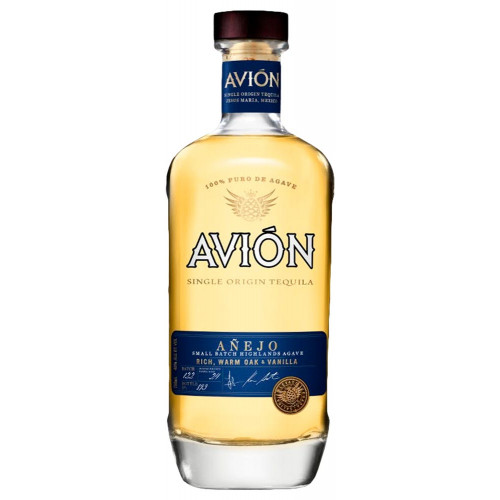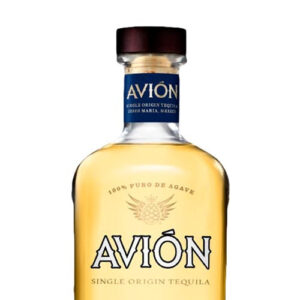
Avión Añejo Tequila

Avión Añejo Tequila — In-Depth Guide
This article dives into Avión Añejo Tequila — exploring what it is, how it’s made, tasting notes, common questions (what people “also ask” on Google), how to enjoy it, its strengths and weaknesses, and a final evaluation.
What is Avión Añejo Tequila — Basics & Background
- Type & Category: Avión Añejo is an aged tequila (“añejo” meaning “aged”). (Distiller – The Liquor Expert)
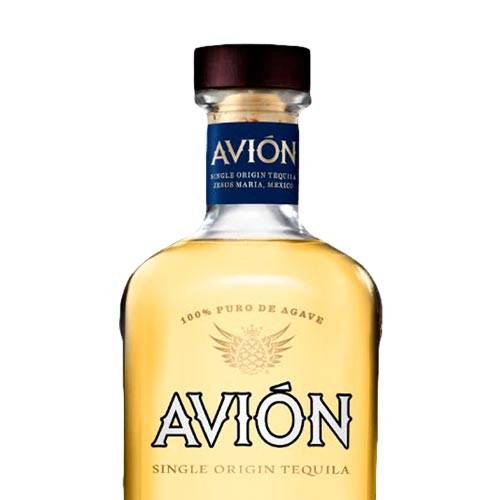
- Agave Source & Region: All agave used for Avión comes from a single origin: the town of Jesús María, located about 7,000 ft above sea level in the highlands region of Los Altos, Jalisco, Mexico. (Distiller – The Liquor Expert)
- Production Method: The tequila is distilled in small batches; the brand uses “stone/brick ovens” (rather than rapid industrial cooking) to roast the agave piñas — a traditional method associated with quality. (Tequila Matchmaker) Then it’s double-distilled in stainless-pot stills with copper coils. (Tequila Matchmaker)
- Aging: For the Añejo, Avión ages the tequila in ex-bourbon American oak barrels for 24 months (two years), which is double the minimum legal requirement for Añejo tequila. (Distiller – The Liquor Expert)
- Alcohol Content (ABV): Bottled at 40% ABV (80 proof). (Distiller – The Liquor Expert)
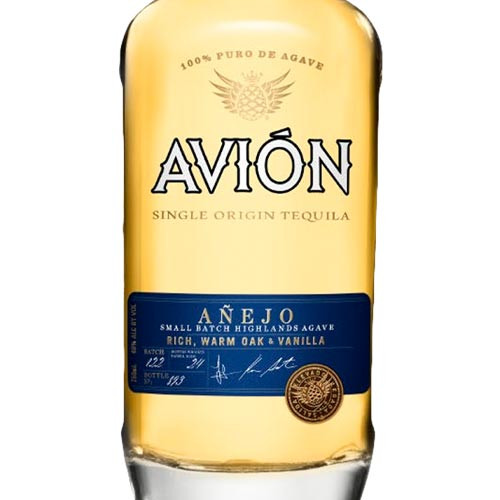
- Bottling & Presentation: The tequila is hand-filled, labeled with batch number and bottle number, and the bottle indicates the number of months aged. (Distiller – The Liquor Expert)
In short: Avión Añejo is a premium, small-batch, 100% agave tequila, aged two years in oak, designed to deliver both agave character and the complexity that comes from extended barrel aging.
How Avión Añejo is Made — From Agave to Bottle
Understanding the process helps explain why Añejo tastes the way it does.
- Agave cultivation: Blue Weber agave (Tequilana Weber) is grown in the high-altitude soils of Los Altos — known for producing agave with good sugar content, which helps yield richer, more complex tequila. (Tequila Matchmaker)
- Cooking / Roasting: The agave piñas are cooked in stone or brick ovens — a slower, more traditional method than autoclaving — which helps caramelize sugars and develop deeper agave flavors rather than vegetal or harsh notes. (Tequila Matchmaker)
- Milling & Fermentation: After roasting, the agave is milled (roller mill), then fermented (open-air, stainless steel tanks, without fibers), using 100% agave and deep well water. (Tequila Matchmaker)
- Double Distillation: Distilled twice in stainless pot stills with copper coils — standard for high-quality tequilas — to purify while preserving agave character. (Tequila Matchmaker)
- Aging in Oak Barrels: The distilled spirit is aged in American white oak ex-bourbon barrels for 24 months. This barrel aging imparts color (amber/golden), wood-derived flavors (vanilla, caramel, oak), and softens/agrees the spirit. (Distiller – The Liquor Expert)
- Filtration & Bottling: Avión applies a “proprietary ultra-slow filtration,” then bottles by hand, labeling batch info and age. (Distiller – The Liquor Expert)
This combination of traditional agave cultivation, careful cooking, small-batch distillation and extended aging aims to produce a tequila that balances agave authenticity with mature, refined character.
Flavor Profile & Tasting Notes — What Does Avión Añejo Taste Like?
Based on tasting reports, expert reviews, and aggregated flavor-profiles, here’s how Avión Añejo tends to present.
Appearance
- In the glass, Avión Añejo typically has a rich amber / golden hue — a result of two years in oak barrels. (Spirits Review)
Aroma (Nose)
Common aroma notes described by reviewers:
- Cooked / roasted agave — a reminder of its agave origin despite barrel aging. (Tequila Matchmaker)
- Vanilla and caramel — sweet wood-derived scent from the oak. (Tequila Matchmaker)
- Oak / wood / toasted wood / char / leather — barrel influence brings woody, slightly smoky or charred notes. (Spirits Review)
- Fruity and sweet accents — some detect peach, dried fruit, persimmon, or cherry/apricot aromas, giving a soft fruitiness layered with wood. (Distiller – The Liquor Expert)
- Spice and herbs — light pepperiness, cinnamon or subtle spice, and sometimes herbal or earthy undertones. (Tequila Matchmaker)
Palate (Taste)
On the palate, Avión Añejo shows a complex interplay of flavors:
- Sweetness and smoothness: vanilla, caramel, butterscotch/caramel-butter, maple-like warmth. (Country Wine & Spirits)
- Cooked agave and wood: roasted agave character still evident, complemented by oak, toasted wood, light char — giving a robust foundation rather than purely sweet spirit. (Spirits Review)
- Dried or stewed fruit notes: dried fruits, perhaps figs or raisins; fruity sweetness like peach/apricot/cherry on some sips. (Tequila Matchmaker)
- Spice, earthiness, subtle complexity: pepper, light cinnamon or woody spice, subtle herbal or earthy finish to balance sweetness. (Tequila Matchmaker)
- Mouthfeel & Finish: Rich, slightly oily or round body; smoothness; long finish with oak, caramel/vanilla fade, maybe coconut or maple-ish warmth, perhaps a hint of leather, tobacco, or char — giving a near-scotch-/whiskey-like depth for tequila. (Spirits Review)
One reviewer described it as almost like “a single-malt of tequila” — with body, complexity, and a scotch-like character, but still unmistakably agave-origin. (Spirits Review) Another more concrete breakdown from tasting platforms lists typical aromas/flavors as vanilla, caramel, cooked agave, oak, pepper, butter, peach, coconut, cinnamon — giving a rich, layered profile. (Tequila Matchmaker)
“People Also Ask” — Common Questions & Answers About Avión Añejo
Here are recurring questions people search for online when they look up “Avión Añejo,” along with concise answers.
Q: What is Avión Añejo made from?
A: Avión Añejo is made from 100% Blue Weber agave. The agave is grown in a high-altitude region (Jesús María, Los Altos, Jalisco), cooked in stone/brick ovens, double-distilled in small batches, then aged in ex-bourbon American oak barrels for 24 months. (Distiller – The Liquor Expert)
Q: How long is Avión Añejo aged?
A: 24 months (two years) in American white oak ex-bourbon barrels — longer than many Añejo tequilas (which often use the minimum of one year). (Distiller – The Liquor Expert)
Q: What is the alcohol content of Avión Añejo?
A: 40% ABV (80 proof). (Distiller – The Liquor Expert)
Q: What does Avión Añejo taste like? / What are its flavor notes?
A: On the nose and palate: cooked/roasted agave, oak / toasted wood, vanilla, caramel or butterscotch, dried fruit (peach, apricot, persimmon, cherry), touches of pepper or spice, subtle herbal/earthy undertones, a rich smooth body — finishing with oak, caramel/vanilla, maybe leather, tobacco, or char. (Spirits Review)
Q: Is Avión Añejo good neat, on the rocks, or for cocktails?
A: It’s suitable for all three: neat, on ice (rocks), or in cocktails. Its depth, smoothness, and complexity make it a fine sipping tequila — but it’s also rich enough to substitute whiskey or bourbon in spirit-forward cocktails (e.g. Old Fashioned). (Caskers)
Q: What makes Avión Añejo different from other tequilas?
A: Several factors: single-origin highland agave (Los Altos), traditional slow cooking (stone-oven), small-batch double distillation, and two-year aging in ex-bourbon oak barrels. This combination aims for a refined, complex, smooth tequila that balances agave heritage with barrel-aged richness. (Distiller – The Liquor Expert)
Q: What kind of flavors/aromas should I expect when opening a bottle?
A: Expect roasted agave aromas underscored by oak, vanilla, caramel — possibly dried fruit or peach/apricot notes, light char or leather, subtle pepper or spice, and a rich, woody character. On the palate: smooth, sweetish yet balanced — wood, vanilla, caramel, cooked agave, fruit or dried fruit undertones, with a long, warm finish. (Tequila Matchmaker)
Reception, Reviews, Strengths & Criticisms
No spirit is universally loved; here is a balanced view of what drinkers and critics tend to appreciate about Avión Añejo — and what some see as its weaknesses.
✅ What people tend to like
- Richness and complexity: Many appreciate that Avión Añejo delivers more than a simple “sweet tequila” — its blend of agave character, oak, fruit, spice, and warmth gives it depth often compared to fine whiskey or single malt. (Spirits Review)
- Smoothness and drinkability: The two-year aging softens harsh edges; the finish tends to be smooth, with pleasant warmth rather than sharp burn — making it appealing even for those newer to aged tequila. (Caskers)
- Versatility: It works well neat, on ice, or in cocktails — a flexible spirit for both casual sipping and more refined drinking. (Manila Wine)
- Satisfying “adult” tequila: For drinkers accustomed to whiskey or cognac, Avión Añejo bridges some of that world — offering woody, caramel, leather, tobacco-like notes along with agave — attractive to those wanting aged tequila beyond basic reposado. (Spirits Review)
- Quality production values: Single-origin agave, traditional cooking, small-batch distillation, extended aging — mark it as a “craft” or “premium” tequila rather than a mass-market blend. (Tequila Matchmaker)
⚠️ Criticisms & What Some Drinkers Don’t Prefer
- Some find it sweet or “bourbon-like”: Because of the heavy influence of oak and barrel aging, some drinkers note vanilla/caramel/wood-forward profile — which may blur the agave character for purists seeking vegetal, peppery, agave-heavy tequila. (Distiller – The Liquor Expert)
- Not as “old-world” or “traditional” as some niche/high-end tequilas: While aging improves smoothness, it may drift away from the raw, earthy, herbal tones of blanco or less-aged tequilas — which some aficionados prefer.
- Variability in taste perception: Because of aging and barrel influence, some tastings highlight fruitiness (peach, apricot), others highlight wood/vanilla/char — which means different drinkers may have different expectations and experiences.
- Pricing can be on the higher side compared to basic tequilas: As a premium/aged expression it tends to cost more — which may not appeal if you want a basic cocktail tequila. (CaskCartel.com)
Overall: critics of Avión Añejo are mostly those seeking more “agave-forward,” traditional style tequilas — while fans appreciate the balance of agave + barrel influences and smooth, complex sipping profile.
How to Enjoy Avión Añejo — Recommended Serving & Cocktails
Given its flavor profile and sophistication, here are good ways to enjoy Avión Añejo:
🥃 Best Straight or Simple Serves
- Neat (room-temperature or slightly chilled) — ideal to appreciate aroma complexity (agave, oak, caramel, fruit) and smooth finish.
- On the rocks (large ice cube) — cooling and slightly diluting without overwhelming — helps open up subtle flavors (wood, caramel, dried fruit).
🍸 Cocktails & Mixed Drinks
Although aged tequila is often enjoyed neat, Avión Añejo can substitute for whiskey or bourbon in many cocktails. Examples:
- Tequila Old Fashioned — Avión Añejo, a dash of simple syrup (or agave syrup), a couple dashes of bitters (citrus or chocolate), stirred with ice, served over a large ice cube with orange twist. This play brings out the oak, vanilla, caramel, and agave body nicely. (Manila Wine)
- Reposado-style cocktails but richer — for cocktails where you’d use watered-down aged spirits (e.g. highball, tequila & tonic, or tequila-whiskey hybrids), Añejo adds depth and warmth rather than a harsh burn. (Manila Wine)
- Sipping-after-dinner — Añejo’s sweetness, oak, caramel and dried fruit notes pair well with dark chocolate, cigars (for those who partake), or desserts — making it a “digestif” alternative to whiskey or cognac.
🍽️ Pairing with Food
Because of its complexity and barrel influence, Avión Añejo can pair especially well with:
- Rich meats (grilled steak, smoked ribs) — wood & char notes complement the smokiness.
- Spiced dishes or smoky flavors — oak and agave interplay well with earthy or peppery cuisine.
- Desserts — especially chocolate, caramel, nuts — enhancing the vanilla/caramel/dried-fruit profile of the tequila.
Why Avión Añejo Matters — Its Place in the Tequila Landscape
Avión Añejo occupies a meaningful slot among tequilas for several reasons:
- Bridge between agave tradition and aged spirit refinement: It maintains agave authenticity but layers in complexity from long oak aging — attractive for those who want more than just a “white tequila” experience.
- Accessible premium: Compared to ultra-rare or ultra-luxury tequilas (or expensive extra-añejos), Avión offers a quality aged tequila at a more approachable price point — making aged tequila less of a niche indulgence.
- Versatility for different drinkers: Whether you’re coming from a whiskey/congnac background or from cocktail-mixing context — Añejo works both neat and as cocktail base.
- Craft/Small-batch credentials within a broader brand: Although not a tiny distillery, Avión’s methods (single-origin agave, traditional cooking, small-batch distillation, 2-year aging, careful bottling) give it a more craft-spirits feel than mass-produced tequilas.
Thus, Avión Añejo can act as a “gateway aged tequila” for people transitioning from lighter/fresher tequilas — or as a reliable aged choice for experienced drinkers who want consistency, quality, and versatility.
Potential Drawbacks & What to Keep in Mind
No spirit is perfect — and depending on what you like in tequila, Avión Añejo might not be ideal. Consider these trade-offs:
- Barrel influence may mask agave — lovers of raw agave flavor, vegetal notes, peppery bite or herbal complexity might find the strong oak/vanilla/caramel profile shifts the spirit away from traditional tequila character.
- Less “old world” character than some boutique or very aged tequilas — some premium tequilas aged longer (extra-añejos, single-barrel, or artisanal bottlings) might deliver deeper complexity than Avión’s two years.
- Price vs taste expectations — as a mid-premium aged tequila, it’s pricier than basic brands; some drinkers may expect more complexity than it delivers, especially compared to ultra-high end tequilas.
- Variability of flavor perception — depending on batch, barrel, storage, and personal palate, some may find wood too dominant, or fruit/spice notes too subtle — taste experience can vary.
In short: if you want a “pure agave blast,” or ultra-long barrel-aged depth — you may want other tequilas. But if you want balance, smoothness, approachability and versatility — Avión Añejo performs well.
Conclusion — Is Avión Añejo Worth It?
Avión Añejo Tequila stands as a well-crafted, balanced, and versatile aged tequila that offers a premium experience without venturing into the “ultra-luxury” price tiers. With its high-altitude agave, traditional cooking, small-batch distillation, and two-year oak aging, it succeeds in bridging the world between agave-pure tequila and barrel-aged spirit.
For drinkers who appreciate a smooth, rich, layered tequila — with notes of vanilla, caramel, toasted oak, dried fruit, and a warm, long finish — Avión Añejo is a strong choice. It caters to whiskey drinkers, tequila newcomers exploring aged expressions, and cocktail fans who want a spirit-forward but agave-based drink.
That said, if your preference runs toward raw, vegetal, peppery, agave-heavy tequilas, or very long barrel-aged, ultra-complex bottles, Avión Añejo might feel a bit “safe,” “sweet,” or “bourbon-like.”
In my view: Avión Añejo is best appreciated as a versatile, well-rounded “everyday premium” aged tequila — one that’s as at home neat as it is in a cocktail, and that offers an accessible gateway into the more refined side of agave spirits.
If you like — I can pull up 5–10 tequilas similar to Avión Añejo (other añejos or aged tequilas) — with tasting notes and price range, so you can see alternatives if you decide to explore more.

Clase Azul Joven Limited Pink Edition Tequila 


Reviews
There are no reviews yet.