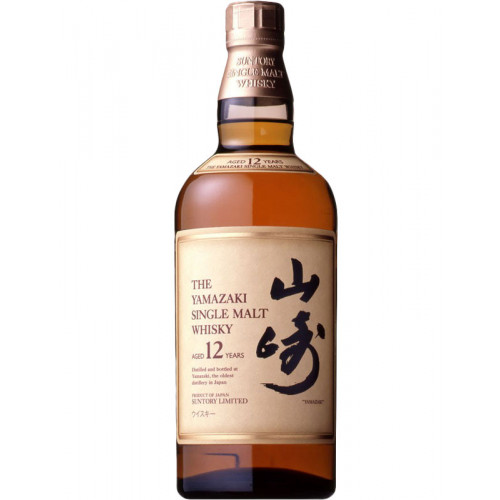
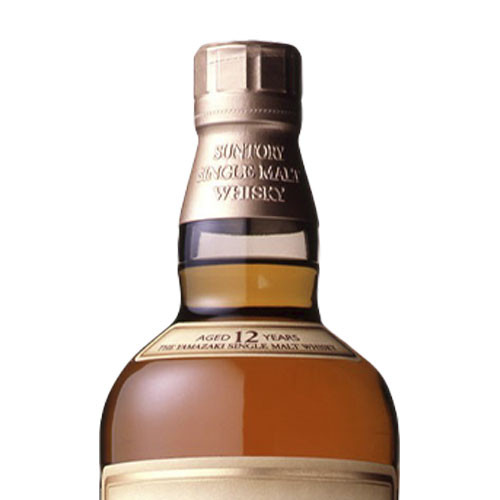
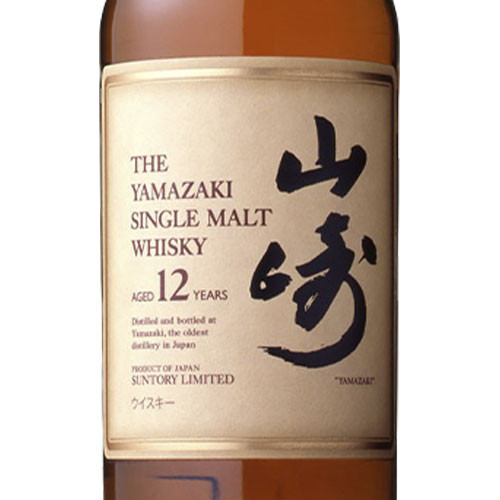
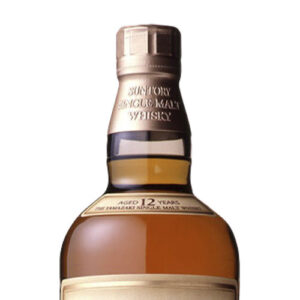
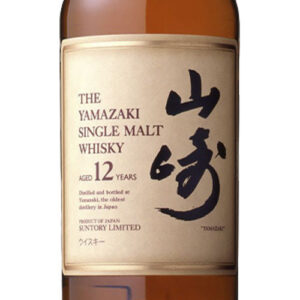
Yamazaki 12 Year Old Single Malt Whisky
Yamazaki 12 Year Old Single Malt Whisky: An Overview
Yamazaki 12 is one of the most iconic Japanese single malts. Produced by Suntory at the Yamazaki Distillery (Japan’s first and oldest malt whisky distillery, founded in 1923), it has become something of a benchmark whisky for many lovers around the world. (House of Suntory)
Here are some of the essential characteristics:
- Type: Single Malt Japanese Whisky (House of Suntory)
- Age Statement: 12 years (House of Suntory)
- ABV (Alcohol by Volume): 43% (Distiller – The Liquor Expert)
- Cask Types / Maturation: A blend of whiskies matured in different types of casks including ex‑bourbon (American oak), Spanish oloroso sherry casks, and Japanese Mizunara oak. (Distiller – The Liquor Expert)
- Colour & Appearance: “Pure gold” or light gold in many official notes. (House of Suntory)
It is considered one of Suntory’s flagship expressions and has played an important role in bringing Japanese whisky to international prominence. (Men’s Journal)
History & Production
Origins & Distillery
- Yamazaki distillery was founded in 1923 by Shinjiro Torii. It was the first malt whisky distillery in Japan. (Men’s Journal)
- Taketsuru Masataka was involved early in the process—he studied whisky making in Scotland and contributed to Yamazaki’s early development before eventually founding his own distillery (Nikka). (Men’s Journal)
Introduction of Yamazaki 12
- Yamazaki 12 was first released in 1984. (Men’s Journal)
- For many years, it was labelled as a “pure malt” (a term used in Japanese whisky that is roughly analogous to single malt) before adopting the more globally recognized “single malt” terminology. (Men’s Journal)
Maturation & Climate & Cask Influence
- The whisky is matured in multiple cask types: American bourbon barrels, Spanish sherry casks (oloroso), and Japanese Mizunara oak. Each contributes different flavor components. (Distiller – The Liquor Expert)
- The Yamazaki distillery is located in a very particular environment—at the outskirts of Kyoto, in a region with distinct seasons, humidity, mist, etc.—which helps ageing. The changing climate, temperature swings, etc., influence how the whisky interacts with its casks. (OldGrogram)
Tasting Profile
Below are the tasting notes (nose, palate, finish) drawn from official sources and independent reviewers; I include variations and subtleties that people often notice.
| Aspect | Common Descriptions |
|---|---|
| Nose / Aroma | Peach, pineapple, grapefruit, candied orange, vanilla, Mizunara oak; some clove and other spices. (House of Suntory) More subtle perfumes: honeysuckle, floral blossoms, honey, orchard fruits. (My Site) |
| Palate / Taste | Smooth and fruit‑forward: orchard fruits, citrus, some tropical notes; butteriness; vanilla; toffee; sweet spices (cinnamon etc.); sometimes coconut or cream. (House of Suntory) |
| Finish | Sweet ginger, cinnamon; long finish; gentle wood influence; sometimes lingering fruit, some cedar, maybe dry oak tones. (House of Suntory) |
Some reviewers note “medium body” and a clean finish, which many find satisfying rather than overwhelming. (The Whisky Exchange)
People Also Ask (FAQ)
Here are frequently asked questions about Yamazaki 12, along with informed answers.
1. What is Yamazaki 12 Year Old whisky?
Answer: Yamazaki 12 is a single malt Japanese whisky produced by Suntory at the Yamazaki Distillery. It is matured for 12 years and made using malted barley, copper pot stills, and a variety of casks (American bourbon, Spanish sherry, Japanese Mizunara oak), which give it a complex flavor profile. It is seen as one of the core Japanese malts and often used as a reference point for Japanese whisky style. (House of Suntory)
2. How does Yamazaki 12 differ from Scotch whiskies?
Answer: There are several differences:
- Cask profile: Use of Mizunara (Japanese oak) is a significant differentiator; Scotch rarely uses this. Mizunara imparts distinctive aromas (sandalwood, incense, exotic wood). (Distiller – The Liquor Expert)
- Climate / ageing: Yamazaki’s location, climate, humidity, temperature shifts contribute to how the whisky matures differently from Scotch regions. Some maturation is faster in warm or humid climates.
- Flavor style: Yamazaki tends to emphasize fruit (peach, citrus, orchard fruits), subtle sweetness, elegant wood/spice, and balance rather than the peat, smoke, heavy malt sometimes associated with many Scotch malts.
- Cultural / blending philosophy: Japanese whisky making has a strong tradition of blending different casks to achieve a harmonious result, with a high attention to subtlety and refinement. Yamazaki 12 is a good example of that.
3. How much does Yamazaki 12 cost?
Answer: Prices vary a lot depending on country, availability, and demand. Here are some example price ranges:
- Some retailers list it around US$130 under ideal conditions. (secretwhiskeysociety.com)
- In other regions, due to scarcity or import duties, significantly more. Some whisky bars or specialty shops charge much higher. People have noted price increases in recent years. (Reddit)
Because Yamazaki 12 has become highly sought after, especially outside Japan, the secondary market sometimes pushes its price well above the original retail in many places.
4. Is Yamazaki 12 worth the hype?
Answer: That depends on what you value.
- Yes, if you appreciate whisky of subtle complexity, good balance, elegance, and want an introduction or experience of Japanese single malt. For many, Yamazaki 12 delivers very well in those respects.
- Maybe less, if you are looking for very bold/peaty whiskies, or want maximum intensity, or are very price‑sensitive. Because scarcity has pushed up price, the cost‑benefit for some may be less appealing now.
Many reviewers believe it still offers excellent value when purchased at a reasonable price, given its craftsmanship, flavor layers, and prestige. (Seattle Spirits Society)
5. How should one drink Yamazaki 12? Neat, with water, or on ice?
Answer:
- Neat is often recommended to fully appreciate the aromas and flavor profile.
- A few drops of water might open up some of the aromatics, especially wood, spices, and reveal subtle notes.
- On ice may slightly diminish some of the delicate aromas and flavors, particularly from Mizunara oak and the fruit notes. But in warm climates or casually, ice is acceptable.
- Also good in a proper whisky glass (e.g. Glencairn or equivalent) that helps concentrate aroma.
6. What are its tasting notes?
Answer: Summing from official sources and many independent tastings, the key notes include:
- Nose: Peach, pineapple, grapefruit, candied orange, clove, vanilla, Mizunara oak, sometimes honey, floral blossoms. (House of Suntory)
- Palate: Coconut, cranberry, butter, vanilla, orchard fruits, sweet spices (ginger, cinnamon). Some richness from sherry/or oloroso casks, subtle wood influence from Mizunara. (House of Suntory)
- Finish: Long, with sweet ginger, cinnamon; lingering fruits and wood, often clean, elegant. (House of Suntory)
7. Is Yamazaki 12 still available?
Answer: In many markets, availability is limited. Due to high demand, import constraints, and sometimes reduced allocations, bottles of Yamazaki 12 are harder to come by. Sometimes it’s out of stock or sold at premium prices. In Japan it may be more accessible. So, whether you can find it depends heavily on region and retailer.
8. How many casks / what proportions are used in the blend?
Answer: The exact proportions of the various cask types (bourbon, oloroso sherry, Mizunara) are not publicly disclosed in detail by Suntory. What is known is that the whisky is a blend of components matured in those kinds of casks, which gives Yamazaki 12 its layered profile. The Mizunara oak is normally a smaller part (since Mizunara is expensive, rare, and sensitive to the climate) but makes an important aromatic contribution. (Distiller – The Liquor Expert)
9. Has Yamazaki 12 won awards?
Answer: Yes. Yamazaki 12 has won a number of awards over the years.
- Gold Medal at the International Spirits Challenge in 2010. (Whiskay – Rare & Exclusive Whiskies)
- Double Gold in the San Francisco World Spirits Competition (noted in listings). (donpanko.com)
- More recently, recognition at global competitions. Suntory often highlights its whisky’s awards. (House of Suntory)
10. How has the price/trend changed over time?
Answer: Some observations:
- The price has gone up significantly in many markets, both due to demand and scarcity. Many collectors and drinkers comment that what used to be affordable has become costly. (Reddit)
- Because Japanese whisky has become more popular globally, and supply (especially of age‑statement whisky) is limited, this puts upward pressure on price.
- Secondary market / resale prices tend to be significantly higher than official retail price in many places where imports are taxed heavily or allocation is small.
Strengths & Criticisms
Here are the pros and cons, as gathered from reviews and whisky‑lover commentary.
Strengths
- Balance & Harmony: One of the main appeals is how well the different cask influences are balanced. Citrus, fruit, wood, spice — nothing overwhelmingly dominates. For many, that’s the beauty. (The Whisky Exchange)
- Elegance and subtlety: Yamazaki 12 is praised for being refined, with aromas/aromas that evolve in the glass. Good for sipping, reflecting, rather than bludgeoning. (The Whiskyphiles)
- Cultural importance: As one of the pioneer Japanese single malts with international presence, Yamazaki 12 has symbolic as well as sensory value. Importantly, it helped put Japanese malt whisky on the map. (Men’s Journal)
- Quality of craftsmanship: The use of various cask types, including rare Mizunara, the care in maturation, Suntory’s history and experience, all contribute to a high‑quality product.
Criticisms / Weaknesses
- Price inflation / cost: Many reviews and consumers say that while the whisky is excellent, at high price points it can be hard to justify relative to other whiskies (Scotch, etc.) offering strong value. As scarcity increases, so do prices. (Reddit)
- Some feel it lacks boldness: For drinkers who prefer very peaty, smoky whiskies, or extremely heavy cask influence, Yamazaki 12 may be too delicate or mild. The subtlety that many praise may be a downside for others.
- Variability / bottle‑to‑bottle differences: Due to blending of many casks, there may be variation across batches or bottles, especially as some older stock becomes scarcer. Some consumer reviews hint that sometimes the intensity or sweetness is more muted. (Reddit)
- Shorter finish for some: Though many find the finish satisfying, others feel that compared to higher age statements or very premium whiskies, the finish lacks extreme length or weight.
Pricing & Availability (More Detail)
Because Yamazaki 12 is somewhat premium and allocation can be limited, here’s more on how much people may expect to pay, and where.
- Official retail in some markets (when not marked up heavily) is lower, but “street price” can be much higher.
- In Japan, especially near distillery or in domestic market, bottles may still be somewhat more accessible or less expensive compared to export markets.
- In Europe, North America, etc., import duties, taxes, retailer margins add substantially.
- Limited stock, high demand, collector interest often lead to secondary market prices that significantly exceed original MSRP.
If you’re looking to buy, it’s good to compare multiple retailers, watch for special promotions or stock drops, consider buying in Japan if traveling, or via duty free (if legal / cost‑effective).
Comparisons & Similar Whiskies
It’s useful to see Yamazaki 12 in context with alternatives, to judge how it stacks up.
- Versus other Japanese malts: Yamazaki 18, Yamazaki Sherry Cask, Hakushu 12, etc. These tend to be more expensive, more intense or with different flavor focuses. For someone who likes Yamazaki 12, stepping up to Yamazaki 18 or a special cask version brings more depth but also higher cost.
- Versus Scotch malts: Malt whiskies from Speyside, Highlands, etc., offer fruit‑forward or oak‑forward characters; some are more heavily peated. Yamazaki 12 often offers a middle ground: fruit, oak, spice, but generally less smoke. For those used to Scotch, Yamazaki 12 might seem lighter, more floral or delicate.
- Versus single malt from other regions: Some California, Australian, or other world whiskies are also doing well. But Yamazaki 12 remains a benchmark for Japanese style.
“People Also Ask” — Extended Q&A
Here are more niche or detailed questions that people sometimes ask, with answers:
Q: What kind of water is used in Yamazaki whisky?
A: Yamazaki distillery uses water from its surrounding region. Water quality is central in whisky production. Yamazaki is located in a valley with mist, mountain springs, etc. While Suntory doesn’t always publish detailed mineral content publicly in every source, the purity and characteristics of the water (softness, mineral composition) are part of what people cite when describing its mellow mouthfeel and clean finish. (OldGrogram)
Q: How much Mizunara oak influence is in Yamazaki 12?
A: Exact proportion is not publicly disclosed. Mizunara casks are expensive, rare, and slow‑maturing, so they are used in smaller amounts. But their aromatic impact can be large even in small contribution — giving sandalwood, incense, exotic wood tones, that enhance the complexity and give the whisky part of its Japanese character. (Distiller – The Liquor Expert)
Q: Does Yamazaki 12 use peated barley / smoke?
A: No, typically Yamazaki 12 is not heavily peated. Japanese whisky tends to use non‑peated malt or very lightly peated malt in many expressions, unless explicitly stated. Yamazaki 12’s flavor is more about fruit, wood, spice, and subtle wood influence rather than heavy smoke or peat. Some finish might suggest incense‑like or slight woody char, but that is different from strong peat smoke. (Distiller – The Liquor Expert)
Q: What food pairings go well with Yamazaki 12?
A: Because of its fruit, light spice, and wood flavors, some good pairing ideas include:
- Light desserts (fruit tarts, citrus‑based, vanilla custard)
- Cheese platters with softer cheeses (brie, camembert) or mild washed rind cheeses
- Sushi or lightly flavored seafood (in Japan, pairing whisky with certain small bites is popular; note that Yamazaki also has domestic pairing culture)
- Dark chocolate with fruity or nutty components
- Autumn fruits (pear, apple, peach) or fruit compote
Pairings that don’t overpower the whisky’s delicate and refined profile tend to work best.
Q: How should one store Yamazaki 12?
A: Basic good whisky storage applies:
- Keep the bottle upright (to protect cork and avoid whisky‑cork interaction)
- Protect from direct sunlight or strong light (especially UV) which can degrade flavour compounds
- Keep in a stable temperature environment, avoiding large swings in heat/cold, or extremes of temperature. (Too hot hastens deterioration; too cold may slow aroma release)
- Once opened, try to consume over some time; as the liquid level drops, headspace increases, oxygen interacts more, more flavour degradation may occur.
Q: Does Yamazaki 12 improve with time once opened?
A: As with most whiskies, five factors matter: storage, bottle volume, headspace, cork integrity, temperature/light. The whisky will not “age” like it does in cask; but flavor changes (oxidation, evaporation, etc.) will gradually alter aroma and taste. Usually, opened bottles retain good quality for several months to a few years if well stored, but subtle notes (especially wood, light fruit, floral) might fade or flatten. So yes, you may notice small changes over time; but improvements beyond what was bottled are unlikely.
Current Market & Trends
- Yamazaki 12 has become harder to find in many markets due to high demand, limited supply, especially age‑statement Japanese single malts.
- Prices have been increasing. What once may have retailed at moderately premium levels now often commands much higher prices in secondary markets or in places with limited import supply.
- Suntory has expanded production capacity (adding pot stills etc.) but ageing stock takes time; so there is often a lag between demand growth and supply growth. (Whisky Antique, Whisky & Spirits)
- Some whisky enthusiasts express concern about whether Yamazaki 12 will continue to be produced with the same flavour profile as stocks age, or whether allocation will be tighter and some older stock used for higher age expressions.
Conclusion
Yamazaki 12 Year Old Single Malt Whisky is a landmark expression in the Japanese whisky world. It manages to combine:
- heritage (oldest malt distillery, nearly a century of whisky‑making)
- craftsmanship (careful cask selection, blending, attention to climate and maturation)
- taste and elegance (a flavour profile that is fruit‑driven, balanced, nuanced, not overly aggressive)
For many whisky lovers, Yamazaki 12 is “a benchmark” — not necessarily because it is the most intense or the most unique, but because it delivers consistency, refinement, and a distinct Japanese character that is both approachable and rich enough to reward repeated tastings.
However, there are caveats: its increasing price means that what was once considered very good value may now feel less so; for those seeking bold peat, smoke, or heavy cask character, it may feel subtle rather than spectacular. Also, availability is increasingly limited, which raises both cost and potential frustration in acquiring it.
If you’re considering purchasing Yamazaki 12:
- Try to find it at a “reasonable” price (i.e. compare multiple sellers)
- Taste it neat first, possibly with a drop of water to open up aroma
- Store carefully
- Savour it slowly, and enjoy what it offers (balance, elegance) rather than expecting extremes
In sum, Yamazaki 12 remains one of the most prestigious and rewarding Japanese single malts available. It may not scream for attention in the same way as heavily peated or bold whiskies, but its whisper is a refined one — one that many whisky lovers want to hear.

Whitley Neill Rhubarb & Ginger Handcrafted Gin
Tobermory 42 Year Old Islay Single Malt Scotch Whisky 


Reviews
There are no reviews yet.