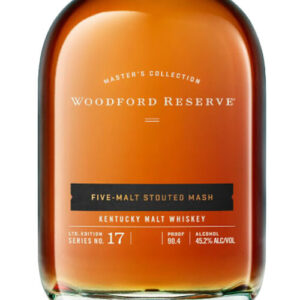
Woodford Reserve Master’s Collection Five-Malt Stouted Mash Whiskey
Introduction
Woodford Reserve’s Master’s Collection is a line of limited‑edition experimental expressions produced by Woodford Reserve, Kentucky. Their Winter 2021 release (Master’s Collection Series No. 17) is Five‑Malt Stouted Mash, which takes a creative leap by bringing influences from the world of stout beer into a malt whiskey. It is intended for whiskey drinkers who like something different, who enjoy roasted malts, darker grain profiles, and a mash bill / flavor approach that evokes rich stout beers.
In this article, I’ll cover:
- The background and production process
- Tasting profile (nose, palate, finish)
- Technical details (proof, mash, barrels, etc.)
- What people are asking / curious about (FAQ style)
- Strengths & weaknesses
- Comparisons to similar whiskies or beer‑whisky crossover ideas
- Market, price, value
- Conclusion
1. Background / Production
Woodford Reserve & the Master’s Collection
Woodford Reserve is owned by Brown‑Forman, located in Kentucky, USA. Its distillery has a long heritage, with innovation in bourbon & malt whiskey, and the Master’s Collection line is their experimental series: each release tends to explore a theme, mash variation, finishing approach, barrel type, or other twist. The aim is to push boundaries of what their whiskey can do beyond standard Bourbon or Straight Malt profiles. (HuntBourbon.com)
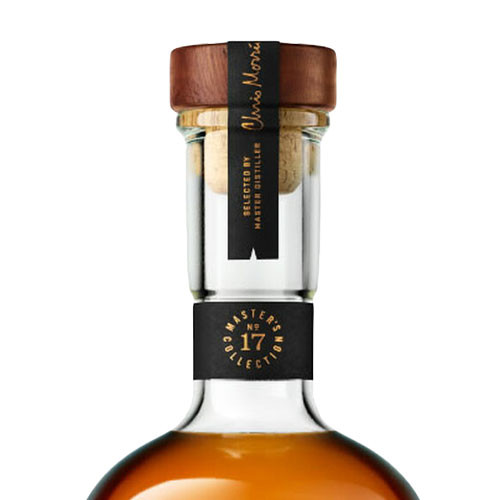
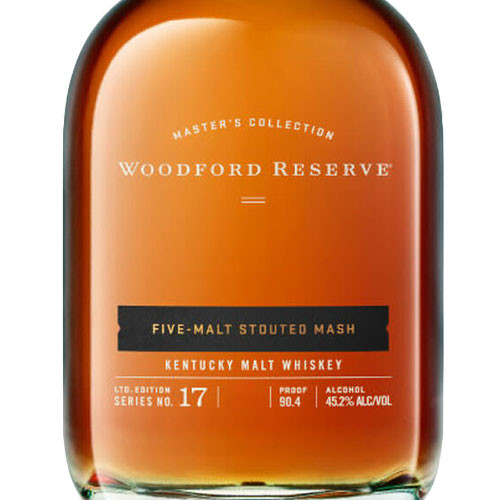
“Five‑Malt Stouted Mash” is the 17th edition in the Master’s Collection. It was released in Winter 2021 (in the U.S.), priced at suggested retail US $129.99 for a 750 ml bottle. It also became available in select global markets later. (Bourbon Review)
The Concept / Inspiration
The idea behind it is to create a whiskey that reflects aspects of stout beer. In Kentucky, the raw mash (grain + water, fermentation) used for whiskey is sometimes called “distiller’s beer.” The distillers wanted to lean into that concept and the flavors of dark stout beer — roasty malts, chocolatey, possibly coffee‑like, rich malt backbone — but translate them into a malt whiskey. (The Whiskey Wash)
To that end, they used five distinct malted grains:
- Distiller’s malt (standard malted barley used in their malt whiskey)
- Wheat malt
- Pale chocolate malt
- Carafa 1 malt (a dark roasted malt/barley type often used in brewing for deep color/flavor)
- Kiln coffee malt (a roast malt with coffee influence) (Distiller – The Liquor Expert)
These darker roast malts (especially pale chocolate, Carafa 1, coffee malt) bring robust roast / dark grain flavor. The inclusion of wheat malt gives some softer texture or sweet/bready malt characteristics. All this is triple pot‑distilled (Woodford’s style) and then barreled in new, charred American oak barrels (as standard for many of their malt and bourbon‑style releases). (Distiller – The Liquor Expert)
Proof & Release Details
- Bottled at 90.4 proof (≈45.2% ABV). (Distiller – The Liquor Expert)
- Released in winter of 2021; in the US in December 2021, then later in other countries (Australia, etc.). (The Old Barrelhouse)
- Limited release, part of the annual Master’s Collection. It is not an age‑stated whiskey in the sense that Woodford does not specify the age of this expression (just that it’s malt and uses various malts + barrel aging). (The Whiskey Wash)
2. Tasting Profile
Here are the compiled tasting notes (nose, palate, finish), both official distillery notes and independent reviews. There is variation among drinkers: some like it, some are “meh” or negative; it is very experimental.
Appearance / Color
- Described as antique orange, copper‑amber, warm glowing with reddish tint. (Bourbon Review)
- In reviews, people note thick “tears” (legs) on the glass; medium viscosity. (The Whiskey Wash)
Nose / Aroma
Official notes:
- Roasted malt, toasted nuts
- Hints of milk chocolate
- Brightened with orange zest, spearmint
- Warm baking spices
- Oak, cherry cobbler, shortbread also in background. (Bourbon Review)
Independent impressions (The Whiskey Wash, reviewers):
- Smells like a brewery: roasted grain, processed grain, toasted multigrain bread. (The Whiskey Wash)
- Some caramel, chocolate, and bitterness from roast. Slightly malty but with roast dominating. (The Whiskey Wash)
Palate / Taste
Official medium:
- Malty with toasted hazelnut and cocoa highlights
- Layers of baked fruit
- Crisp spice and zest (e.g. orange or citrus) bouncing among the malt depth. (Bourbon Review)
From independent / community:
- Biscuit, toffee, barley flavors; sweet but tempered by roast bitterness and some citrus or “zest” for balance. (The Whiskey Wash)
- Some find a bitter or dry note; some HOP‑like bitterness is perceptible (though it is not hops, but roast malt can mimic some bitter / dark profiles). (The Whiskey Wash)
Finish
Official:
- Malt and cocoa notes linger. (Bourbon Review)
Reviewers:
- Some say finish is fairly long; the roast, dark chocolate, and cocoa linger, sometimes with an astringent edge or dryness from barrel / oak char. (Whiskybase)
- Others mention the finish becoming drier, or with less sweetness in later sips. (The Whiskey Wash)
Overall Mouthfeel
- Medium‑to‑full body; rich in flavor, though some reviewers feel it is lighter in texture than the flavor might suggest. (The Whiskey Wash)
- Some heat / slight astringency especially in the finish. (The Whiskey Wash)
3. Technical Details
Here is more of what is known or speculated about how this whiskey is made:
| Feature | Details / Known Info |
|---|---|
| Style | Kentucky Straight Malt Whiskey; malt only grains (no corn, etc.), with five types of malted grains. (Distiller – The Liquor Expert) |
| Mashbill / Malts used | Distiller’s malt, wheat malt, pale chocolate malt, Carafa 1 malt, kiln coffee malt. The latter three are darker roast malts. (Distiller – The Liquor Expert) |
| Distillation style | Triple pot stills (Woodford’s malt whiskey line and historical inspiration, influenced by “Irish style” references). (Bourbon Review) |
| Barrel / Aging | Charred new American oak barrels (standard for Woodford). The whiskey is aged; exact age not declared. (Distiller – The Liquor Expert) |
| Proof / ABV | 90.4 proof / 45.2% ABV. (Distiller – The Liquor Expert) |
| Release format | Limited release, part of a numbered series (No. 17), Winter 2021. MSRP ~$129.99 in U.S. for 750 ml bottle. (Bourbon Review) |
4. “People Also Ask” / FAQ Style Questions & Answers
Here are some commonly asked questions about this whiskey, with answers based on current knowledge.
Q: What does “stouted mash” mean?
A: “Stouted mash” is a term Woodford uses to indicate that the mash (grain mixture for fermentation) is treated in a way to mimic flavors found in stout beer: roasted malts, dark malts, chocolate, coffee notes, etc. It doesn’t mean they brewed beer, then aged whiskey in beer barrels necessarily; rather, they used roasted malts in the mash itself (including chocolate malt, Carafa 1 malt, and coffee malt) so that the raw distillers’ beer / mash has stout‑like flavor components before distillation. So “stouted mash” refers to the mash composition, not aging in stout barrels. (Distiller – The Liquor Expert)
Q: Is this whiskey more like beer or bourbon or malt whisky?
A: It is a malt whiskey (Kentucky Straight Malt Whiskey) — meaning only malted grains are used, no corn or other typical bourbon mash ingredients. So structurally, it is a malt whiskey. However, its flavor leanings (roasted malts, chocolate, coffee, stout‑beer character) make it more “beer‑ish” in flavor profile than many whiskeys. But it retains whiskey qualities: barrel aging, oak, finishing, proof, etc. It is not a beer, obviously; the fermentation / distillation / barrel aging process means many beer volatiles are stripped out.
So it is a whiskey that has strong beer‑inspired flavor ingredients (from the darkness of malt roast, etc.), not a beer.
Q: How does this differ from regular Woodford Reserve Malt Whiskey or their other Master’s Collection expressions?
A: Differences include:
- The mash bill: use of a blend of malted grains with darker roasted malts (pale chocolate malt, Carafa 1, coffee malt) is unusual; typical Woodford malts are more traditional malt barley with less roast.
- Flavor profile: dark roast, chocolate, coffee, more bitterness and stout‑like traits plus spices and fruit zest, as opposed to sweeter, lighter malt whiskies or bourbon variants.
- Experimental nature: this is more of a theme release, contrasting with standard non‑theme expressions. The Master’s Collection tends to push boundaries; this one is one of the more polarizing ones because of its unique flavor direction. Regular Woodford malt or bourbon is expected to be more conventional.
Q: Is the proof (45.2%) high or low compared to other similar releases?
A: It is moderate. 45.2% ABV (90.4 proof) is somewhat standard for premium whiskies and well past minimum barrel proof for many expressions. It gives enough alcohol to carry flavors but is not cask strength. Some drinkers looking for bold finishes or very spicy oak might expect higher proof; others may find this proof suitable to reveal flavors without overwhelming them. So it’s in the middle.
Q: What are some of the criticisms of this whiskey? What do people dislike?
A: From community reviews and Reddit threads, some criticisms include:
- Some people find the nose / flavor off‑putting: too roasted, bitter, or having unusual notes like “stale cereal,” “used coffee filter,” or “fishy” brine (though some of those might be subjective or idiosyncratic). (Reddit)
- Some expect something more balanced between sweet malt / roast / oak / fruit, but feel the roast / char dominates too strongly or overwhelms other flavor layers.
- Value concerns: at the $130 MSRP (and often higher in secondary / import markets), people expect a certain level of polish and consistency; some feel it does not deliver to that level.
- For people who prefer Bourbon or sweeter whiskies, this may be a departure — possibly unpleasant if it’s not what they like.
Q: Who might like this whiskey? Who might not?
A:
Likely to like if you:
- Enjoy dark beers or stouts, or flavors like roasted malts, chocolate, coffee, darker grains.
- Are interested in experimental whiskey, enjoy trying new mash bills or flavor twists.
- Tend to like malt whiskey, maybe Scotch or other malt whiskies with roast / smoke, even if you usually drink bourbon.
- Want something different from the usual bourbon or mellow malt profile.
Not likely to like if you:
- Prefer sweeter bourbon profiles, vanilla, fruity, light flavors without roast or bitterness.
- Dislike strong roast / dark malt, coffee, or burnt / charred flavors.
- Are very proof‑sensitive & want something smoother / lower ABV or more gentle.
- Dislike experimental releases which may lack consistency or may have odd notes that some find off‑putting.
Q: Is it worth the price / value for what you get?
A: As with many whiskey purchases, it depends on what you value.
If you appreciate experimental releases, unique flavor profiles, and want something “beer‑inspired malt whiskey,” this can be worth the price. For many reviewers, it delivers an interesting, if polarizing, experience. Some believe it’s “successful” as a creative exploration. (The Whiskey Wash)
However, if you want more typical bourbon or malt whisky with more conventional flavors, the cost may feel high relative to what you get. Also, in markets outside the U.S., taxes, shipping, etc., may inflate the retail cost, possibly making it less “worth it” depending on local price.
5. Strengths & Weaknesses
Here’s a breakdown of what this whiskey does well and where it may fall short.
Strengths
- Uniqueness / Experimental character: Very few mainstream American malt whiskies attempt to mimic stout beer mash flavor so directly. The use of five roast malts and coffee malt sets it apart.
- Complexity in roast / malt layers: The combination of different roasted malts, toasted nuts, cocoa, hazelnut, orange zest, etc., gives multiple flavor layers for those who enjoy roast and confectionary elements.
- Visual appeal: Color, legs / tears are praised; the bottle etc. is presented as a premium limited edition.
- Conversation piece / novelty: For whiskey enthusiasts, this is a bottle that invites discussion: “Did you try that ’stouted’ mash whiskey?” It pushes boundaries.
- Solid craftsmanship: Even if opinions vary, it’s made by experienced distillers (Chris Morris & Elizabeth McCall) in Woodford’s high‐quality facilities.
Weaknesses
- Polarizing flavor: The roast, bitterness, dark malts may be “too much” or “off” for many drinkers. Some find it unbalanced or find odd off‑notes (oxidation, “musty” or “stale” descriptors) in certain bottles.
- Proof / Finish clarity: At 45.2%, it’s not cask strength; some details might be muted compared to stronger releases. Some reviewers felt the finish or palate could be more vivid or extended.
- Price vs value concerns: For many, paying ~$130 (or more in some markets) for a release that is experimental and possibly inconsistent seems high. The risk is that being limited & novelty means secondary market (or what people are willing to pay) may overshoot perceived value.
- Potential expectation mismatch: If one expects a standard whiskey with mild roast or a bourbon lean, this will surprise, possibly disappoint. The name and marketing suggest stout‑like roast, but what one imagines might differ from what is delivered.
6. Comparisons & Similar Whiskies
To better understand where this stands, it’s helpful to compare it to similar whiskies or beer‑whiskey crossovers.
- Scotch / malt whiskies with chocolate malt / roasted barley influence: e.g. some peated malts or whiskies featuring dark roast barley or heavy malt profile. Though here, the source of roast is from malt rather than peat. For instance, whiskies like Dram’s “Signet” by Glenmorangie employ heavy roast. For someone who likes those, this Woodford might be interesting.
- American malt whiskies: There are fewer major mainstream examples; many malt whiskies are gentler / less roast. Woodford’s release pushes roast harder than many.
- Beer barrel finishes: Some whiskies are finished in barrels that held stout or beer; this is a different route (post‑distillation finishing) vs modifying the mash itself. The “stouted mash” approach is more integrated from the beginning.
- Other Master’s Collection releases: Many of the other releases explore themes (e.g. farm‑style, wheat influence, high‑rye, etc.). Compared to those, this one is among the more daring or divisive. If you like Woodford’s other theme releases, see how this fit your taste.
7. Market, Price, Value & Availability
Price
- In the U.S., suggested retail was US$129.99 for 750 ml. (Bourbon Review)
- But in many international markets, due to import duties, taxes, shipping, the price is often higher. For instance, in Australia or Europe, you often see significantly higher shelf prices (sometimes USD‑converted $200+). (The Old Barrelhouse)
Availability
- Limited release. Only in select markets (U.S. first, then other countries). Because of limited allocations, some places may have little or none. (Norfolk Wine & Spirits)
- It tends to be found in specialty whiskey shops / stores dealing in premium/limited editions.
Value Consideration
Whether one gets “value” depends on:
- Local price: if you can buy close to MSRP (or not too inflated above), the novelty and flavor might justify the cost.
- Your flavor preferences: if you love roast, dark malt, coffee, etc., you may extract more enjoyment per dollar. If you prefer lighter or sweeter whiskies, you may feel some notes to be flaws, reducing value.
- For collectors: limitedness, being part of the Master’s Collection, novelty could add some collector’s value.
8. What People Also Ask (More Questions)
Here are more queries people might have and their answers.
Q: Does this whiskey contain corn or typical bourbon mash elements?
A: No. It is a malt whiskey. The mash is composed of malted barley (in different roast levels including pale, chocolate, coffee, etc.) and wheat malt. So, unlike bourbon which has a large corn component, this is purely malted grains. (Distiller – The Liquor Expert)
Q: Is this whiskey aged for a specific number of years (age statement)?
A: It is not age‑stated. Woodford did not declare a specific age for this expression. They say “Kentucky Straight Malt Whiskey,” which implies minimum aging (by U.S. law), but not a specific many‑year age. Some community reviewers speculate that it may be younger whiskey or mixed ages, but no official age statement. (The Whiskey Wash)
Q: What malt types are in the mash, and what do they contribute?
A: The five malts are:
- Distiller’s malt (baseline malt; typical malted barley for whiskey) – gives core malt, cereal, grain sweetness and structure.
- Wheat malt – adds softness, perhaps bread/cracker notes, some creaminess.
- Pale chocolate malt – relatively lighter roast, cocoa or chocolate tones, toffee.
- Carafa 1 malt – darker roast malt used in brewing to give dark color, roasty / chocolate / burnt‑coffee notes, sometimes bitter dark malt edge.
- Kiln coffee malt – malt roasted to produce coffee knee or coffee‑like flavors. Adds dark roast aroma + flavor. (Distiller – The Liquor Expert)
Each adds complexity; together, they aim to evoke a stout beer’s malt backbone, layered roast, and chocolate/coffee sweetness.
Q: Is it similar to a whiskey aged in stout barrels?
A: Not exactly. When whiskey is aged in barrels that previously held stout beer (or soaked in beer), you get flavors imparted by the barrel (beer remnants, sugars, some yeast/beer character). In Five‑Malt Stouted Mash, the flavor inspiration is built into the mash itself via roast malts, before distillation. This gives a more integrated roast malt character, rather than simply a finish or barrel influence. So it’s more like starting with stout‑like ingredients, rather than finishing in stout barrels. If you’ve tried beer barrel finished whiskies, the experience may overlap somewhat, but the source of flavor is different.
Q: Can water or ice improve this whiskey?
A: Some reviewers suggest that adding a little water helps open up sweet malt and fruit layers, maybe reduce astringency or roast bitterness. Ice might dull some of the subtler flavors or roast character; because roast / malt aromas can be sensitive, too much dilution (via melting ice) might flatten out the distinctive flavors. So: neat or with a splash of water first is recommended. Experiment to your taste. (The Whiskey Wash)
Q: How long is the finish / what flavors linger?
A: The finish is described as lingering malt and cocoa notes. There is roast lingering, sometimes bitterness or dryness from roasted malts and oak. The dark chocolate / cocoa tends to linger longest; some mention also nutty or spice echoes or astringency toward end. Some find the finish less sweet than the middle palate. (Whiskybase)
Q: Where in the world is this whiskey available?
A: Initially in the U.S. (Winter 2021), then select global markets (Australia, Europe, etc.). Because of limited release, availability is patchy. It may show up in specialty liquor stores, online retailers that ship, whiskey boutiques. Price and availability vary greatly by region (due to tariffs, duties, shipping). (The Old Barrelhouse)
9. Strengths & Weaknesses (Recap & Additional Notes)
To summarize with extra nuance.
Strengths
- Bold flavor identity: Distinct roast, malt, coffee, chocolate layers that stand out compared to many malt whiskies.
- Experimental bravado: For drinkers tired of safe bourbons / malts, this offers something riskier and more interesting.
- Good craftsmanship & story: The inclusion of multiple malts, the history of triple pot stills, the stout inspiration, the limited‑edition nature all add to the story.
- Unique pairing potential: This could match well with desserts, dark chocolate, roasted meats, or evening sips.
Weaknesses
- Polarizing flavor — not universal appeal: Many reviews are negative or strongly mixed. Some find “off” notes, or find that the roast / bitterness overwhelms. Aroma may turn harsh or unbalanced depending on one’s palate.
- Price vs expectations: Given price, people expect something exceptional; if it doesn’t align with your flavor preferences, you may feel shortchanged.
- Limited proof / age disclosure: For those who value higher proof or age statements, this may disappoint.
- Possible batch variation or perceived inconsistency: Since it is a relatively new experimental style, there is some feedback from users about variability, bottle‑to‑bottle differences, or misalignment between promotional descriptors and what’s delivered.
10. Comparison with Other Whiskies / Beer‑Whiskey Crossovers
To place this in context, here are some comparable styles and how Five‑Malt Stouted Mash stacks up.
- Beer‑finished whiskies: Some whiskies are aged in barrels that formerly held stout, porter, or other beers. These often get some beer character from the cask wood and residual compounds. Five‑Malt Stouted Mash differs by putting roast malt into the mash itself. The flavor integration is earlier (pre‑distillation) rather than post‑.
- Scotch malts with heavy roast / chocolate malt: Some Scotch whiskies (often in the peated / sherried / malt‑heavy styles) bring roast, chocolate, and coffee notes (e.g. Talisker, some Islay, some blended malts with chocolate malt). If you like those, this Woodford may appeal, though the base is American malt whiskey with charred oak, so oak influence is different.
- Woodford’s other Master’s Collection expressions: If one has tried previous releases (e.g. ones with wheat, ones with special cask finishes, etc.), this one is among the more roast‑heavy, bold and potentially divisive. Some other releases perhaps lean more in familiar territory.
- Bourbon: Compared to standard bourbons, this is much more malt/roast/coffee/chocolate themed; standard bourbons often have corn/sweet vanilla/fruit signature. So for bourbon fans, this is a left turn.
11. What People Also Ask (More Q&A + Misconceptions)
Here are some common misconceptions or deeper questions.
Q: Is this whiskey “smoky” like peat?
A: Not in the sense that Scotch from peated malt uses phenols from peat smoke. The roast malts here give dark, roasted, even slightly burnt or coffee‑like flavors, but those are coming from malt roasting / kilning rather than smoke from peat. So it’s “roasted” rather than “peated.” If you’re used to heavily peated single malts, this will be a different kind of dark flavor.
Q: Does it age in special barrels or staves to get beer flavor?
A: No indication that it is aged in beer barrels. The barrel type is standard new charred American oak. The beer/stout flavor / roast comes from the mash ingredients (roasted malts, etc.). The barrel contributes oak, char, vanilla, etc., as is typical. (Distiller – The Liquor Expert)
Q: Can one detect hops or hops‑like bitterness/flavors?
A: Some reviewers report bitter or “dry” roast elements that remind them of hops or similar bitter sensations. But there are no hops in the mash that we know of—they didn’t add hops, as far as public documentation shows. The bitterness is coming from roast malts. So you may perceive “hoppy” bitterness, but that’s your palate interpreting roast / dark malt / char / oak interactions.
Q: Is there a chance of off‑flavors or bottle variation / quality control issues?
A: Some community feedback suggests that certain bottles might have off or undesirable notes (e.g. stale cereal, musty, coffee filter), which could be:
- Bottle variation
- Personal palate differences
- Perception being influenced by expectations
As with many experimental whisky releases, especially ones that push flavor boundaries, some consumers report more negatives than usual. It’s hard to say whether these are defects or just flavor extremes. So if possible, tasting first is helpful.
12. Price & Market Position Analysis
- MSRP in U.S.: ~$129.99 for 750 ml, Winter 2021. (Bourbon Review)
- In other markets: often higher. E.g. Australia: some listings show $229 AUD, etc. (The Old Barrelhouse)
- Because it’s a limited edition, secondary market prices may be higher in places of scarcity.
Given that Woodford also produces lower‑priced regular malt and bourbon expressions, this one sits in premium/experimental price bracket. For someone buying this, the “cost per dram” may be higher than more standard whisky, especially if one only approaches it somewhat or doesn’t enjoy the flavor profile fully.
13. Conclusion
Woodford Reserve Master’s Collection Five‑Malt Stouted Mash is a bold, experimental whiskey that pushes into roast, malt, coffee, and stout beer‑like flavor territory. It is not “safe” whiskey: for some it is exciting, for others it is divisive. Its strengths lie in its uniqueness, its strong malt roast identity, and its craftsmanship; its weaknesses are that its flavor profile may alienate many, expectations vs reality may differ, and for its price one might expect more polish or balance.
If you like whiskies with roasted malt, dark chocolate, coffee, and enjoy the idea of “beer‑whiskey crossover” (or at least flavor inspirations therefrom), this is a whiskey you should try. It offers a different take, a conversation piece, and can reward those who savor its roast and malt layers.
If instead you prefer sweeter, lighter, fruitier, or classic bourbon‑style whiskies with corn / vanilla / caramel, this may be a miss. As always with limited editions, it’s safest to taste first if possible, evaluate local price relative to import cost, and buy what aligns with your palate more than just marketing or novelty.

Tito's Handmade Vodka (375mL)
Blanton's Straight From The Barrel Bourbon Whiskey
Appleton Estate Signature Blend
Lagavulin 11 Year Old Nick Offerman Edition Double Charred Single Malt Scotch Whisky
Smooth Ambler Old Scout 5 Year Old Single Barrel (Caskers Staff Pick)
Mars Shinshu Iwai Tradition Whisky 


Reviews
There are no reviews yet.