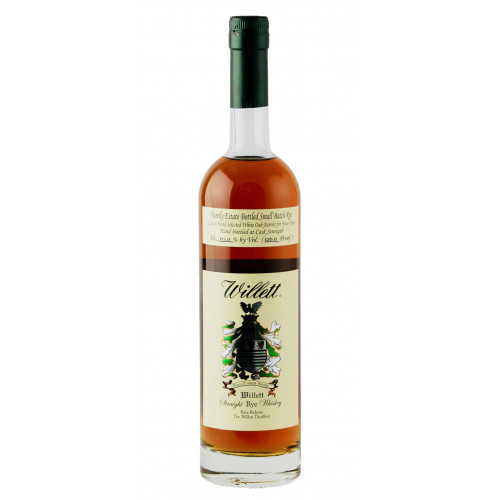
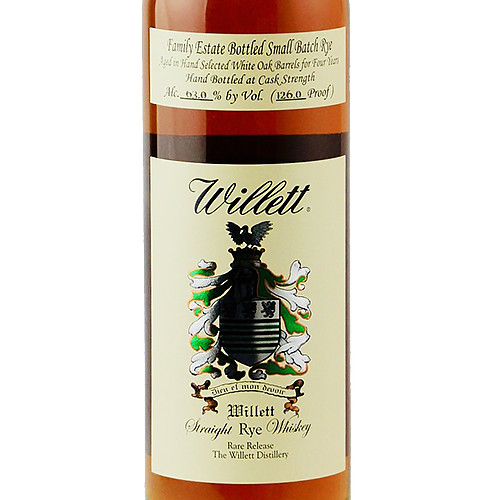
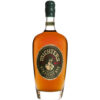
Willett Family Estate 4 Year Old Small Batch Straight Rye Whiskey
Willett Family Estate 4‑Year Small Batch Straight Rye — Overview & Background
The Willett Distillery & Brand
- Willett Distilling Co. (also known via the “Willett Family Estate” line) is located in Bardstown, Kentucky. They have a long history in the American whiskey world, acting for many years as a “bottler/brand” (sometimes sourcing, etc.), but in recent times more of their own stock (younger whiskey) has come to market. (Lost Cargo)
- The “Family Estate” small batch rye is part of their rye offerings — more accessible than some of their single barrel releases, and has become a standard feature in their portfolio. (Lost Cargo)
What “4‑Year Small Batch Straight Rye” Means in This Case
Here are the defining attributes:
- Straight Rye Whiskey: It meets U.S. legal requirements (at least 51% rye, new charred oak, etc.) to be labeled “straight rye.” Willett’s version has a much higher rye content in its mash bills (two mash bills are blended) so rye flavor is prominent. (Lost Cargo)
- Age: It is aged 4 years. While not an “old rye,” 4 years gives enough time for wood interaction and maturation beyond very young ryes. (bourbonveachdotcom)
- Small Batch / Blended Mash Bills: The whiskey is a blend of two of Willett’s rye mash bills:
- A high‑rye mash bill: 74% rye, 11% corn, 15% malted barley (Lost Cargo)
- A lower‑rye mash bill: 51% rye, 34% corn, 15% malted barley (Lost Cargo)
- Cask Strength / Proof: This rye is bottled at “cask strength” or near it; proof has varied by batch (some around 110–113 proof, ~54‑56% ABV). (Lost Cargo)
- New Charred White Oak Barrels: The whiskey is matured in new charred American white oak. This is normal for straight rye in the U.S., and gives strong oak / char / vanilla / wood spice characteristics. (Lost Cargo)
- Non‑Chill Filtered: Many sources noting flavor review mention no chill filtration. The finish, texture, etc., are praised partly because of this richer, less “processed” mouthfeel. (Reddit)
History & Release Context
- Willett began releasing younger rye expressions (2‑, 3‑year) and then in 2018 made a 4‑year version a regular part of their line. The 4‑year small batch straight rye is the matured version, kept in the year‑round portfolio in many markets. (Lost Cargo)
Technical & Production Details
Here’s a more detailed breakdown of what’s involved in producing this whiskey, as per available sources.
| Aspect | Details |
|---|---|
| Mash Bills | Blend of two: 74% rye / 11% corn / 15% malted barley (high‑rye); and 51% rye / 34% corn / 15% malted barley (lower‑rye). (Lost Cargo) |
| Wood / Casks | New, charred American white oak barrels. Level of char is not always specified in all batches, but standard new oak barrels. (Lost Cargo) |
| Aging | Minimum of 4 years in these new oak barrels. (Lost Cargo) |
| Proof / ABV | Varies by batch; many releases around 110–113 proof (≈ 55‑56.5% ABV). Others bottle slightly lower depending on release. (bourbonveachdotcom) |
| Bottling | Small batch blending of the two mash bills; non‑chill filtered; cask strength or near cask strength; bottled in the Family Estate line (i.e. Willett’s own label). (Lost Cargo) |
Tasting Profile & Flavor Notes
Here’s what people report in terms of aroma, palate, finish, texture, etc. There are variations by batch and personal palate.
Appearance / Color
- Rich amber, golden‑copper hues. Some batches appear deep in color, partly from barrel maturity, oak contact. (Reddit)
Nose / Aroma
Common descriptors:
- Spice & Rye Character: Strong rye spice, pepper, baking spices (cinnamon, nutmeg, clove). (Me, My Wife & Whisky)
- Fruits: Dark/sour cherries, apricot, orange peel, red fruit, sometimes stone fruits. (bourbonveachdotcom)
- Sweet / Vanilla / Oak: Vanilla, caramel, burnt vanilla, wood char, oak tannins. (Me, My Wife & Whisky)
- Herbal / Minty Notes: Menthol, spearmint, peppermint, dill, a touch of green herbs. (Me, My Wife & Whisky)
- Some reviewers mention creamy or candy bottom notes (hard candy, cloth sugar), floral touches, eggnog‑like or toffee. (Barrel Banter)
Palate / Taste
- Bold Rye Spice: Pepper (black or mixed), a pronounced rye grain presence, baking spices. (Me, My Wife & Whisky)
- Sweetness & Fruit: Caramel, vanilla, some citrus, apricots or stone fruits, cherries. (bourbonveachdotcom)
- Oak / Wood / Toast: Charred oak, toasted wood, sometimes burnt vanilla, barrel char influence noticeable but often well balanced with other elements. (Me, My Wife & Whisky)
- Herbal / Menthol / Cooling: Mint, spearmint, sometimes menthol or herbal notes emerge, especially in mid‑palate. (Me, My Wife & Whisky)
- Other nuanced flavors: Some reviewers pick up chocolate (dark or bittersweet), leather, toffee, sometimes a bit of dill, fennel, or earthy undertones. (Me, My Wife & Whisky)
Mouthfeel / Body
- Medium to medium‑full body; oily texture; varnish/oil/coating in some better batches. (The Daily Pour)
- Heat / Alcohol Warmth: Because of relatively high proof, there is warmth / burn in some sips (especially early), though many report that the alcohol is fairly integrated. (Me, My Wife & Whisky)
Finish
- Length: Medium to long. Some find finish lingering especially with spice and oak. (Seelbach’s)
- Flavor Evolution: Finish often starts with sweet/spice/fruit then transitions to oak, pepper, sometimes herbal or minty echoes. Vanilla, toasted wood etc. (Me, My Wife & Whisky)
- Aftertaste: Rye spice, oak tannins, sometimes dryness. Also occasional lingering fruit or candy‑like sweetness in better bottles. (Me, My Wife & Whisky)
What “People Also Ask” — FAQs
Here are questions often asked / likely to appear in Google’s “People Also Ask” related to this whiskey, with answers.
Q: What is the mash bill of Willett Family Estate 4‑Year Rye?
A: It’s a blend using two of Willett’s rye mash bills: one mashbill with 74% rye / 11% corn / 15% malted barley (“high rye”), and another with 51% rye / 34% corn / 15% malted barley (“lower rye”). These are combined to produce the flavor balance in the small‑batch rye. (Lost Cargo)
Q: What proof is Willett 4‑Year Small Batch Rye?
A: It tends to be around 110‑113 proof depending on batch — cask strength or near that. Some batches are around 110, others a bit higher (≈ 113). (bourbonveachdotcom)
Q: What flavor profile can I expect?
A: Expect a mix of bold rye spice + baking spices (pepper, nutmeg, cinnamon) + fruit (cherry, apricot, orange peel) + oak/vanilla + herbal or minty notes. Finish with oak and lingering spice. The whiskey is spicy and rich, with sweet accents. Some batches show more fruit, others emphasize oak or spice. (Me, My Wife & Whisky)
Q: Is Willett 4‑Year Rye non‑chill filtered?
A: Yes, many sources note non‑chill filtration. That contributes to the richer mouthfeel. (Reddit)
Q: Is 4 years enough aging for rye whiskey?
A: It depends on what you expect. Four years gives decent oak interaction, some maturation, but is still relatively young compared to older ryes or single malts. The Willett 4‑year rye seems to overperform its age in many opinions, with flavors sometimes perceived as more mature than four years. But some critiques point out that more time in barrel might develop deeper complexity, smoother oak integration. (Me, My Wife & Whisky)
Q: How much does it cost / is it good value?
A: Price varies by region and retailer. MSRP often around US$60‑70 in the U.S. for 750ml. Some retailers list higher depending on demand or scarcity. Value judgments vary: many reviewers feel it’s good flavor for the price, especially given the proof and complexity; some feel it’s a bit overpriced vs expectations for age. (Me, My Wife & Whisky)
Q: For whom is this whiskey best suited?
A: It will appeal to those who like:
- Strong rye flavor (not mild) plus oak + vanilla + spice
- Higher‑proof whiskies that are still drinkable neat
- Complex flavor profiles (fruit + spice + oak + herbal)
- Straight sipping rather than just mixing
- Those who appreciate small batches and brand pedigree
It might be less appealing if you prefer low proof, mild whiskies; or want very old, mellow rye; or dislike strong oak/char or high proof heat.
Strengths & Weaknesses
Here are what this whiskey does well, and where it has trade‑offs.
Strengths
- Flavor Richness for Age: Many reviewers note that despite “only” four years, the whiskey delivers complexity — good oak, spice, fruit, herbal notes.
- Proof & Character: Bottled near barrel / cask strength, the proof gives body and heat, but many find that alcohol is fairly well integrated.
- Blended Mash Bills Add Balance: By blending a high‑rye mashbill with a lower‑rye one, Willett achieves a balance between intense rye character + sweetness from corn/malted barley.
- Non‑Chill Filtered & Oak Influence: These help preserve mouthfeel, texture, oak driven flavors (vanilla, toast, char) rather than smoothing everything out.
- Good Value (often): For what you get (proof, flavor complexity, brand), many feel this is a strong bottle in its price bracket. Especially when you can buy at or near MSRP.
- Versatility: While strong, it’s often cited as good neat, with a few drops of water, or even in cocktails (if you want to showcase complex rye).
Weaknesses / Limitations
- Youth & Oak/Smoothness Trade‑off: Four years can still leave youthful edges — lighter depth in some bottles, some harshness or raw oak / wood tannins. Some finer nuances (deep dried fruit, long aging wood complexity) are missing compared to older ryes.
- Batch Variation: Because small batches and blending of two mash bills, different barrels, storage etc., results vary from bottle to bottle. Some batches are better balanced than others. (Reddit)
- Strong Proof = Heat: For some drinkers, the alcohol burn or heat is more than they prefer. Especially if not used to strong rye.
- Price Inflation / Premium Mark‑ups: Some retailers mark up heavily, so what might have been a “good value” at MSRP becomes less so, especially in secondary markets.
- Not Ultra‑Long Finish or Ultra‑Subtle: While finish is respectable, many reviews note that after the initial richness & spice, the finish tends to tighten (oak, spice) rather than evolve into more delicate or nuanced layers.
Comparisons & Alternative Ryes
To understand how this whiskey stacks up, here are comparisons to similar ryes, what makes it stand apart, and possible alternatives.
- Compared to younger ryes (2 or 3 years) — Willett’s 4 year gives more maturation, oak, smoother wood/spice, more balanced profile.
- Compared to older ryes (8‑12+ years) — Those often show deeper oak, more mellowness, long lingering complexity; Willett’s 4 year won’t match that, but often delivers more flavor per dollar for its age.
- In relation to other cask‑strength rye offerings — It holds up nicely; some compare it to ryes from MGP, New Riff, Russell’s Reserve, etc.
- Compared to other Willett expressions: The small batch release is more widely available than some single barrel Willetts; gives a good entry into the brand’s rye line.
What People Also Ask — Additional Deeper Questions
Here are some less obvious but often asked questions among enthusiasts, with what is known.
Q: Is the proof consistent across batches?
A: No — while many batches are bottled around 110‑113 proof, there is variation. Because it’s small batch and blended, proof shifts slightly depending on barrel entry, aging, barrel selection. Some sources show 110, some 113, some slightly lower. (bourbonveachdotcom)
Q: Are there artificial colorings or other additives?
A: No indications of artificial coloring. It is non‑chill filtered in many sources. Willett tends to avoid unnecessary additives in this line. (Reddit)
Q: What is “barrel entry proof,” and how does 4‑year rye fare under barrel proof vs other ryes?
A: Barrel entry proof refers to the alcohol content when the whiskey enters the barrel for aging. Willett’s rye barrels often enter at ~110 proof. Over time, proof may drop depending on storage conditions, heat, evaporation etc. A 4‑year cask strength rye from Willett under this barrel proof tends to retain more bold oak, spice, and proof character than a whisky that spends more years but much lower proof or in different barrel conditions. (Lost Cargo)
Q: Does the 4‑year age limit its ability to compete in certain flavor dimensions (e.g. very dark fruit, extreme wood, long finish)?
A: Yes — some flavor dimensions that come with very long barrel aging, e.g., very deep dried fruit, sherry‑like oxidation, super mellow oak tannins, etc., are rarer in 4‑year whiskey. Some reviewers say this Willett rye sometimes “tastes older” than 4 years, but that’s relative: good barrel selection + proof help, but limits exist. If you want very mature, oak‑dominant rye, older age statements will likely outdo it. (Whisky Connosr)
Pricing & Availability
- In the U.S., MSRP has been in the US$60‑70 range for many retailers (for a 750 ml bottle). Some bottles go for more depending on demand. (The Daily Pour)
- In export markets (Australia, Europe), prices tend to be higher due to import taxes, shipping, etc. For example, a listing in Australia shows ~$159 AUD for a 4‑year batch. (Bourbon Brothers Australia)
- In many markets, it is more available now than older Willett expressions; but still somewhat limited / allocated. Some retailers or specialty shops have occasional stock. (Reddit)
Strengths & Weaknesses
Here’s what this whiskey does very well, and where it may fall short, from a consumer’s perspective.
Strengths
- Bold Rye Flavor + Proof: For its age, the proof and flavor punch are impressive. Many reviewers enjoy that it doesn’t feel “thin” or overly young.
- Balanced Profile: The blend of mash bills helps it balance spiciness and sweetness, fruit + oak + herbal/menthol aspects.
- Value for the Flavor: Many cultivate the view that you get a lot of flavor for the money in its class — especially when obtained near or at MSRP.
- Versatility: It works neat, for sipping, perhaps with a drop of water; also good in cocktails where rye spice is desirable.
- Brand & Prestige: Willett’s already strong name and reputation helps; this rye gives a relatively accessible entry into their more premium rye offerings.
Weaknesses
- Youthful Limitations: Some oak harshness, under‑developed deeper wood flavor, less complexity than older ryes.
- Variability: Batch‑to‑batch differences are noticeable; some bottles better than others. This reduces predictability.
- Strong Proof Burn for Some: If you’re sensitive to alcohol or high proof, some sips can feel hot, especially if not rested or without tempering.
- Price Sensitivity: In some areas, retailers mark up heavily; what seems good value in one place might feel overpriced elsewhere.
- Finish May Be Less Evolving: The last phase of flavor may not shift dramatically; the finish is solid but often lacks ultra‑long evolving transitions.
“People Also Ask” — Additional FAQs & Debates
Here are more nuanced or debated questions with what is known / opinions from community sources.
Q: Is this rye “barrel proof”?
A: It is often described as “cask strength” or “barrel proof / near barrel proof”, though some batches vary slightly. Many are bottled in the neighborhood of 110‑113 proof which suggests minimal or no dilution from barrel proof. However, “barrel proof” in whiskey parlance implies the bottle ABV equals what came out of the barrel (no dilution), which is true in many but perhaps not all batches depending on proof drops, cuts, etc. (bourbonveachdotcom)
Q: Does the mash bill being blended affect the identity of the whiskey?
A: Yes. Because there are two different mash bills, one with much higher rye content and one with less rye but more corn, the blended result tends to smooth out extremes. You get strong rye spice from the 74% rye portion, plus sweetness and softness from the 51% rye mashbill. This blending is what gives the whiskey more rounded profile than a single very high rye mash might give (which could be too spicy or harsh for some). (Lost Cargo)
Q: Does bottle variation matter a lot?
A: Yes — many users on Reddit and review sites mention noticeable variation between bottles or batches. Some bottles emphasize fruit; others lean more into the wood or spice or herbal notes. This is expected in small batch / barrel proof whiskies, but it means experience may differ. (Reddit)
Q: Is it better to drink it neat or with water/ice?
A: Many reviewers recommend neat first (to take in the aroma, spice, etc.), then possibly a few drops of water to open up fruit/vanilla/honey and mellow the heat. Ice is generally less popular because it tends to mute a lot of the flavor in high proof ryes. Resting in glass helps. (Me, My Wife & Whisky)
Conclusion
The Willett Family Estate 4‑Year Small Batch Straight Rye Whiskey is a compelling option in the American rye whiskey landscape, especially for drinkers who want a rye that shows boldness, proof, character, and flavor complexity without waiting decades.
Here are my summarized takeaways, and whether I think it’s a good buy (and under what circumstances):
Summary of What Makes It Strong
- It delivers spicy rye flavor, oak / vanilla / barrel char — the fundamentals of a rye whiskey — quite well for four years of aging.
- The proof tends to be robust, and many batches show that the alcohol is integrated rather than just burning.
- The blend of two mash bills gives a balancing act: spiciness + sweetness, fruit + wood, herbal + baking spices.
- Non‑chill filtration and new oak cask maturation add mouthfeel, texture, and desirable wood derived character.
- Across reviews, many find the whiskey overperforms for its age in terms of punch and flavor.
Where It Might Be Less Perfect
- If you’re seeking ultra‑aged complexity, deep dried fruit, super smooth oak that comes with 10+ years in barrel, this 4‑year rye will not match those profiles.
- Some batches or bottles may suffer from over‑oak or high proof heat more than others; consistency is not perfect.
- For price‑sensitive buyers, paying much above MSRP or in markets with high taxes/markups reduces its value proposition.
My Recommendation
If I were advising someone:
- Yes, this is a bottle I’d recommend if you like rye whiskey and want something with punch. It’s a good “step up” from entry‑level ryes.
- Try to buy at or close to MSRP; avoid heavily marked up bottles if possible.
- If you have the opportunity, try a sample first to see how your palate handles the proof and oak, because batches vary.
- This whiskey makes a great sipper, and will also shine in a rye‑centered cocktail (e.g. classic rye cocktails) if you like strong rye character.


Reviews
There are no reviews yet.