Ruinart Blanc de Blancs Brut Champagne


Introduction
The “Blanc de Blancs” from Ruinart (often written Ruinart Blanc de Blancs Brut) is a signature Champagne expressing the elegance of 100 % Chardonnay from the Champagne region of France. The house of Ruinart, founded in 1729, is the oldest Champagne house. (XtraWine)
This article explores this Champagne in depth: its origins, production, tasting profile, context, how to drink it, its availability and pricing, common questions (“People also ask” style), and a conclusion to summarize its place and value.
1. The House and Heritage
Origins & History
- Ruinart was founded in 1729 in Reims by Nicolas Ruinart. (Lilovino)
- It is the oldest Champagne house, meaning it has a long tradition of Champagne-making, and this heritage is part of its appeal. (XtraWine)
- The style of the house emphasises Chardonnay, particularly from the great terroirs in the Côte des Blancs and Montagne de Reims. (brut-de-champ.com)
Position & Style
- The Blanc de Blancs is an emblematic cuvée of Ruinart: the house describes it as “the emblem of the taste of Ruinart”. (brut-de-champ.com)
- Its style is typically fresh, elegant, with pronounced finesse and minerality — rather than heavy, overly yeasty or super-rich. For example, one tasting note: “fresh. nice crisp acidity and good structure.” (champagne411.com)
- The house uses a proportion of reserve wines from previous years in the blend, hand-harvested grapes, stainless steel fermentation, etc. (brut-de-champ.com)
Terroir & Blend
- The blend is 100 % Chardonnay. (Wine)
- The grapes predominantly come from Premiers Crus of the Côte des Blancs and Montagne de Reims, with some from Sézannais (for roundness) and the north of the Vallée de la Vesle (for freshness) — in order to craft a balanced profile. (cavedessacres.com)
- Hand harvesting, stainless steel vats, malolactic fermentation, and use of reserve wines (20-30%) are part of the production process. (brut-de-champ.com)
2. Production & Technical Details
Vinification & Process
- Grapes are harvested by hand. (brut-de-champ.com)
- Fermentation (alcoholic) takes place in temperature-regulated stainless steel tanks; malolactic fermentation is complete. (ventealapropriete.com)
- The blend incorporates approximately 20-30% of reserve wines from previous years (for non-vintage versions). (brut-de-champ.com)
- Ageing on the lees (i.e., after secondary fermentation in bottle) for a minimum period: various sources say at least 2 to 3 years for this cuvée. (ventealapropriete.com)
- Dosage (i.e., added sugar after disgorgement) is typically around 7-9 g/l depending on market or batch. For example, one source says dosage 7 g/l. (goutdivin.fr)
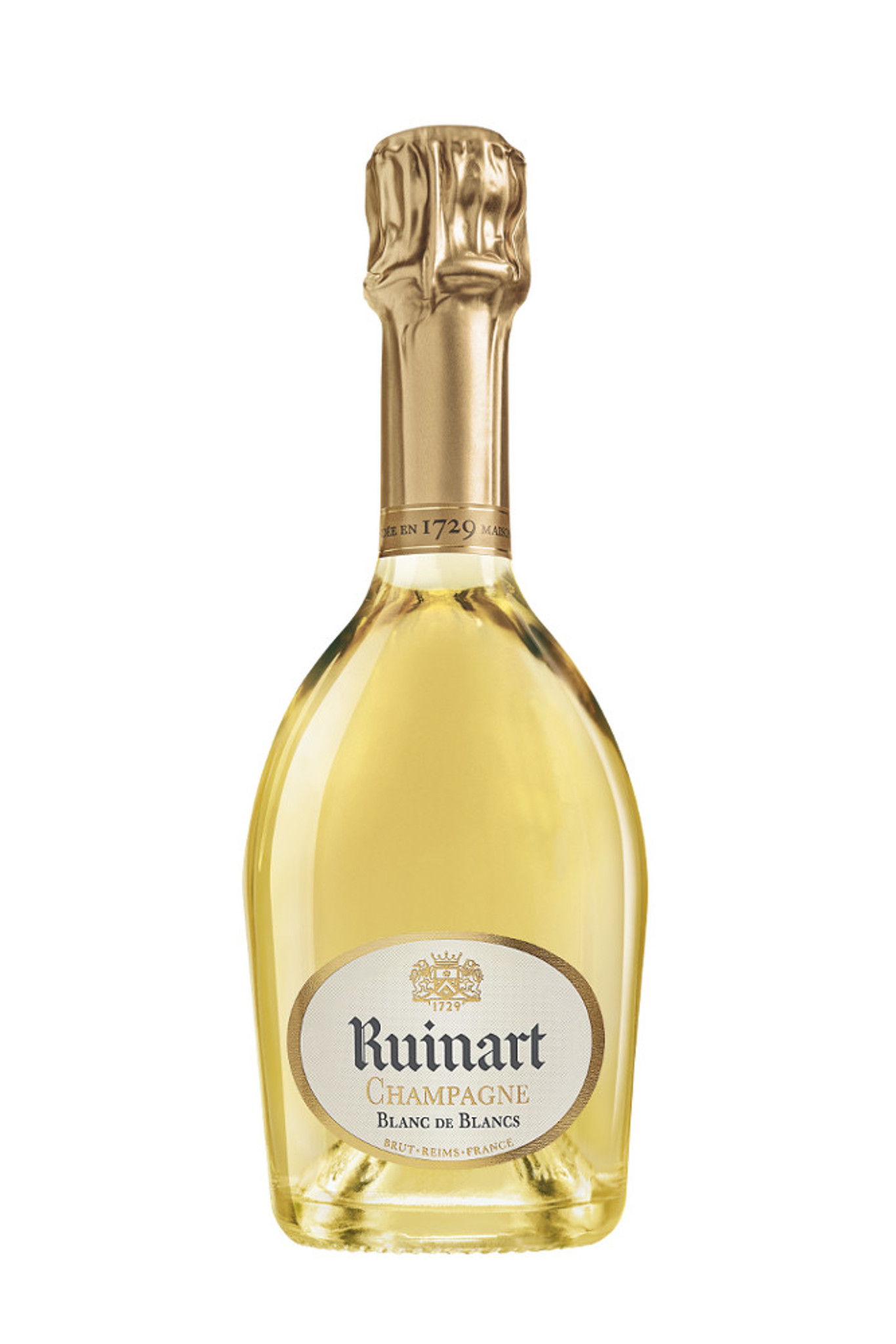
- Bottles are now often made of clear glass (for this cuvée) and need protection from light. (champagne411.com)
Technical Specifications
- Grape variety: 100 % Chardonnay. (Wine)
- Alcohol: typically ~12.5% vol. (delicando.com)
- Appellation: Champagne AOC, region: Champagne, France. (La Cave du Bénin)
- When to drink: It is ready shortly after release, but can develop further in cellar for some years; typical drinking window for non-vintage is up to about 3-5 years in many sources. (champagne411.com)
- Service temperature: Generally recommended 8–10 °C. (ventealapropriete.com)
3. Tasting Profile & Characteristics
Appearance
- Very pale yellow colour with greenish reflections or almond/green jade hues. (goutdivin.fr)
- Fine, persistent effervescence (fizz) and luminous appearance. (Wine)
Aroma (Nose)
- Initial notes: fresh citrus (lemon, citron), ripe citrus fruits, white fruits (peach, pear), sometimes tropical hints such as pineapple or mango. (Wine)
- Secondary nose: floral notes (white flowers, acacia, linden), light bread/lees characters, light spice (ginger, pink pepper). (goutdivin.fr)
- Mineral/ chalk/ fresh earth notes also appear in many tasting commentary. (Wine)
Palate (Mouth)
- The entry is usually smooth, harmonious, round yet fresh — combining vinosity with elegance. (cavedessacres.com)
- Flavours: white fruits (peach, pear), citrus (lemon, lime), some exotic (pineapple, mango) depending on vintage/blend; also brioche, toast, yeast undertones in some bottles. (Champagne Season)
- Texture: fine mousse, crisp acidity, good freshness, and a mineral backbone. (Champagne Season)
- Finish: long, fresh, often with notable minerality and citrus-chalk interplay. (cavedessacres.com)
Overall Impression
Ruinart Blanc de Blancs is prized for its “lightness of touch” — not heavy, not overly yeasty, but refined, fresh, and elegant. It is often cited as a benchmark for Blanc de Blancs style Champagne.
4. Food Pairings, Serving & Storage
Serving Suggestions
- Serve at about 8-10 °C (some say 6-8 °C for aperitif). (XtraWine)
- Glassware: Use a fine flute or white wine glass to appreciate aroma and bubbles.
Food Pairings
- Excellent as an aperitif, especially in spring/summer. (brut-de-champ.com)
- Very good with seafood and shellfish: scallop carpaccio, sea bream or sea bass tartare, sole à la plancha, oysters. (Wine)
- White fish, sushi, light cheeses (fresh goat cheese, burrata) also work. (goutdivin.fr)
- You could also pair with lighter dishes where freshness and mineral edge are essential, rather than extremely rich or heavy food.
Storage & Ageing
- Although it’s a non-vintage blend and ready to drink upon release, some years of aging in bottle (2–5 years) can enhance complexity. (champagne411.com)
- Storage advice: keep away from light (especially because some bottles are clear glass) and vibration, in a cool, stable temperature. (delicando.com)
- The house suggests it can hold maybe up to 5–10 years (depending on conditions) for non-vintage. (XtraWine)
5. Availability, Pricing & Market
Pricing & Market Notes
- Price varies by market, currency, taxes and vintage/reserve content. One French site lists ~€99 for 75 cl. (cavedessacres.com)
- In Cameroon context (Douala region) one listing shows XAF 75,000 for 75 cl, though promotional or local mark-up might apply. (Buyam)
- Some online commentary suggests that for a non-vintage Blanc de Blancs from Ruinart, paying significantly below typical pricing may indicate a deal—but check provenance and condition. (Reddit)
Availability
- As a leading brand in the Champagne category, Ruinart’s production is substantial but premium. Availability can vary by country and importers.
- Lightly discounted or clearance bottles may appear—be sure to verify storage, provenance, and condition.
6. Frequently Asked Questions (“People Also Ask”) & Answers
Here are some common questions people search for regarding Ruinart Blanc de Blancs Brut, with corresponding answers.
Q: What is Ruinart Blanc de Blancs Brut made of?
A: It is made of 100 % Chardonnay grapes. (Wine)
The grapes come primarily from the Côte des Blancs and Montagne de Reims regions (plus Sézannais and north Vesle) and the production uses reserve wines. (brut-de-champ.com)
Q: What style is Ruinart Blanc de Blancs Brut?
A: It is a non-vintage Brut Champagne (though some limited vintage or special editions may exist) with a focus on finesse, freshness, minerality, and elegance rather than heavy oak or overt richness. For example, it has crisp acidity, fine bubbles, and a long mineral finish. (champagne411.com)
Q: How should one serve it and what food pairs with it?
A: Serve it cold, about 8-10 °C (some say 6-8 °C if used as aperitif). Good pairings include seafood (scallops, sea bass, bream, sole), shellfish, sushi/fish dishes, light cheeses, and as a refined aperitif. (XtraWine)
Q: How long can one age Ruinart Blanc de Blancs Brut?
A: Since it is non-vintage and built for freshness, drinking within 1–5 years of release is sensible for optimum freshness. Some will age a little longer (up to 5–10 years) for further development. (XtraWine)
Q: What is the dosage (sugar level) of Ruinart Blanc de Blancs?
A: The dosage varies by year/batch but is generally around 7-9 g per litre (Brut level). (ventealapropriete.com)
Q: Is Ruinart Blanc de Blancs Brut a good value?
A: For a premium Blanc de Blancs from a major house with such heritage and terroir, many consider it good value relative to ultra-luxury cuvées. That said, compare price, vintage, provenance, and regional mark-up. Some consumer comments caution against very low priced bottles which may be mis-stored. (Reddit)
Q: Where can I buy Ruinart Blanc de Blancs Brut in Cameroon / Douala?
A: One listing shows the Champagne available in Cameroon (Douala) for XAF 75,000 for 75 cl. (Buyam)
However, you should check the vendor’s legitimacy, storage conditions, authenticity, and import status.
Q: What does the tasting profile of Ruinart Blanc de Blancs Brut include?
A: Tasting notes include fresh citrus (lime, lemon), chalk/mineral, white fruits (peach, pear), exotic fruits (pineapple, mango), fine floral notes (linden, acacia), brioche/yeasty touch, and fine mousse with fresh finish. For example: “Cool initial suggestions of lime, chalk, and buttered toast… sunny aromas of yellow apple, Anjou pear, peach and pluot sprinkled with white flowers.” (Wine)
Q: Is the bottle colour transparent or dark, and does it matter?
A: For this cuvée, Ruinart uses a clear glass bottle for the Blanc de Blancs to highlight the pale golden-green hue. This makes protection from light more critical. (champagne411.com)
Q: What is the difference between Ruinart Blanc de Blancs and Ruinart R (or other Ruinart cuvées)?
A: The difference lies in blend and intention. The “R de Ruinart” (or “Ruinart Brut”) uses a blend of Chardonnay and Pinot Noir (or more Pinot), whereas the Blanc de Blancs is purely Chardonnay (100 %) and emphasises that terroir and style. Many tastings note that Blanc de Blancs is lighter, more mineral, whereas the R might be more yeasty or broader. (Reddit)
7. Pros & Cons / Things to Consider
Pros
- Elegant, refined and high-quality Champagne from one of the most historic Champagne houses.
- 100 % Chardonnay gives a clean, pure, mineral-rich profile (which many drinkers prefer).
- Excellent as aperitif or with seafood, making it versatile.
- Good reputation and non-vintage stable cuvée (so you’re getting house style, consistency).
- Appealing packaging and prestige brand which may enhance the experience for celebrations.
Cons / Considerations
- Price: Being a premium cuvée, it is more expensive than basic Brut Champagnes; value depends on market and provenance.
- Non-vintage means less “vintage expression” than some single-vintage Champagnes; for collectors seeking rarity or deep ageing, maybe less compelling.
- Because of the clear bottle (in some markets) and delicate style, proper storage is crucial — light exposure or heat can degrade the wine more rapidly.
- Some drinkers may prefer heavier, more toasty or Pinot-dominated Champagnes; if you favour rich, deep Champagne with lots of Pinot Noir, this may feel lighter.
- Availability may vary and mark-up in certain markets (like Cameroon) could be substantial.
8. Conclusion
The Ruinart Blanc de Blancs Brut represents a refined, fresh, terroir-driven expression of Chardonnay in Champagne — from one of the region’s most historic houses. It offers elegance, fine bubbles, minerality, and versatility for dining and celebration. For someone in Douala (or elsewhere) looking for a premium Champagne that aligns with seafood, light refined meals, or special occasions, it is a strong choice.
If you have the budget, and if you ensure it has been stored well, it is very likely to deliver pleasure and prestige. On the other hand, if the budget is tight or you prefer a richer, Pinot-dominated Champagne, you might explore alternatives. Either way, Ruinart Blanc de Blancs sits in a sweet spot: premium but not the ultra-luxury stratosphere (in non-vintage form), delivering high-quality Chardonnay Champagne with style and pedigree.

Belvedere Single Estate Rye Lake Bartezek Vodka
Clase Azul 25 Aniversario Limited Edition Tequila 


Reviews
There are no reviews yet.