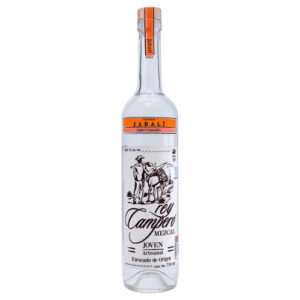
Rey Campero Jabali Mezcal
Here is an in-depth article on Rey Campero Jabalí Mezcal, covering its history, production, tasting, cultural significance, frequently asked questions (based on Google’s “People also ask”), and a conclusion. I’ve included detailed information, insights from experts and community reviews, and a full exploration of what makes this mezcal special.
Rey Campero Jabalí Mezcal: A Comprehensive Article
Introduction
Mezcal is more than just a spirit — it’s an expression of place, of soil, of agave, and of the people who craft it. Among the many agave varieties used to make mezcal, Jabalí (usually Agave convallis) is one of the most notorious and challenging. Rey Campero, a distillery rooted in Oaxaca’s Sierra Sur, took on that challenge and created a benchmark Jabalí mezcal that is widely celebrated.
Rey Campero Jabalí stands out for its complexity, wild character, and the technical skill required to distill it. In this article, you’ll learn:
- The history and background of Rey Campero and the Jabalí expression
- The agave species behind Jabalí — its traits, ecology, and difficulty
- The production process for this mezcal
- Tasting profile, including nose, palate, and finish
- Social, environmental, and cultural significance
- Frequently asked questions (People Also Ask) with answers
- Comparisons with other Rey Campero mezcals
- A conclusion summarizing its importance and appeal
1. History & Background
Rey Campero is a well-known mezcal brand created by the Sánchez-Parada family in Candelaria Yegolé, Zoquitlán, in Oaxaca, Mexico. Over several generations, the Sánchez family has been making mezcal in their palenque (“La Candela”) using traditional methods.
- The production is deeply artisanal: they cook agaves in earth pits, mill with a stone tahona, ferment in wooden vats with wild yeasts, and use copper stills. (Skurnik Wines & Spirits)
- Rey Campero is known for tackling “difficult” wild agave types: besides Espadín, they produce mezcal from Jabalí, Tepextate, Cuishe, and more. (Skurnik Wines & Spirits)
- The Jabalí expression is produced by Vicente Sánchez Parada (or in some notes by Rómulo Sánchez Parada) depending on batch. (Mezcalistas)
Why Jabalí is notable:
- Agave convallis (Jabalí) is considered more difficult to produce mezcal from, because it tends to foam during distillation, due to its chemical makeup (notably saponins). (Skurnik Wines & Spirits)
- The Sánchez family apparently engineered a way to distill this agave reliably, which has made their Jabalí expression more available and respected. (Skurnik Wines & Spirits)
Thus, Rey Campero Jabalí is not just a mezcal — it’s a technical and cultural milestone.
2. The Agave: Jabalí (Agave convallis)
2.1 Botanical Profile & Ecology
- The agave used is 100% Jabalí, scientifically Agave convallis. (Skurnik Wines & Spirits)
- Jabalí agave typically grows in rocky, cliff-like terrains, often difficult to access. (Distiller – The Liquor Expert)
- It matures very slowly; some sources (e.g., Mezcalistas) indicate that the wild agaves used by Rey Campero for Jabali take 15-18 years to reach maturity. (Mezcalistas)
- The species has a lower sugar content compared to more common cultivated agaves (like Espadín) and a higher content of saponins, which makes fermentation and distillation challenging: the fermentation can foam, and distillation risks foaming or instability. (Skurnik Wines & Spirits)
- Because of these challenges, many mezcaleros historically avoided Jabalí, or limited production. Rey Campero’s success with it is therefore notable.
2.2 Significance
- The use of Jabalí contributes to agave biodiversity preservation: by using wild or semi-wild agaves, producers like Rey Campero help ensure these species remain economically valuable and ecologically protected.
- It is also a heritage agave, connecting mezcal production to older, more traditional landscapes and practices.
- The difficulty of production means that quality Jabalí mezcals are relatively rare, making them prized among enthusiasts.
3. Production Process
Rey Campero’s approach to Jabalí uses deeply traditional processes, adapted to manage the agave’s challenges.
- Harvesting: Mature Jabalí agaves are harvested — likely wild or semi-wild — after many years. (Mezcalistas)
- Cooking: The agave piñas are cooked in an earthen, conical pit oven (“horno cónico”) for several days. (mezcalreycampero.com)
- Milling: After roasting, the agaves are crushed by tahona, a heavy stone wheel. (Skurnik Wines & Spirits)
- Fermentation: The cooked agave mash ferments in open-air wooden vats (tinas), made of pine and possibly sabino (or cypress), using river water (from their local water source) and ambient (wild) yeast. (Skurnik Wines & Spirits)
- Distillation: Double distillation in copper pot stills is used. According to Skurnik, they use a wood-fired copper pot still with a “hybrid refrescadera condenser.” (Skurnik Wines & Spirits)
- Bottling: The mezcal is bottled “joven” (unaged). According to several sources, it’s not barrel-aged; it’s presented as a clear spirit reflecting its wild agave origin. (Distiller – The Liquor Expert)
The key technical innovation: Rey Campero reportedly developed a distillation method allowing them to safely distill Jabalí, despite its foaming tendencies. (Skurnik Wines & Spirits)
4. Tasting Profile & Sensory Experience
Here’s a detailed breakdown of how Rey Campero Jabalí tastes, what different experts and communities say, and how it evolves.
4.1 Nose (Aroma)
- Mezcalistas describe the nose as “dark green herbs, cinnamon, leather, roasted chilies.” (Mezcalistas)
- Skurnik Wines & Spirits mentions a “flamboyant and sweaty nose … before breaking into orange zest and slate.” (Skurnik Wines & Spirits)
- According to some community reviewers (via Distiller), there are floral notes, citrus peel, and a somewhat mild sweetness. (Distiller – The Liquor Expert)
- Some Reddit reviewers mention acetone, lactic notes, tomatillo, a barnyard funk, along with mint and anise. (Reddit)
- Another reviewer described a “chemical haze” reminiscent of turpentine, mixed with tropical fruit underneath. (Reddit)
These descriptions show how layered and volatile the aroma profile can be: a mix of herbaceousness, floral sweetness, funk, and more “wild” or unexpected notes.
4.2 Palate (Taste)
- Mezcalistas: On the palate, they report anís (anise), clavo (clove), and jengibre (ginger). (mezcalreycampero.com)
- They also note spicy green and red chilies, creamy fruit flavors like mango and guava, and layers of tobacco, dried mint, and toasted coffee at the finish. (Mezcalistas)
- Mezcal Reviews: Some reviewers detect sweet agave, citrus, pineapple, mango, soapiness (for some batches), earthy spice, and a dynamic, evolving spirit. (mezcalreviews.com)
- For one vintage (per Mezcal Reviews): “sweet roasted pineapple with toasted almonds, black pepper, candied jalapeños … then jalapeño heat, tropical fruits, sea water iodine, buttered brie.” (mezcalreviews.com)
- Another lot (same source) had a nose of “minerally and fruity: orange, banana, peach, honeysuckle, fresh basil, grass, slight smoke,” then on the palate “pineapple, mango, orange citrus, wet soil, dried citrus fruits, figs, agave … finish clay, roasted fruits, burnt oranges, bitter, passion-fruit like.” (mezcalreviews.com)
- On Reddit, a user wrote:
“Sweet pineapple and cream cheese at first, turning more herbal and woodsy. Gets a bit drying and grassy, clay and anise … finish: pineapple and other tropical fruits make a return … long bitter finish.” (Reddit)
4.3 Finish
- Mezcalistas mention a silken toasted coffee finish. (Mezcalistas)
- Some reviewers from Mezcal Reviews note a long, dynamic finish, where clay, roasted fruits, burnt citrus, and a bitter, passion-fruit note emerge. (mezcalreviews.com)
- Community reviewers mention a finish that is earthy, mineral, slightly dry, with a return of fruit and a lingering bitterness. (Reddit)
- Another reviewer notes a “very steady … sharp, citrusy, bright” finish, balancing cooked agave sweetness and herbal dryness. (Reddit)
4.4 Overall Impression
From the tasting notes above, a few themes emerge:
- Complexity & Layering: This is not a simple mezcal — each sip seems to morph, offering sweet fruit, herbs, spice, minerality, and funk.
- Wildness & Unpredictability: Given the agave and production methods, there is an “untamed” feel, with unexpected notes (barnyard, lactic, acetone) balanced by fruit.
- Textural Richness: Though Jabalí has lower sugars, Rey Campero’s method gives a rich, somewhat creamy texture (as per some reviewers), which helps carry the complex flavors.
- Long Finish: The finish is generous, with layered return notes, bitterness, and earth.
5. Cultural, Social & Environmental Significance
5.1 Technical Innovation
- Producing Jabalí is challenging due to its high saponin content, which can lead to foam and instability during distillation. Rey Campero’s success in commercial Jabalí production shows a remarkable technical achievement. (Skurnik Wines & Spirits)
- The innovation (developing a distillation method that avoids blowups) has not only helped their own production but also apparently influenced other mezcaleros’ willingness to work with Jabalí. (Skurnik Wines & Spirits)
5.2 Preservation of Wild Agave
- By harvesting Jabalí (a wild agave species) sustainably, Rey Campero helps maintain biodiversity.
- Their commitment ensures that wild agaves remain economically viable; this provides an incentive for local communities to value and protect these plants rather than overharvest irresponsibly.
5.3 Community & Tradition
- The Sánchez family has a long mezcal-making heritage, and their work on wild agave carries forward traditional practices while innovating.
- Their palenque (La Candela, in Candelaria Yegolé) is part of a network of small-scale, community-based mezcal production.
- By producing high-quality single-agave mezcals (like Jabalí), they’re fostering appreciation for traditional agave species and contributing to a more sustainable mezcal culture.
6. Frequently Asked Questions (“People Also Ask”)
Here are common questions people search for about Rey Campero Jabalí Mezcal, along with detailed answers.
Q1: What is Rey Campero Jabalí Mezcal?
Answer:
Rey Campero Jabalí is an artisanal mezcal made by the Sánchez-Parada family in Oaxaca. It is distilled from 100% Agave convallis (Jabalí), harvested from wild or rocky terrain. The mezcal is produced using traditional methods: cooking in an earth pit oven, milling with a tahona stone, open-air wild fermentation, and double distillation in copper pot stills. (mezcalreycampero.com)
Due to the technical challenges of working with Jabalí (high saponins, foaming), Rey Campero’s production is particularly significant.
Q2: Where is Rey Campero Jabalí made?
Answer:
It is made in Candelaria Yegolé, in the municipality of Zoquitlán, Oaxaca, Mexico. (Mezcalistas)
The distillery is part of the Sánchez family’s mezcal operation, which uses locally sourced agaves and traditional production processes. (Skurnik Wines & Spirits)
Q3: What is the ABV (alcohol content) of Rey Campero Jabalí?
Answer:
According to several sources:
- Mezcalistas lists the ABV as 48.8%. (Mezcalistas)
- Skurnik lists a typical ABV of 49%, though it may vary by batch. (Skurnik Wines & Spirits)
- On Distiller, some community notes say 49.0%. (Distiller – The Liquor Expert)
Q4: What does Rey Campero Jabalí taste like?
Answer:
Here’s a breakdown:
- Nose: Dark green herbs, cinnamon, leather, roasted chilies; citrus peel; sweaty or flamboyant aromatic profile. (Mezcalistas)
- Palate: Spicy notes (green/red chilies), anise, clove, ginger, tropical fruits (mango, guava), tobacco, dried mint, toasted coffee, and herbal woodiness. (Mezcalistas)
- Finish: Long and layered — clay or earth, roasted fruits, burnt citrus, bitterness, a toasted-coffee or spice finish. (mezcalreviews.com)
- Overall impression: Complex and evolving, combining sweet fruit and herbal spice with mineral earthiness and a wild, somewhat funky character.
Q5: Why is Jabalí agave difficult to work with?
Answer:
- Jabalí (Agave convallis) has a lower sugar content than some other agaves, which makes fermentation and distillation more challenging. (Skurnik Wines & Spirits)
- It has a high saponin concentration, which can lead to foaming during fermentation and distillation. That foam can destabilize the distillation process, potentially damaging stills or causing safety issues. (Skurnik Wines & Spirits)
- Historically, this made Jabalí less used in commercial mezcal production; not many distilleries mastered a safe method. Rey Campero’s technique is considered a breakthrough.
Q6: Is Rey Campero Jabalí a limited or rare mezcal?
Answer:
- While it is not an ultra-limited release, Jabalí mezcals are inherently rarer than Espadín, because the agave matures slowly, yields are low, and distillation is risky.
- Rey Campero has made it more available than many wild-agave mezcals due to their technical improvements, but it’s still a prized expression.
- Because of batch variation, ABV, and sensory profile shifts, individual lots may feel quite distinct — adding to its “collector” appeal.
Q7: How should I drink Rey Campero Jabalí?
Answer:
- Neat: Best enjoyed slowly in a copita, tasting glass, or similar to pick up its complex layers.
- Let it breathe: After opening, giving it a little air might help mellow sharp edges and open up aromas. Some reviewers have noted that over time, more tropical fruit notes emerge. (Reddit)
- Water: A few drops of neutral water might help soften the ABV and reveal subtler aromas.
- Cocktails: While it’s a delicate and complex mezcal, it can also be used in cocktails — but better in ones that allow its character to shine, e.g., spirit-forward mezcal sours or high-end agave cocktails.
Q8: How much does Rey Campero Jabalí cost?
Answer:
- According to the official Rey Campero website, Jabalí is priced at 1,325 MXN (for their local shop) for the 750 ml bottle. (mezcalreycampero.com)
- In U.S. or other export markets, prices vary: e.g., Royal Batch listed it around US$122.99. (Royal Batch)
- In Europe, Baltic Whisky Shop lists it at €105 for 0.7 L. (Baltic Whisky Shop)
- Some specialty shops like LiquorStore-Online list it at US$212 (though this may reflect scarcity or markup). (Liquor Store Online)
- Wholesale or price-sheet sources also indicate about US$97.50 per bottle in some distributor pricing. (Ohana Beverage Company)
- Because it’s a wild-agave and more complex expression, it’s typically more expensive than standard mezcal joven but more accessible than heavily aged or ultra-rare wild agave mezcals.
Q9: Is Rey Campero Jabalí sustainable / ethically produced?
Answer:
Yes, to a considerable degree:
- The agave used (Jabalí) is wild or semi-wild, so their production helps preserve wild agave species and maintain local biodiversity.
- Rey Campero’s method reflects artisanal tradition, using pit ovens, stone milling, open-air fermentation, and copper stills — all low-impact, heritage practices.
- By giving value to a difficult-to-distill agave, they incentivize local communities to protect and harvest it responsibly, instead of favoring only high-yield commercial agaves.
- The production employs local workers and supports rural economies, reinforcing a model of mezcal as a socially embedded craft.
Q10: How does Rey Campero Jabalí compare to other Rey Campero mezcals?
Answer:
Here are some comparisons:
- Versus Espadín: Rey Campero Espadín is more common, smoother, more citrus/mineral-forward, and likely more approachable for beginners. Jabalí, by contrast, is wilder, more complex, more “agave character forward,” and less standard.
- Versus Mexicano: The Mexicano mezcal tends to be herbal, forest-like, maybe earthier; Jabalí leans more into fruit, funk, and unusual spice.
- Versus Tepextate: Tepextate is another wild agave, often extremely vegetal, mineral, and aged. Jabalí is more about tropical fruit, spice, wildness, and dynamic finish.
- Rarity and risk: Jabalí comes with production challenges that not all mezcaleros tackle, so it’s more “wild and technical” than some other Rey Campero offerings.
7. Community Impressions & Critics
To understand how lovers of mezcal view Rey Campero Jabalí, it’s useful to look at community reviews and expert commentary.
- Distiller: The community rating is 4.16/5, indicating strong appreciation. The flavor profile summary: “Despite the agave’s rough reputation, the nose is relatively mild … some sweetness, floral notes, citrus peel … palate adds black pepper, modest smoke, earthy-vegetal components … a powerhouse lurking beneath a proper demeanor.” (Distiller – The Liquor Expert)
- Mezcal Reviews: Reviewers highlight the thick texture, fruit-driven nose, complexity, and evolving layers; some note “soapiness” in certain lots, but many find it one of their favorites. (mezcalreviews.com)
- Reddit (mezcal community):
-
“Really like the nose … permanent markers, isoamyl acetate (banana/pear), tropical fruit … sour/sweet, then little savory, lemon-lime note, then smoke and heat … floral and smoky finish … harmonious.” (Reddit)
-
“Minerally and fruity … orange and banana Laffy Taffy, light peach, honeysuckle, fresh basil, fresh cut grass, touch of smoke … palate: pineapple, mangos, orange citrus, dried fruits … finish: clay, roasted fruits, burnt oranges, long bitter finish.” (Reddit)
-
“Very steady … sharp, citrusy, bright … delightful balance between sweetness of cooked agave and dryness of fresh sage/thyme … long lasting but turns a bit stale.” (Reddit)
-
These voices reflect strong appreciation, though not everyone agrees on the same notes — batch variation and personal palate clearly play a role.
8. Comparison with Other Jabalí Mezcals
Putting Rey Campero Jabalí in context with other Jabalí mezcals helps highlight its character:
- Del Maguey Wild Jabalí: Produced by Del Maguey, this version of Jabalí (A. convallis) offers notes of figs, baked apples, star anise, herbal violets, tarragon, sandalwood. (Del Maguey Single Village Mezcal) Compared with Rey Campero, Del Maguey’s may lean more into floral and herbal, depending on the vintage.
- Other small producers: Because Jabalí is difficult, not many produce it, and those who do often command higher prices or produce very limited batches. Rey Campero’s relative accessibility (for a wild agave) is noteworthy.
9. Pros & Considerations
Strengths / What Makes Rey Campero Jabalí Great
- Unique Agave Profile: Jabalí gives a flavor very different from mainstream Espadín; its tropical, spicy, wild character is exciting.
- Technical Mastery: The Sánchez family’s ability to distill this difficult agave reliably is a major achievement.
- Artisanal Craft: Traditional pit cooking, tahona milling, and wild fermentation preserve cultural methods.
- Complexity: Aromatic layers, palate depth, and a long, evolving finish make it rewarding for sipping.
- Sustainability / Biodiversity: Supporting wild agave species is a big plus for ecological and cultural preservation.
Considerations / Challenges
- Price: More expensive than many mainstream mezcal jovens due to difficulty and wild agave.
- Availability: Wild agave, limited production, and batch variability may make it harder to find.
- Batch Variation: Because of wild agave and spontaneous fermentation, different lots may taste very different.
- Intensity: For someone new to mezcal, Jabalí’s wild, funky, and bold flavor might be challenging compared to more mellow mezcals.
10. Conclusion
Rey Campero Jabalí Mezcal is a truly remarkable spirit — not just for its taste, but for what it represents in the mezcal world. By daring to work with Agave convallis (Jabalí), the Sánchez-Parada family demonstrates deep respect for tradition, terroir, and innovation.
Here’s why it matters:
- Craft & Courage: Taking on Jabalí requires skill, patience, and experimentation. Rey Campero’s success highlights their craftsmanship and technical innovation.
- Terroir & Wildness: This mezcal captures the wild, rocky landscapes where Jabalí grows, giving drinkers a taste of a more primal, less cultivated side of agave.
- Ecological Value: By valuing wild agave, they help preserve agave diversity and local ecosystems.
- Drinking Experience: For the adventurous mezcal lover, Jabalí offers complexity, surprise, and depth — from herbaceous, funky aromas to tropical fruits, spice, and mineral finish.
If you’re exploring mezcal and want to dive into something bold, wild, and deeply rooted in tradition, Rey Campero Jabalí is a must-try. For many, it is a benchmark Jabalí mezcal — a bridge between the rawness of wild agave and the refinement of a carefully crafted spirit.
If you like, I can add pairing suggestions (food), cocktail recipes, or compare Rey Campero Jabalí to some of the top Jabalí mezcals on the market — do you want me to include that?

E H Taylor 18years Marriage 


Reviews
There are no reviews yet.