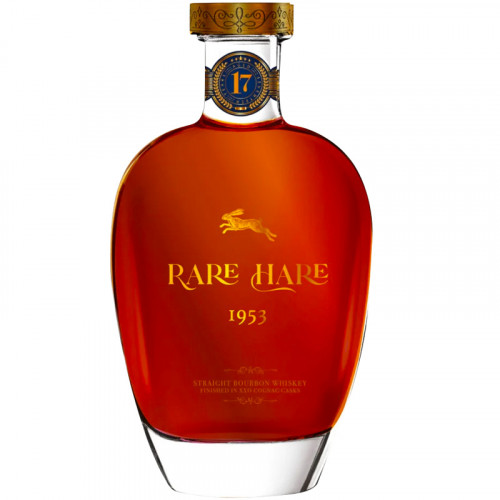
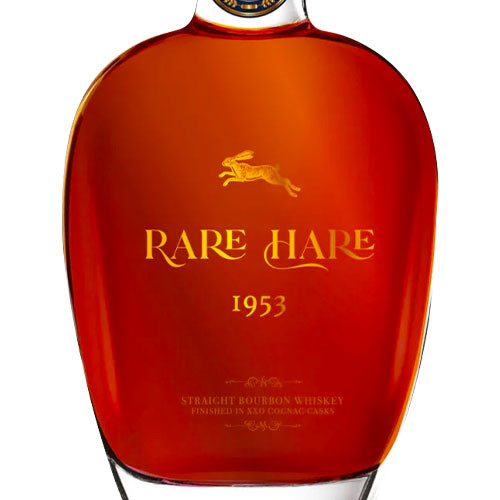
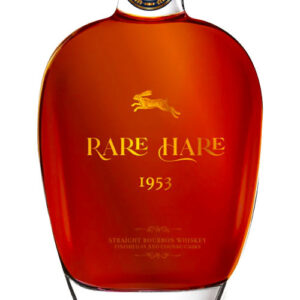
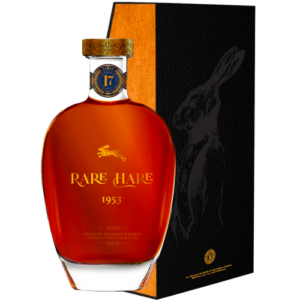
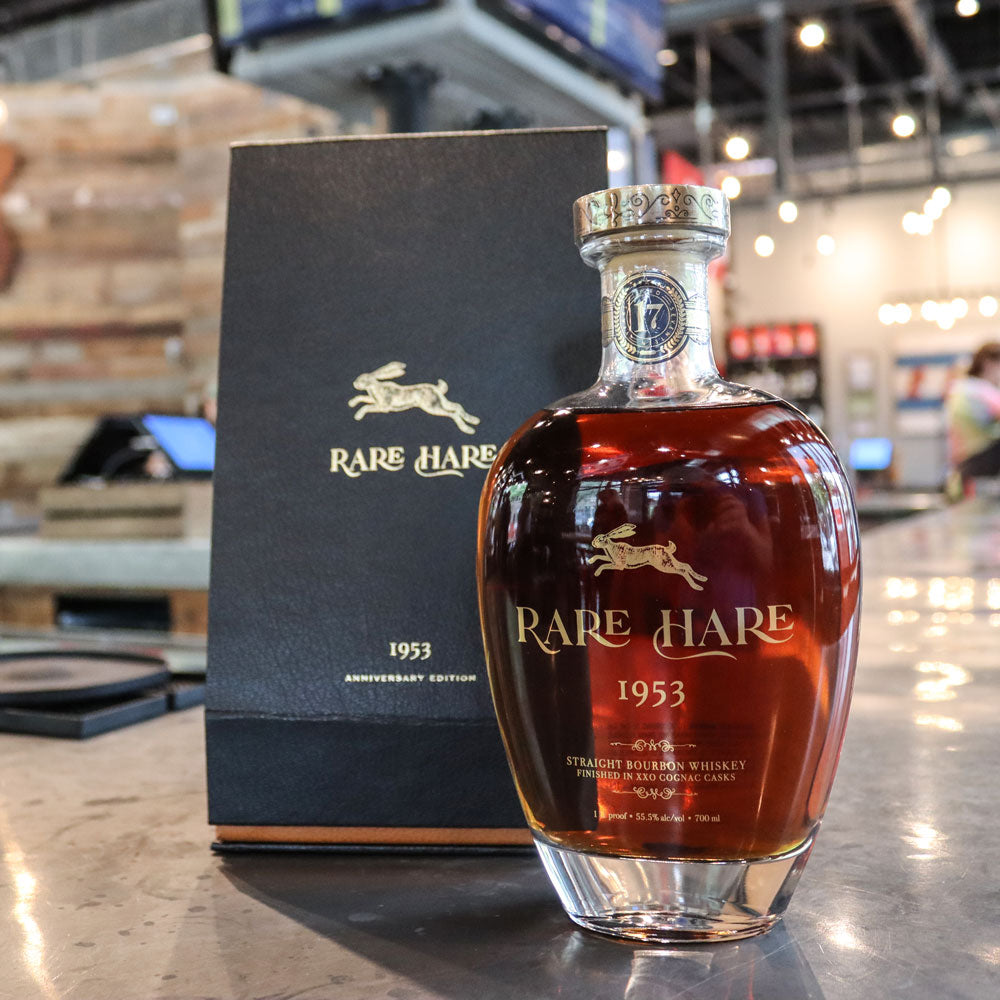
Rare Hare 17 Year Old 1953 Straight Bourbon Whiskey
Rare Hare “1953” 17 Year Old Straight Bourbon Whiskey


Introduction & Brand Background
“Rare Hare 1953” is a limited‑edition, ultra‑premium bourbon launched by Playboy Spirits / Rare Hare Spirits as the inaugural whiskey release under the Rare Hare label. (Bourbon Blog) The name “1953” is a tribute to the founding year of Playboy magazine. (Bourbon Blog)
It is marketed as a 17‑year-old straight bourbon, finished in XXO Cognac casks from the Champagne region of France, then bottled at 111 proof (55.5 % ABV). (Distiller – The Liquor Expert) Only 1,953 bottles were produced for the U.S., and similarly 1,953 for Europe/Asia markets, aligning with the “1953” motif. (Distiller – The Liquor Expert)
Rare Hare is a venture of Playboy’s spirits ambitions. The Rare Hare 1953 is the brand’s entry into the whiskey space, part of a broader “rare and unique spirits” portfolio they plan to roll out in select markets globally. (Bourbon and Mead)
In terms of positioning, 1953 is clearly a prestige, collector’s, luxury bottle: very small production, premium finishing, elegant packaging (including NFC chip in box for Rare Hare Society access), high price point, and a narrative linking to Playboy heritage and prestige. (Distiller – The Liquor Expert)
Production, Composition & Technical Specifications
Because Rare Hare is a relatively new brand and this is a sourced / custom project, the full production details are not fully transparent. But here’s what is known or strongly inferred:
Known / Publicly Stated Specifications
| Feature | Specification / Claim |
|---|---|
| Age | 17 years (straight bourbon) (Distiller – The Liquor Expert) |
| Proof / ABV | 111 proof / 55.5 % ABV (Distiller – The Liquor Expert) |
| Cask Finish | Final finishing in XXO Cognac casks (from Champagne region) for a period (often 9–12 months) (Hard To Find Whisky) |
| Barrel Source / Base Bourbon | Undisclosed; likely sourced (some believe from Dickel) (BOURBON & BANTER) |
| Bottling Location | Bottled in Memphis, Tennessee (per WhiskeyWash) (The Whiskey Wash) |
| Filtering / Chill Filtration | Non‑chill filtered (to preserve texture) as claimed in retailer descriptions (Hard To Find Whisky) |
| Production Run | 1,953 bottles (U.S.), plus same number for Asia/Europe markets (Distiller – The Liquor Expert) |
| Packaging / Tech Additions | NFC chip in box granting access to Rare Hare Society perks; individually numbered bottles (Distiller – The Liquor Expert) |
Some additional inferences and commentary:
- Because this is a straight bourbon, the base spirit must be aged in new, charred American oak and contain at least 51% corn as per U.S. bourbon law. (The Whiskey Wash)
- The finishing in cognac casks is a secondary maturation step: after the 17 years in bourbon barrels, the blend was “re-barreled” into XXO cognac casks for additional mellowing and flavor influence. (UPROXX)
- Some sources say the bourbon spent ~16 years in American oak, then final year in cognac casks. (The Whisky)
- The #3 char + medium toast profile of new oak is referenced in one retail listing (F Hare / Rare Hare) for the base bourbon. (Hard To Find Whisky)
Because the distillery and mash bill are undisclosed, whiskey enthusiasts speculate (via Reddit) that the spirit originates from Dickel (Tennessee) because of origin codes seen on bottles and tasting traits. (Reddit) Some commenters say the marketing is misleading. (Reddit)
Thus, Rare Hare 1953 is a sourced / custom bottling rather than a fully in‑house distilled product from Rare Hare itself.
Tasting Profile & Sensory Experience
Below is a compiled, comparative summary of tasting notes from multiple reviewers, plus my analysis of the expected profile.
Appearance / Color
Rare Hare 1953 pours a rich amber to dark bronze hue. The spirit shows oily legs and slow tears on glass, indicating body and weight. (The Whiskey Wash)
Aromas / Nose
- Subtle fruit & dried fruit: Notes of brandy-soaked raisins, dried cherry, dried fruit leather, and deeper orchard fruit (apricot, nectarine) appear. (UPROXX)
- Candied / sweet notes: Brown sugar, buttered pastry, vanilla, caramel, and butterscotch undertones. (The Whiskey Wash)
- Spices & oak: Hints of clove, nutmeg, oak char and toasted oak. (The Whiskey Wash)
- Light citrus / brightness: Pineapple, cherry / tart fruit hints amid richness. (The Whiskey Wash)
One reviewer summarized: “dark fruit leather next to brandy soaked raisins … amber and golden leaves … a hint of clove and toffee.” (UPROXX)
Palate / Taste
- Sweet core: Caramel, vanilla oils, cream corn, buttery notes. (The Whiskey Wash)
- Spice & heat: Cinnamon, nutmeg and peppery black spice — noticeable but not overly fierce for the proof. (UPROXX)
- Fruit & cognac influence: Underlying notes of cognac / grape / brandy fruitiness, subtle, tucked beneath the bourbon character. (The Whiskey Wash)
- Oak & toast: Toasted oak and gentle char, enough structure but not overpowering. (BOURBON & BANTER)
- Herbal & grain: Some descriptions mention light herbal or grainy touches (corn, herbal whispers) to balance the richness. (BOURBON & BANTER)
From Bourbon Banter: “medium bodied with light herbal notes and creamed corn; light oak and baking spices.” (BOURBON & BANTER)
Finish
- Long, lingering: Caramel and sweetness persist on tongue, with nutmeg, oak and some tobacco leaf. (UPROXX)
- Fruity / forest character: The finish leans back toward autumnal forest imagery, with bark and chewiness, softened fruit, a touch of salted toffee drizzle and sour cherry leaf. (UPROXX)
- Warm / Balanced: The finish is warm but not harsh; the oak is present but integrated.
Overall Impression
Rare Hare 1953 is a rich, mature bourbon with a balance between depth and elegance. The cognac cask finishing adds complexity, fruit influence, and a subtle extra layer over the aged bourbon base. It does not strike as an overwhelmingly wood-driven dram (at least not in the best pours) but with visible oak presence.
Some reviewers caution that out of the bottle the spirit can feel hot / sharp — especially early — and may benefit from some rest or a few drops of water. (The Whiskey Wash) For lovers of ultra-aged bourbon, some may find the oak or finishing influence borderline intrusive, but many appreciate the interplay.
Marketing, Packaging & Prestige Features
Rare Hare 1953 is not just a whiskey but a branding statement, built with features aimed at premium collectors and brand-engaged buyers.
Packaging & Presentation
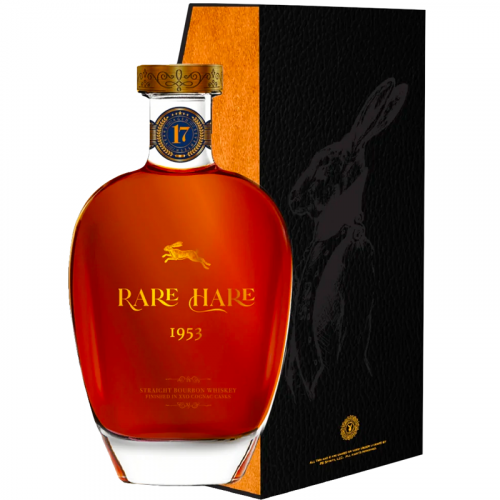
- Each bottle comes in a commemorative presentation box (leather, wood interior, art deco / premium design). (BOURBON & BANTER)
- The box includes an NFC chip (near-field communication) which, when scanned, grants owners access to the Rare Hare Society — a club offering exclusive experiences like travel, events, private barrel releases. (Distiller – The Liquor Expert)
- Bottles are individually numbered (matching the 1,953 bottle run) for collectibility. (Distiller – The Liquor Expert)
- The branding draws strongly on Playboy heritage / glamour — the name “Rare Hare” and the founding date “1953” evoke the Playboy brand. (Bourbon Blog)
Prestige & Exclusivity
- Only 1,953 bottles produced (U.S.), plus same count for Europe/Asia — extremely limited. (Distiller – The Liquor Expert)
- High price point (MSRP ~$589 to ~$639 depending on market) positions it among ultra-premium / luxury bourbon releases. (The Whiskey Wash)
- NFC + membership features aim to tie bottle ownership to lifestyle incentives, driving demand among brand / status-conscious collectors. (Bourbon and Mead)
- Rare Hare (and Playboy Spirits) intends this to open the door to further “rare / curated spirits” launches in select global markets. (Bourbon and Mead)
From Bourbon Banter: “Because of the whiskey’s rarity, only 1,953 bottles were produced.” (Rare Hare Spirits)
One reviewer, Uproxx, commented that the bottle and presentation are “a beauty on its own … overall this is a great-looking gift bottle with a little something extra.” (UPROXX)
Thus, Rare Hare 1953 is as much a marketing / prestige product as it is a whiskey — engineered to attract collectors, enthusiasts, and brand-oriented buyers.
“People Also Ask” – Common Questions & Answers
Here are several likely Google “People also ask” style questions about Rare Hare 1953, with researched answers.
1. What is Rare Hare 17 Year Old Bourbon?
Answer:
Rare Hare 1953 is a tribute / limited edition 17‑year-old straight bourbon whiskey released by Rare Hare Spirits / Playboy Spirits. It is aged 17 years (in new American oak barrels for most of that time) and then finished (re‑barreled) for a period in XXO Cognac casks from Champagne region, before bottling at 111 proof (55.5 % ABV). (Distiller – The Liquor Expert) Only 1,953 bottles were produced, and the release includes premium packaging and NFC membership features. (Distiller – The Liquor Expert)
2. How is Rare Hare 1953 Bourbon made / finished?
Answer:
- The bourbon is sourced (i.e. not fully distilled in-house by Rare Hare) from an undisclosed distillery. Some speculation points to a Tennessee origin (Dickel) based on origin codes and tasting characteristics. (The Whiskey Wash)
- The bourbon spends most of its aging life in standard new charred American oak barrels (likely char #3, medium toast) for ~16 years (or slightly varying depending on formulation). (Hard To Find Whisky)
- After aging, the barrels (or blended barrels) are transferred into XXO cognac casks for finishing / mellowing (often 9–12 months) to impart grape / cognac / fruit influence. (Hard To Find Whisky)
- The final spirit is blended, non-chill filtered, and bottled at 111 proof. No added color or flavor is claimed. (Hard To Find Whisky)
- The package includes premium elements (NFC chips, battery of branding) to reinforce its luxury positioning. (Bourbon and Mead)
3. What does Rare Hare 1953 taste like?
Answer:
Nose / Aromas:
- Dried fruit, dark fruit leather, brandy-soaked raisins
- Candied / caramelized nectarine, brown sugar, vanilla
- Oak, toasted wood, subtle clove and baking spice (Sunrise Liquor)
Palate / Taste:
- Sweet core: caramel, vanilla oils, buttery / creamy corn
- Spices: cinnamon, nutmeg, light pepper / black spice
- Cognac influence: subtle fruit / wine-like grape / brandy notes in background
- Oak / char: supportive but not overwhelming
- Some herbal, grain, and corn influence to balance (BOURBON & BANTER)
Finish:
- Long and lingering: caramel, oak, nutmeg, tobacco leaf
- The fruit and forest / bark elements return on the tail
- Warm and balanced rather than harsh (UPROXX)
Some reviewers note that when taken straight out of the bottle, the spirit can feel hot, particularly before it spends time in glass or with a little water. (The Whiskey Wash)
4. Is Rare Hare 1953 worth its price?
Answer:
That depends on your priorities. Some points to consider:
Arguments for “Yes, it’s worth it”:
- Uniqueness & rarity: Only ~1,953 bottles per region; high collector appeal. (Distiller – The Liquor Expert)
- Prestige packaging & membership perks: NFC / Rare Hare Society adds experiential value for some buyers. (Bourbon and Mead)
- Quality & flavor depth: Many reviews praise its complexity, the interplay of oak, spice and cognac finish. (UPROXX)
- Novelty & speculative value: If the Rare Hare label becomes more established, early bottles may gain resale / collector value. (Bourbon and Mead)
Arguments against or cautionary notes:
- The base bourbon is not disclosed, potentially making this more of a finishing / marketing play than a truly original distillate. (The Whiskey Wash)
- The cognac finishing may overshadow or distort the pure bourbon character; some purists may prefer unadulterated bourbon expressions.
- The high premium over typical 17-year bourbons (if not factoring packaging) makes the value proposition marginal for those buying solely for taste.
- Some reviewers feel the spirit is “show-off pour” — lovely to showcase, but perhaps less compelling for daily drinking. (UPROXX)
- Out-of-bottle harshness needs mitigation (resting, dilution) to fully open. (The Whiskey Wash)
One reviewer (Uproxx) said:
“I’d say save it for your vault. It is a rare whiskey that we are not going to see again … you have a really solid 17‑year whiskey to sip on through the year.” (UPROXX)
Another (Bourbon Banter) stated:
“WORTH THE PRICE: No. But keep reading. There’s more to the price than whiskey alone.” (BOURBON & BANTER)
So, for collectors or consumers who value prestige, branding, limited edits, and are willing to pay for exclusivity, it may justify the cost. For taste-only buyers seeking maximum flavor per dollar, there may be alternative aged bourbons offering better cost-to-flavor ratios.
5. How should I drink Rare Hare 1953? Neat, with water, or in a cocktail?
Answer:
Because it is 55.5% ABV and a finished, delicate bourbon, here are recommendations:
- Neat: Use a tulip-shaped bourbon or Glencairn glass. Allow 10–15 minutes for the spirit to open and breathe.
- With water: A few drops (1–2 ml) of water can help coax forth aroma and soften edges, especially early on.
- Resting: Let the pour sit in the glass for several minutes, particularly the first few times, to let the cognac finish mellow.
- Cocktails: While rare / expensive bourbons are often best savored neat, it could be used in refined cocktails (e.g. an Old Fashioned) where you want the spirit to shine. But dilution will mute much of its complexity — best to use sparingly and in cocktails with minimal additional flavors.
- On ice: Large ice cubes may be acceptable but will dilute quickly, so less ideal unless you prefer milder flavours.
Because of its strength and finishing, pacing the dram — sipping slowly, letting it evolve — is the best approach to appreciate its layers.
6. How many bottles of Rare Hare 1953 exist / is it rare?
Answer:
Exactly 1,953 bottles were allocated for the U.S. market (matching the “1953” motif) and similarly 1,953 bottles for Asia/Europe launches, making a total production of ~3,906 bottles for these combined markets. (Distiller – The Liquor Expert) This extremely limited run ensures rarity among ultra-premium releases.
7. Where can I buy Rare Hare 1953 / what’s its price?
Answer:
- Official / Brand Website: Rare Hare’s own site listed 1953 previously for ~$599 USD per bottle. (Rare Hare Spirits)
- Specialty & Online Retailers: It’s available (or was available) through specialist whiskey / spirits retailers, though stock is extremely limited. (Craft Spirit Shop)
- International Markets / Duty‑Free / Importers: Some allocations were made for Asia/Europe markets. (Distiller – The Liquor Expert)
- Price Range: Approx retail ~US $589 to ~$639 (depending on market) based on official / press releases. (Bourbon and Mead) Some retailers mark it significantly higher ($800–$1,000+). (Sunrise Liquor)
Because of limited supply, buyers may pay significant premiums. Also, in countries with high import duty / taxes (such as in many African markets), the final retail could be substantially higher.
8. Is Rare Hare 1953 “straight bourbon”?
Answer:
Yes — it is labeled as a straight bourbon whiskey. That means it adheres to U.S. regulations for straight bourbon: made from at least 51% corn, distilled at ≤ 160 proof, entered into the barrel at ≤ 125 proof, aged in new charred oak for at least 2 years, and bottled without added color/flavor. (The Whiskey Wash)
However, it is finished (re-barreled) in cognac casks post-aging, which is permissible so long as the original aging was in new oak and all bourbon laws have been met. The finishing does not disqualify it, though it makes it a “finished bourbon.” (The Whiskey Wash)
Interestingly, some sources mention origin codes (like Tennessee) and that the base could be Tennessee whiskey (Dickel) being reclassified or relabeled. (Reddit) But as marketed, it is presented as “17 Year Straight Bourbon.”
9. What are the criticisms / controversies around Rare Hare 1953?
Answer:
Several criticisms or concerns have been voiced by whiskey enthusiasts, reviewers, and community posts:
- Lack of transparency
The base distillery, mash bill, and full aging details are undisclosed — meaning consumers must trust the branding. (The Whiskey Wash)
Some argue much of the value is in finishing, packaging and marketing rather than raw distillate provenance. - Speculation of source / origin
Some Reddit commentators claim the whiskey originated from Dickel (Tennessee) based on codes or tasting characteristics. Others criticize this as “marketing game.” (Reddit)
One post:“It has an Origin code of Tennessee. That means it was originally made in TN. For the age and state origin, it can only really be Dickel.” (Reddit)
- Price premium / “show‑off pour”
Multiple reviews suggest that while the whiskey is excellent, the markup is heavy, and much of the price is in the packaging and prestige, not just the spirit itself. (BOURBON & BANTER) Uproxx: “It felt like a bit of a show-off pour more than one I’d actually want to return to day in and day out.” (UPROXX) - Oak / finish dominance / hot initial pour
Some reviewers note that the oak or finishing can dominate in early pours, and the spirit may feel too “hot” straight from bottle. (The Whiskey Wash) - Limited practical use
Given its rarity and cost, many consumers might prefer to keep (or sell) it rather than drink regularly — increasing the “investment / display” vs “daily enjoyment” tension. (UPROXX)
Overall, the criticisms center less on the whiskey being bad, and more on whether the premium pricing, marketing packaging, and lack of full transparency justify the purchase for everyone.
10. How should one store it and preserve flavor?
Answer:
- Store upright (standard for high-proof / finished whiskeys) to avoid cork seepage.
- Keep in cool, dark environment, away from UV / sunlight and temperature fluctuations (which can degrade flavors).
- Minimize headspace: as with many premium bottles, once opened use relatively quickly — ideally within 12–24 months — because oxidation can flatten aromatic compounds.
- Decant carefully: if the bottle is half-empty, some collectors decant into a smaller bottle to reduce air.
- Let a poured dram rest for several minutes for the aromas and flavors to open before drinking (especially for first pour).
- Use a quality glass (tulip, Glencairn, or copita) to capture nose and flavor.
Comparative & Contextual Analysis
To understand Rare Hare 1953 in context, let’s compare or situate it among similar ultra-aged / finished bourbons, and assess who this bottle might appeal to.
Compared to other ultra‑aged or finished bourbons
- Many ultra‑aged bourbons (15–25 years) run into the risk of “barrel fatigue” or too much oak dominance. Rare Hare’s approach of finishing in cognac casks is designed to add complexity and mitigate over-oaking.
- Some other bourbons with finishing (e.g. cognac, sherry, etc.) derive extra flavor; Rare Hare’s cognac finish is not unique but is elegantly done in many reviews.
- Because the base source is unknown, it’s challenging to compare directly to house-distilled, full transparency whiskeys (e.g. Pappy Van Winkle, Four Roses Private Selections, or well-known aged bourbons).
Who is the ideal consumer for this bottle?
Rare Hare 1953 is likely to appeal most to:
- Collectors & enthusiasts: those who value rarity, limited editions, premium packaging, NFC membership perks, and brand prestige.
- Luxury / gift buyers: someone seeking an impressive, high-end whiskey for gifting or display.
- Experienced bourbon drinkers: folks who can appreciate the subtleties of finishing, aged character, and layering, and are comfortable managing a high-proof pour.
- Brand-oriented buyers: people enthusiastic about Playboy / Rare Hare brand tie-ins, club membership / experience perks, or aspirational branding.
It is less suited for:
- Buyers focused solely on value per flavor dollar (i.e. everyday drinking).
- Beginners or casual bourbon drinkers who may find the strength or complexity intimidating.
- Those demanding full transparency of mash bill, distillery, etc., for trust in provenance.
Community & Enthusiast Feedback
Whiskey fan forums and Reddit threads offer interesting real-world insights and critiques. Some selected comments:
- A Reddit user:
“Short review … Nose: amazing, sweet, brown sugar, oak, the cognac cask comes through nice … Palate: thick mouth feel, caramel, sweet oak, chocolate, hint of vanilla … Summary: Rare Hare 1953 is one of the best pours I ever had …” (Reddit)
- Another commenter cautioned:
“The juice can’t be worth the price … marketing game from Playboy/Heavens Door.” (Reddit)
- Some noted that initial impressions shift after letting the whiskey sit:
“I revisited this bottle … let it seat uncovered for 15 minutes … the Dickelness profile came through … changing the review … disappointment with misleading marketing.” (Reddit)
- Others speculated about the origin:
“It has an Origin code of Tennessee … it can only really be Dickel.” (Reddit)
“Playboy: $17‑year … bottle club marketing … overpriced … etc.” (Reddit) - On the logistics / hype:
“My local liquor store got a case … they have two left … trying to convince myself NOT to buy it …” (Reddit)
These candid remarks echo many of the same cautions: strong praise for the nose/flavor, but skepticism about price, marketing, and transparency.
Conclusion & Final Thoughts
Rare Hare 1953 is a bold and ambitious entry into the premium distilled spirits market. It is as much a statement pieceas a whiskey: blending aged bourbon character, finishing craft, branding, exclusivity, and experiential marketing.
Strengths
- Uniqueness and limited run: only ~1,953 bottles — high scarcity.
- Layered flavor profile: aged depth + cognac finishing adds nuance.
- Strong packaging and membership incentives: NFC, Rare Hare Society, premium box.
- Collector appeal: positioning as a luxury / prestige whiskey.
- Drinking quality: many reviewers praise its balance, depth, and complexity (when well managed).
Weaknesses / Caveats
- Transparency lacking: undisclosed mash bill, distillery source, and full aging details.
- High price premium: the cost is steep and may be driven more by branding than absolute drinking value.
- Finish / oak may dominate: some pours may feel “hot” or strongly oaked initially.
- Limited practicality for regular drinking: likely more “occasional / display / collectible” than daily dram.
Verdict
If you are a whiskey collector, prestige-focused buyer, or enthusiast who values rarity, design, membership perks, and are comfortable with some opacity — Rare Hare 1953 is a compelling trophy bottle. It offers a rich sensory experience and a strong story.
If instead you prioritize maximum flavor per dollar, full production transparency, or everyday drinkability, you might find better value elsewhere among well-established aged bourbons from known distilleries.
In summary: Rare Hare 1953 is not for everyone — it is for those who want a statement whiskey as much as a fine pour. Approach it with respect, patience (let it breathe), and a mindset to enjoy more than just the spirits inside — also the packaging, context, and story behind it.
If you like, I can check the availability and likely price of Rare Hare 1953 in your region (Cameroon / Central Africa) and compare it to alternate aged bourbons you could import. Do you want me to find that?




Reviews
There are no reviews yet.