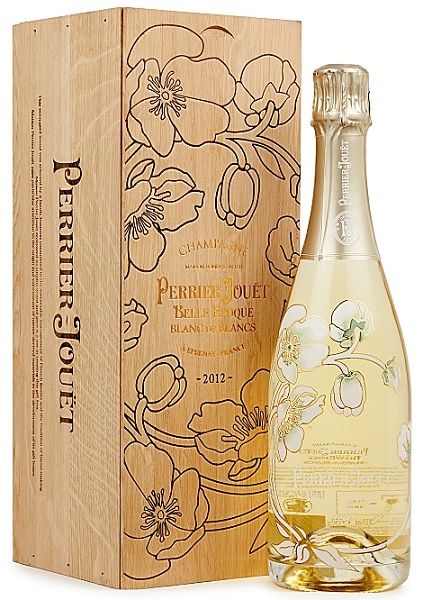
Perrier-Jouët Belle Epoque 2012 Blanc de Blancs Champagne
Introduction
When it comes to genuinely exceptional Blanc de Blancs Champagnes—those made purely from Chardonnay and drawn from the top terroirs of Champagne—one name stands out: the Belle Époque Blanc de Blancs 2012 from Perrier-Jouët. This cuvée represents the Maison’s highest expression of Chardonnay, crafted only in the years when conditions are truly outstanding. With the 2012 vintage, one of the more highly regarded recent years for Chardonnay in Champagne, this edition becomes a candidate for both enjoyment now and ageing into the future. In this article, we will explore: the heritage of the Maison, the detailed production and composition of the 2012 cuvée, tasting notes and characteristics, serving and pairing recommendations, market positioning and pricing, then dive into all the likely “People also ask” questions from Google with answers, and finish with a conclusion about whether and when to purchase this Champagne and how it may fit into your cellar or special occasions.
1. The Maison: Perrier-Jouët – Heritage & Style
Origins & Legacy
Perrier-Jouët was founded in 1811 (some sources say 1810) by Pierre-Nicolas Perrier and his wife Adèle Jouët, in Épernay, Champagne. (Le Guide Hachette des Vins) Over time the house has become known for its elegant style, its strong emphasis on Chardonnay from the Côte des Blancs, and the iconic Belle Époque line decorated with the white anemone motif created in 1902 by the Art-Nouveau master Émile Gallé. (Millesima)
House Style & Philosophy
Perrier-Jouët’s hallmark is finesse, purity and floral elegance — especially when it comes to their Blanc de Blancs offerings. The Belle Époque Blanc de Blancs is only declared in exceptional years, and the house says that it “represents the quintessence of the expression of Chardonnay, entirely consistent with the style of the Maison.” (Perrier-Jouët Worldwide) This emphasis on pure Chardonnay (100%) from Grand Cru sites gives the cuvée a singular character: not the dominance of Pinot noirs or Meunier blends, but refined white-grape expression, elegance, minerality and ageing potential.
In short: if you are looking for a top-tier Champagne to represent Chardonnay at its best, the Belle Époque Blanc de Blancs is squarely in that category.
2. The Cuvée: Belle Époque Blanc de Blancs 2012 – Composition & Production
Vintage & Terroir
- The 2012 vintage for Champagne had a challenging start (wet spring, cloudy early summer) but from mid-August onward settled into warm and dry conditions, producing concentrated grapes. (Bulles en Ligne)
- The Belle Époque Blanc de Blancs 2012 is made from Chardonnay only (100%) from the Côte des Blancs Grand Cru terroirs. (plus-de-bulles.co.uk)
- Specifically, the grapes come from two historic parcels: Bouron Leroy & Bouron du Midi in Cramant (6.8 ha of limestone soil, south-east exposure) which are integrated in the Maison’s holdings. (Millesima)
Blend & Technical Details
- Varietal: 100% Chardonnay. (Ventealapropriete)
- Alcohol: ~12.5% vol. (approximate) as noted in several technical sheets. (Ventealapropriete)
- Dosage / Brut designation: The cuvée is Brut; typical dosage identified in retailer notes is ~6–12 g/l. (Bulles en Ligne)
- Ageing: The house’s description indicates very strong ageing potential; one technical sheet notes “incredible ageing potential.” (Bulles en Ligne)
- Colour & visuals: The house describes “a pale, luminous hue” reminiscent of the rising sun. (plus-de-bulles.co.uk)
Style Intention
According to the Chef de Caves Séverine Frerson:
“With its elegance, its refinement and its beautiful silky texture, this Champagne reminds me of the white orchid, my favourite flower.” (Bulles en Ligne)
That sums up the intention: a Champagne of subtle power, refined texture, floral and mineral nuances, rather than overt opulence or muscular fruit. In effect: Chardonnay in grand style.
3. Tasting Profile & Characteristics
Here’s a breakdown of what to expect from the Belle Époque Blanc de Blancs 2012.
Appearance
- Colour: Pale gold with green/silver highlights. Falstaff tasting describes “bright, pale green yellow, silver reflections, very fine, persistent mousse.” (Falstaff)
- Bubbles: Very fine, persistent, elegant mousse — consistent with high-end Champagne.
- Visual impression: luminous, delicate, refined.
Nose (Aroma)
- According to the house: “A refined and delicate nose, with aromas of white flowers and white-fleshed fruit.” (Bulles en Ligne)
- Further descriptors from reviewers:
- White flowers, orchard fruits (peach, vine peach), citrus zest, honeyness, almond and chalky/mineral notes. (Ventealapropriete)
- Falstaff review: “Mineral nuances, a fine touch of vineyard peach, a hint of almond and citrus zest, white flowers in the background … very multi-layered bouquet.” (Falstaff)
- Others: Honey, brioche, white chocolate, wild white flowers, chalk-driven minerality. (millesima.it)
Thus the aromatic profile: elegant floral and white-fruit top notes, followed by subtle pastry/yeast and chalk/mineral mid-notes, giving depth.
Palate (Taste & Texture)
- The house gives: “A frank and delicate attack. A subtle, chiselled wine with a nuance of white pepper. Elegant silky texture and almost infinite length.” (Bulles en Ligne)
- Reviewers:
- Falstaff: “Full-bodied white stone fruit, lively acid core, velvety texture on the palate, fine fruit sweetness, with salty-peppery aspects on the finish.” (Falstaff)
- The Hachette Guide: “Round in attack, chalky in mid-palate, acid‐driven finish with a slight bitterness.” (Le Guide Hachette des Vins)
- Reddit tasting note:
“We enjoyed this … nose of croissant and lemon. The palate has strong, complex flavours of citrus, brioche, minerals, and butter. … A long finish of green apple, pear, and honey.” (Reddit)
Texture: The wine has clarity and precision (thanks to Chardonnay) but also a richness of texture – satiny, silken, yet kept in check by acidity and minerality.
Flavour profile: white stone fruit (peach, pear), citrus (lemon, lime), floral, honey/almond, spicy hint (white pepper), mineral/chalk, pastry/brioche undertones.
Finish: Long, elegant, chalk-minerality lingering, subtle bitterness or saline edge; excellent age potential.
Overall Impression
The Belle Époque Blanc de Blancs 2012 is a truly refined example of high-end Blanc de Blancs Champagne: it combines freshness, finesse, complexity and aging capacity. It does not shout with overt fruit; rather it whispers nuance, mineral geology, texture and time. If you’re looking for a Chardonnay-driven Champagne that will reward both now and with years ahead, this sits right at the top.
4. Serving, Food Pairing & Storage
Serving
- Recommended serving temperature: around 10 °C (some sources say 12 °C) to reveal aromatics and texture. (millesima.it)
- Glassware: A quality Champagne tulip or white-wine glass will allow the aromas to unfold and bubbles to show elegantly (use rather than a narrow flute for vintage Champagne).
- Pouring: Chill the bottle gradually, open gently, let it settle, and pour allowing the mousse to show but not dominate.
- Time to open: While already delicious, motivated by ageing potential, decanting or letting the glass rest 10-15 minutes may help early bottles to open up.
Food Pairing
Because this Champagne is both refined and textured, it pairs beautifully with elevated cuisine rather than simple snacks.
Suggested pairings from the Maison and retailers:
- Noble seafood: spider crab (“araignée de mer”), scallop carpaccio with citrus zest, sea bass in salt crust, turbot, lobster, langoustines. (Perrier-Jouët Worldwide)
- More inventive: white mushroom (ceps) dishes, fruit passion (fruit de la passion) as a flavour accent. (Perrier-Jouët Worldwide)
- Vegetarian option: dishes with creamy/almond aspects, lightly spiced white pepper touches.
- Cheese/ delicacy: soft cheeses with white fruit compotes, almond or buttery textures.
Because the palate is crisp yet rich, the Champagne balances richness of dish with freshness, rather than being overwhelmed.
Storage & Ageing Potential
- Storage: Ideal conditions are cool (~10–13 °C), stable temperature/humidity, dark, minimal vibration, bottle lying horizontally or suitably stored. Especially crucial if you are buying in warmer climates (e.g., Douala, Cameroon).
- Ageing potential: It is made for the long haul: multiple sources indicate excellent potential. For example, Falstaff rated it 97 points and notes the “certain ageing potential.” (Falstaff)
- Retailers note a “tasting window” around 2022-2029 and even beyond (some say until 2032 or more). (Bulles en Ligne)
- When to drink: You can enjoy now if properly stored (it is showing beautifully already), but if you are investing, holding for 5-10 more years will reward you with tertiary nuance (almond/honey/toasty/chalk) layered on the primary freshness.
5. Market Positioning, Pricing & Availability
Positioning
- The Belle Époque Blanc de Blancs line is the top tier prestige cuvée of Perrier-Jouët for Chardonnay. Compared to the standard Belle Époque (which may include blends of Chardonnay and Pinot Noir), this Blanc de Blancs is rarer, dedicated solely to Chardonnay, often from single terroir parcels. (Perrier-Jouët Worldwide)
- Because only in the best years is the cuvée declared, the production is limited and the price is premium. It is intended for collectors, anniversaries, fine dining – not necessarily everyday consumption.
Pricing
- According to Millésima, an Italian retailer lists the bottle at ~ €376 (tax incl) for the 2012. (millesima.it)
- Falstaff lists from around €100 (though that may refer to older stock or different release). (Falstaff)
- Retailers: one listing in Canada refers to $825 CAD for the 2012/2014 mix. (BSW Liquor)
- Clearly, in markets with high import costs (Africa, Asia) final retail can be significantly higher.
Thus, for a buyer in Douala or similar market you should check landed price, import duties, storage history and compare with benchmark Europe/UK pricing to assess value.
Availability
- Because it is limited in production, you may find scarcity. Retailers comment on its rarity. (plus-de-bulles.co.uk)
- Ensure provenance (proper storage), correct vintage (2012) and authenticity (bottle with the Belle Époque design, wooden case or special packaging).
- In warmer climates shipping/storage conditions must be carefully checked to ensure value is retained.
6. “People Also Ask” – Frequently Asked Questions & Answers
Here are the questions people commonly search for online about this Champagne, with answers.
Q: What grapes are used in Perrier-Jouët Belle Époque Blanc de Blancs 2012?
A: The cuvée is made from 100% Chardonnay grapes. (plus-de-bulles.co.uk) The grapes come from Grand Cru parcels in the Côte des Blancs (specifically Cramant) including Bouron Leroy & Bouron du Midi. (Millesima)
Q: What is the style of Perrier-Jouët Belle Époque Blanc de Blancs 2012?
A: It is a vintage Blanc de Blancs Champagne: refined, Chardonnay-driven, floral and mineral in style, with ageing potential. The house emphasises its “quintessence of Chardonnay.” (Perrier-Jouët Worldwide)
Q: What are the tasting notes for this cuvée?
A: On the nose: white flowers, white-fleshed fruit (pear/peach), honey, almonds, chalk/mineral. On the palate: elegant, silky texture, citrus/stone fruit, white pepper nuance, minerality/chalk backbone, very long finish. (Falstaff)
Q: How should I serve this champagne and what food pairs well?
A: Serve chilled (~10-12 °C). Use a quality tulip or white-wine glass; pour gently and let settle. Pairing: excellent with fine seafood like scallops, sea bass, lobster; delicate white-meat dishes; mushrooms and white truffle; dishes with almond or citrus zest; vegetable dishes in fine dining. (Perrier-Jouët Worldwide)
Q: How long can I cellar this Champagne?
A: Very good ageing potential. According to one review it scored 97 points and “certain ageing potential.” (Falstaff) Retailers mention a tasting window through 2032 or longer. (Bulles en Ligne) If stored properly, you may hold 8-15+ years and see additional tertiary character evolve.
Q: Is this Champagne a good value?
A: It depends on price and market. Given the pedigree (100% Chardonnay, Grand Cru terroir, limited production), many consider it excellent value for a prestige Blanc de Blancs. For example, one review gave very high score (95-97pts) for 2012. (champagneclub.com) However, in markets where import mark-up is high, the value may be less compelling compared to European pricing.
Q: What distinguishes this Belle Époque Blanc de Blancs from the standard Belle Époque line?
A: Standard Belle Époque may incorporate blends of Chardonnay and Pinot Noir (or broader sourcing). The Blanc de Blancs version is dedicated 100% to Chardonnay from premium terroirs (Côte des Blancs Grand Cru). It is more exclusive, focused, and produced only in exceptional years. (Millesima)
Q: What is the colour and presentation like?
A: The house describes the colour as “pale, luminous hue, like the rising sun.” (plus-de-bulles.co.uk) The bottle is the iconic Belle Époque bottle, decorated with white anemones (Art Nouveau design by Émile Gallé from 1902) which adds to its visual appeal. (millesima.it)
Q: What should I look out for when buying in my region (e.g., Cameroon / Douala)?
A: Important factors: verify proper storage (cool, stable, dark); verify authenticity (correct vintage 2012, label and bottle design); compare local price versus European benchmarks; check bottle condition (no heat damage, label integrity, fill level, storage history). Because high-end champagnes are sensitive to shipping/storage conditions in hot climates, extra care is wise.
7. Pros & Cons – Things to Know
Pros
- Exceptional quality: 100% Chardonnay, Grand Cru terroir, excellent vintage (2012).
- High scores: e.g., 97 points (Falstaff) for 2012. (Falstaff)
- Ageing potential: can be enjoyed now or cellared for years to come.
- Elegance: refined texture, floral/mineral complexity, white-grape purity.
- Presentation: packaging, bottle design, rarity add to prestige.
- Versatile pairing: works from aperitif to a high-end meal.
Cons / Things to Consider
- Price: As a prestige Blanc de Blancs it commands a premium; if import mark-up is heavy the value may be diminished in some markets.
- Availability: Thin production, may be harder to source in certain regions; ensuring provenance important.
- Storage sensitivity: Because of the delicate nature and high specification, poor storage (e.g., excessive heat) can degrade quality. Especially relevant in tropical markets.
- Style may not suit all: If you prefer rich, heavy, Pinot Noir-driven Champagnes or straightforward fruity ones, you may find this more subtle, more mineral, and less overtly opulent.
- Timing: While enjoyable now, part of the value lies in ageing; if you drink immediately, you may miss the evolution that makes this special.
8. Conclusion
In conclusion, the Perrier-Jouët Belle Époque Blanc de Blancs 2012 is a top-tier Champagne for those seeking refined Chardonnay expression with elegance, depth and future potential. For a special occasion, a significant celebration, a cellar addition or to impress with a sophisticated white-grape Champagne, this cuvée is highly compelling.
When to choose it:
- When you are celebrating a milestone (anniversary, major achievement, fine dining event) and want a Champagne that stands out.
- When you enjoy or appreciate Chardonnay-driven Champagnes rather than Pinot Noir-dominated styles.
- When you have access to proper storage or are buying from a trusted source and don’t mind the premium.
- When you want a Champagne that can be enjoyed now but also has years ahead — perhaps buy one now and one to cellar.
When you might choose something else:
- If your budget is constrained and you want a good Champagne without prestige-price.
- If you don’t have assurance of good storage or are buying in a hot/humid market with questionable transport/storage conditions.
- If you prefer bold, fruity, immediately approachable Champagnes rather than subtle mineral Chardonnay style with ageing potential.
Bottom-line verdict: Highly recommended for the discerning buyer. If you find the Belle Époque Blanc de Blancs 2012 from Perrier-Jouët at a reasonable price, in trustworthy condition, and you value Chardonnay-driven finesse and cellar potential, go for it. Just ensure due diligence (storage, provenance, cost). For markets such as Douala, Cameroon, consider shipping, import cost and local storage environment carefully — but if all those are managed, this bottle offers a memorable Champagne experience.
Cîroc Pomegranate Limited Edition Vodka 


Reviews
There are no reviews yet.