
SHOP ALL

RARE BOURBON

RARE SCOTCH

LIMITED EDITIONS

1792-COLLECTION



$228.99
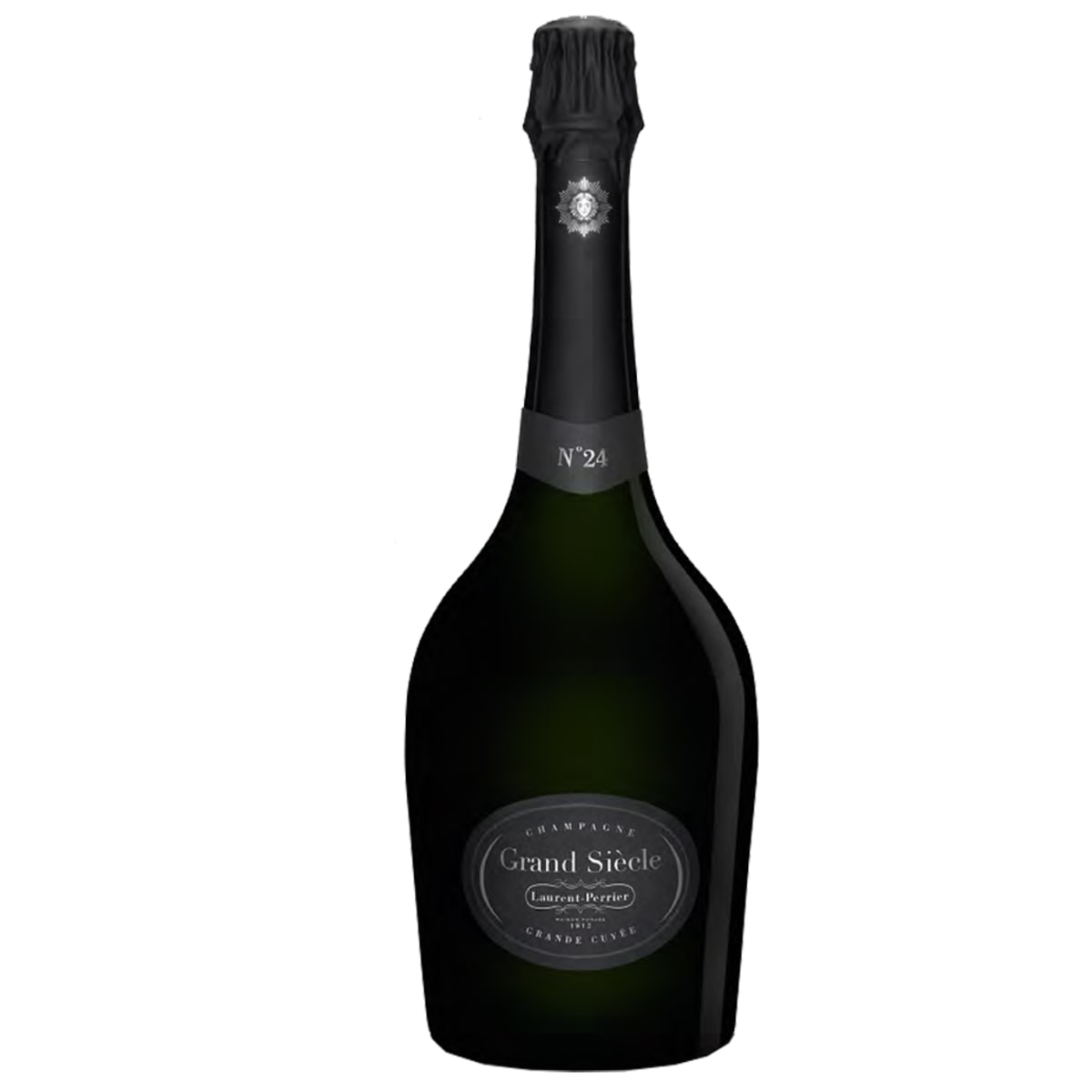
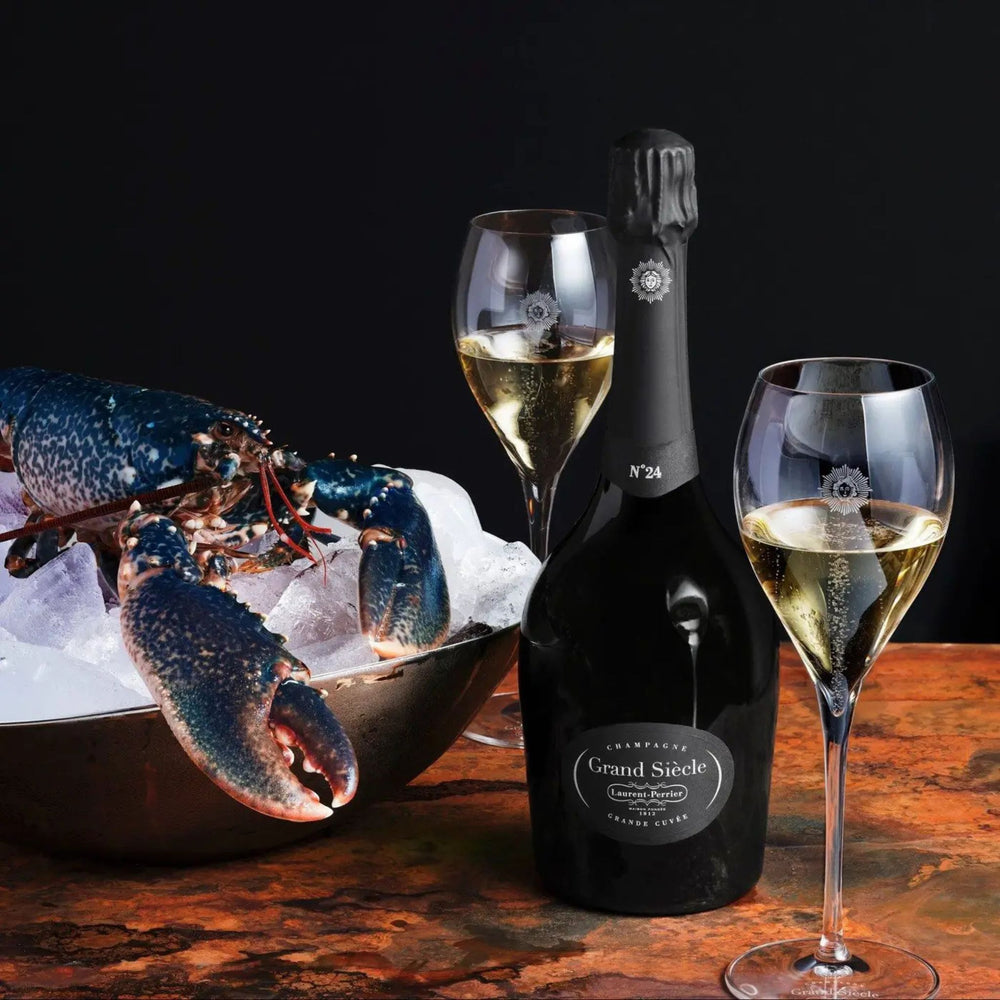
If you’re exploring top-tier prestige Champagnes, few cuvées command as much attention and admiration as the Grand Siècle line from Laurent‑Perrier and in particular the Iteration N°24 of the Grande Cuvée. This release represents the house’s concept of the “perfect year” through the art of assemblage, rather than relying on a single vintage. In this article, we’ll dive deep into every aspect: the house background, the pedigree of the cuvée, its blend, production, tasting profile, food pairings, market positioning, pricing, editions, common “People Also Ask” questions with full answers, and finally a conclusion to help you decide if it’s the right Champagne for you (especially if you’re purchasing in a market like Douala, Cameroon).
Laurent-Perrier is a historic Champagne house founded in 1812 in Tours-sur-Marne, Champagne, France. Over two centuries it has built a reputation for elegance, high-quality vineyards, and an aesthetic of freshness and refinement. The house is known for prioritising Chardonnay and long ageing in many of its cuvées.
The Grand Siècle line was initiated by the late Bernard de Nonancourt in 1959. The name “Grand Siècle” references the 17th century era in France under Louis XIV (the “Sun King”), a period celebrated for human achievement, harmony and grand design. According to the house, the idea was this: instead of waiting for one “perfect vintage” in Champagne (which is rare), you can create an “ideal year” by blending several exceptional ones. (Laurent-Perrier)
Thus, Grand Siècle represents the apex of Laurent-Perrier’s know-how: from vineyard sourcing (Grand Crus only), long ageing, and precision blending to deliver depth, complexity, and age-worthiness while preserving freshness. (Laurent-Perrier)
Within the Laurent-Perrier range, Grand Siècle is the prestige cuvée: above the non-vintage house blends like La Cuvée or Cuvée Rosé, and even above vintage bottlings in terms of investment, exclusivity and ageing potential. (Laurent-Perrier)
Because of this positioning, Grand Siècle commands higher prices, has limited availability, and is treated as a collectible or celebratory “top shelf” Champagne.
The Grand Siècle line is released in “iterations”—each iteration is a new assemblage of several vintages selected to achieve the house’s idea of a “perfect year.” With iteration numbering (N°24 in this case), the house emphasises the craft of blending. According to Laurent-Perrier:
“Vintage in Champagne is usually synonymous with excellence for Prestige Cuvées. Contrarily, Laurent-Perrier believes that only the art of assemblage can offer what nature can never provide, that is, the perfect year.” (Laurent-Perrier)
Iteration N°24 is specifically defined as:
Thus this is a non‐vintage Champagne in the sense it is not purely one vintage, but the blend is crafted from three outstanding years chosen for their complementary profiles.
For this iteration:
By sourcing only Grand Crus and using a high Chardonnay ratio, the house emphasises finesse, complexity, minerality, and longevity.
Here we detail what you can expect visually, aromatically and on the palate from Grand Siècle N°24—based on house description, critic reviews and taste note compilations.
Visually one should see a pale gold robe, clear and bright, with a fine steady stream of bubbles typical of top Champagne.
House notes describe:
“A very complex nose which mixes honeysuckle, lemon, clementine and fresh butter aromas, followed by notes of hazelnut and a touch of honey.” (Laurent-Perrier)
For iteration N°24:
“A complex nose with aromas of candied lemon and clementine giving way to notes of toasted bread and fresh hazelnut.” (Laurent-Perrier)
Critic tasting adds further detail (Wine Advocate etc): aromas of candied pear, lemon confit, freshly baked bread, dried flowers, hazelnut, sweet pastry, ginger, cardamom. (Wine)
So the aroma profile is very layered: starting with fresh citrus/white fruit, then brioche/pastry/almond, then tertiary nutty/mineral notes.
From the house:
“The attack in the mouth is very delicate and fresh with aromas of candied lemon and fresh hazelnut. The palate is silky and mineral with notes of honeysuckle, flaked almonds and clementine.” (Laurent-Perrier)
For N°24:
“Fresh and mineral at first on the palate with evolving citrus notes. A silky texture offering aromas of honeysuckle and candied lemon. A finish of great complexity and exceptional length.” (Laurent-Perrier)
Critic review for N°24:
“Medium- to full-bodied … a sweet fruit core supported by a racy spine of acidity … precise, saline-tinged finish.” (Wine)
“Brisk acidity with notes of sweet pastry, ginger and cardamom.” (Bodeboca)
Thus the palate experience: crisp entry, mineral core, elegant texture, layered citrus/white fruits, pastry/nut complexity, long finish with salinity/mineral tension. Very refined and age-worthy.
Finish is described as “exceptional length”, “great complexity”, “saline-tinged” and “mineral freshness sustained”. This is typical of Champagnes meant to age. For example: house: “une finale d’une grande complexité et d’une longueur exceptionnelle.” (Laurent-Perrier)
Critic note: “like a grand cru Burgundy… full body, lightly chewy, phenolic tension gives it form and beauty.” (Bodeboca)
Overall, you’re getting a top‐flight Champagne: built to age, with refinement, depth and elegance rather than overt flamboyance. This is not just a “celebration fizz”—it’s a cellar wine in its own right.
Given the complexity, age and finesse of Grand Siècle N°24, ideal pairing is with premium cuisine. House notes list the following:
Other recommended pairings:
Grand Siècle N°24 is a luxury prestige Champagne—one of the flagship expressions from Laurent-Perrier. It is designed for serious collectors, fine dining, major celebrations, and long-term cellaring. Because of its pedigree (Grand Crus only, high Chardonnay content, long ageing), it sits at the high end of the Champagne market.
Because it is an iteration of the house’s elite line, it is limited in production and released selectively. As mentioned: only 26 iterations in bottle since 1959. (Laurent-Perrier)
Pricing will vary greatly depending on market, bottle size, age, shipping/import costs, taxes. Some indicative pricing:
Here are frequent questions people search about Grand Siècle N°24, with full answers.
Q: What grapes are used in Laurent-Perrier Grand Siècle N°24?
A: The blend is approximately 55% Chardonnay and 45% Pinot Noir (for iteration N°24). The grapes are all sourced from Grand Cru vineyards. Specific Grand Crus include Le Mesnil-sur-Oger, Oger, Cramant, Avize, Chouilly (for Chardonnay) and Ambonnay, Bouzy, Tours-sur-Marne, Mailly, Verzy, Verzenay (for Pinot Noir). (Laurent-Perrier)
Q: Is Grand Siècle N°24 a single vintage Champagne?
A: No. Instead of being a single-vintage bottling, Laurent-Perrier uses a blending of multiple vintages (2007, 2006, 2004 in this iteration) to craft what they call the “perfect year”. So it is a multi-vintage prestige cuvée. (Laurent-Perrier)
Q: What is the dosage and alcohol content of Grand Siècle N°24?
A: According to critics, the dosage for the magnum version of N°24 is around 7 g/L. Alcohol content is approx 12% ABV. (Wine)
Q: What does Grand Siècle N°24 taste like?
A: Taste profile includes:
Q: How should I serve Grand Siècle N°24 and what does it pair with?
A: Serve chilled at around 8-12 °C; use glassware that allows aromas to show (tulip or white wine style rather than narrow flute). Pairing suggestions:
Q: Is Grand Siècle N°24 worth the price?
A: Many critics and consumers believe yes, provided you buy it at a fair price and with good provenance. Ratings: James Suckling 97, Wine Enthusiast 96, Wine Advocate 94 for this iteration. (Wine)
One user on Reddit:
“Grand Siècle is always a nice treat.” (Reddit)
Another user was less positive:
“I personally did not find it much better than the regular LP… quite similar and for the price… very disappointed.” (Reddit)
So while many regard it as excellent, personal preference and price paid matter. If the price is excessively inflated in your market, the value proposition may be less compelling.
Q: How long can Grand Siècle N°24 be cellared?
A: Very good ageing potential. Critic notes suggest “another 10-15 years” for well-stored bottles. (tastingbook.com)
Given the long ageing before release and high quality grapes, one can hold it for many years—but you must ensure storage conditions are excellent (cool, dark, stable).
Q: How can I identify the iteration number on the bottle?
A: The iteration number (N°24 in this case) is typically printed on the neck of the bottle just below the capsule. Poster community advice:
“The number on standard bottles is on the neck (at the bottom of the capsule/coiffe).” (Reddit)
Before iteration labelling, older bottles may not have a number, making identification harder. Check the neck and verify with house documentation or retailer if unsure.
In conclusion, Laurent-Perrier Grand Siècle N°24 is a distinguished, luxury Champagne that deserves serious consideration if you’re looking for top-tier bubbly—and are willing to invest accordingly. It offers a combination of heritage, vineyard quality (Grand Crus only), refined artistry in blending, long ageing, and a tasting profile that rewards patience and good cuisine.
When to choose it:
When you might choose something else:
Final verdict: If you find Grand Siècle N°24 at a fair price, with good provenance, it stands out as one of the better prestige cuvées you can purchase in the non‐vintage/iteration world. It combines depth, elegance and age-worthiness in a way that many prestige Champagnes do. While cost is high, for the right occasion it offers a luxurious experience worthy of investment.





Reviews
There are no reviews yet.