
SHOP ALL

RARE BOURBON

RARE SCOTCH

LIMITED EDITIONS

1792-COLLECTION



$47.99
This is a blend of rare pot and column still rums, all hand-picked and aged for at least 12 years in the tropical climate of Jamaica. Crafted with limestone-filtered water, it’s best enjoyed neat or in premium cocktails.
Here is an in‑depth article about Appleton Estate 12‑Year‑Old Rare Casks Rum, covering what the rum is, how it’s made, its tasting profile, common questions people ask (from “People also ask”‑style queries), plus pictures, context, and a conclusion.
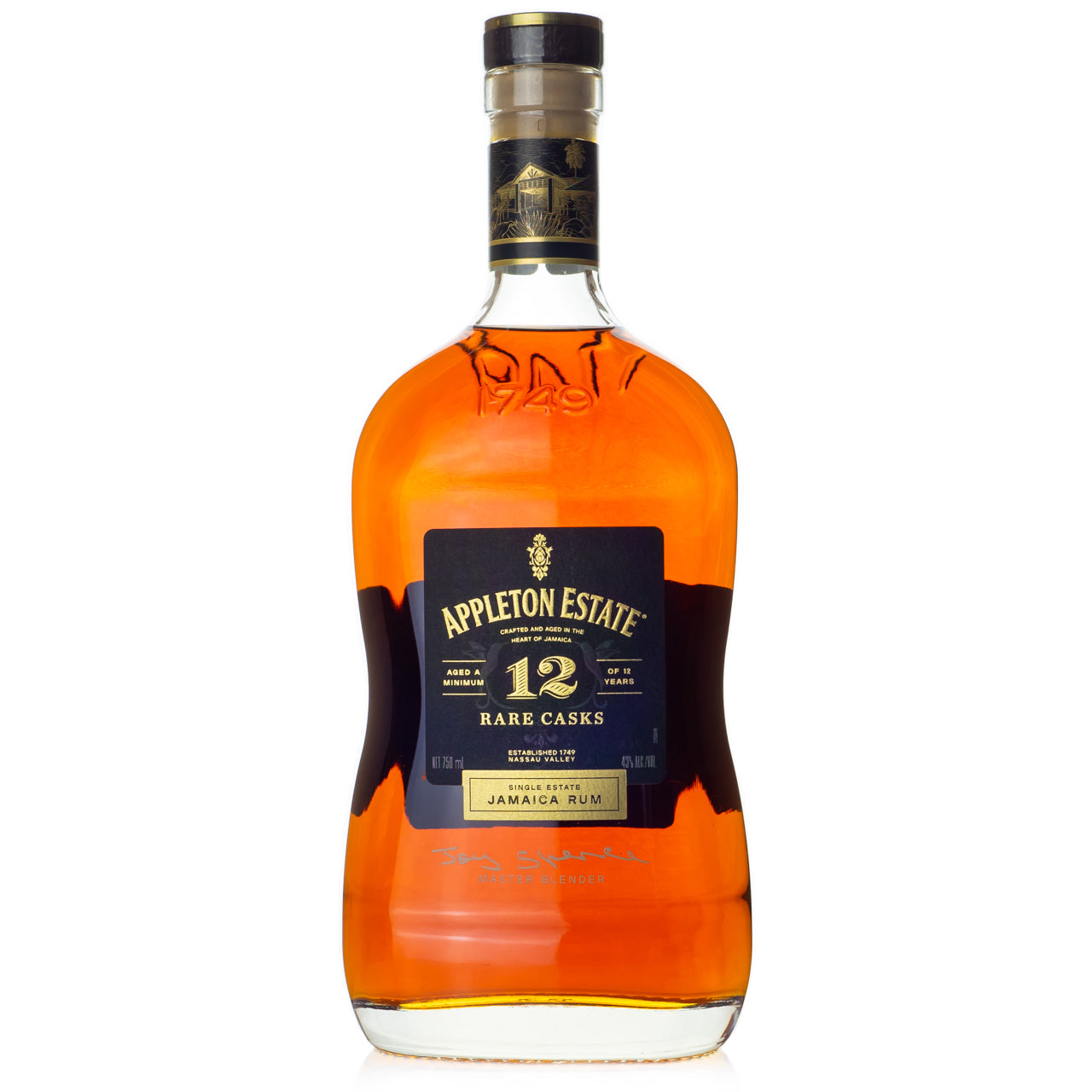
The Appleton Estate 12‑Year‑Old Rare Casks is a premium aged Jamaican rum produced by Appleton Estate, a historic rum distillery located in Jamaica’s Nassau Valley. (Appleton Estate)
This expression is a blend of pot‑still and column‑still rums, all matured for at least 12 years under tropical Jamaican conditions. (Appleton Estate) The result is a rum designed for sipping — but with enough depth, character, and complexity to satisfy both newcomers and seasoned rum drinkers. (The Rum Barrel Blog)
Appleton positions this as a “Rare Casks” expression, meaning the casks used are carefully selected for their quality — rums chosen by their master blender for their balance, depth, and aging character. (Appleton Estate)
In what follows, I’ll walk through its origin and production, tasting and flavour profile, common questions people search for on Google (with answers), its place in the rum world, and a final take on who should consider it and why.
Appleton indicates that the 12‑Year Rare Casks is produced with limestone‑filtered water, estate-grown sugarcane/molasses, and tradition-based distillation and aging; the rum is “additive-free” (no flavorings or sweeteners added) — meaning all flavors come from the raw materials, yeast, fermentation, distillation, and barrel aging. (Appleton Estate)
This commitment underpins its identity as a “premium” Jamaican rum — a spirit meant to express the island’s terroir, climate, and heritage.
Here’s what you’ll likely experience when you open a bottle of Appleton Estate 12‑Year Rare Casks — its aroma, taste, mouthfeel, and finish.
According to official tasting notes from Appleton: aromas of toasted oak, dried fruit, hazelnut; followed by darker notes like dark cocoa, molasses, orange peel, vanilla, with hints of coffee. (Appleton Estate)
Independent reviewers and rum enthusiasts often add to that bouquet:
Overall, the nose tends to be complex: a mix of fruit, oak, spice, sweetness — suggesting both tropical origins and long barrel aging.
When tasted, many describe the flavour as rich and layered:
One reviewer summed it up as “a delicious Jamaican rum that brings some rich barrel‑aged components to a tropical and fruity spirit.” (Thirty-One Whiskey)
Overall, Appleton Estate 12‑Year Rare Casks delivers a balanced, nuanced, and versatile rum — marrying Jamaican rum tradition (molasses base, pot still distillate) with the maturity and depth imparted by 12 years’ aging in oak. It tends to be refined but not overly heavy, rich but not overly sweet, and complex without being intimidating. For many, it represents a “sweet spot” — not entry‑level, but not ultra‑premium — making it ideal for sipping neat, on the rocks, or as a foundation for premium rum cocktails. (The Rum Barrel Blog)
Below are many of the questions people commonly search in Google regarding Appleton Estate 12‑Year Rare Casks Rum, along with clear answers based on official information and independent reviews.
A: It is a premium Jamaican aged rum produced by Appleton Estate. It is a blend of pot‑still and column‑still rums, matured for a minimum of 12 years under tropical Jamaican conditions. It is known as the “Rare Casks” expression because the barrels are hand‑selected by the distillery’s master blender for depth and quality. (Appleton Estate)
A: It is made in Jamaica, at Appleton Estate — in the Nassau Valley, historically one of Jamaica’s sugarcane estates and rum‑producing hubs. (nl.whisky.com)
A: Both. The rum combines rums made via pot still and column still distillation. This hybrid method allows Appleton to balance rich, robust rum character (from pot still) with smoother, lighter components (from column still). (Appleton Estate)
A: The age statement of 12 years indicates that the youngest component in the blend has spent at least 12 years aging in oak casks. All casks used are aged a minimum of 12 years. (Appleton Estate)
A: 43% ABV (86 proof). (Appleton Estate)
A: According to the distillery: toasted oak, dried fruit, hazelnut, dark cocoa, molasses, orange peel, vanilla, and hints of coffee on the nose. (Appleton Estate)
Independent reviewers and drinkers report tastes and aromas including caramel, brown sugar, molasses, cocoa/dark chocolate, dried fruit, tropical fruit undertones (banana or plantain, citrus, mango), spices (nutmeg, clove, allspice, ginger), roasted nuts, oak, tobacco or earthy depth — culminating in a smooth, warm, somewhat spicy, and balanced finish. (The Rum Barrel Blog)
A: No — Appleton states that the rum is produced naturally, using limestone‑filtered water from the estate, estate‑grown sugarcane/molasses, and traditional distillation/aging methods, with no added flavors or sweeteners. (Appleton Estate)
A: Yes — it’s considered versatile. Its richness and complexity make it excellent for sipping neat or on the rocks. But because it also retains enough rum character and sweetness, it works well in cocktails — especially “spirit‑forward” or classic-style rum cocktails like a Rum Old Fashioned, Daiquiri, or cocktails where depth and character matter. (The Barrel Tap)
A: The “Rare Casks” designation refers to the fact that Appleton Estate hand‑selects particular casks — pot- and column‑still rum barrels — for their quality, aging character, and balance. It suggests a level of craftsmanship, care, and selectivity beyond standard blends. (Appleton Estate)
A: It can appeal to a broad range: for beginners, it’s a good entry into premium aged rum — smoother and more refined than entry-level blends, but still approachable. For intermediate drinkers or rum enthusiasts, it offers enough complexity, maturity, and subtlety to appreciate in glass or use as a base for cocktails. For connoisseurs, while it may not be “ultra‑old” or rare cask‑strength, it represents a balanced, estate‑rooted Jamaican rum with heritage and quality.
Why does Appleton Estate 12‑Year Rare Casks matter? What does it represent in the broader context of rum, Jamaican heritage, and aged spirits?
Appleton Estate is one of the oldest continuously operating sugar estates and rum distilleries in Jamaica, its roots going back to the 18th century. (Wikipedia)
Because it controls much of the production — from sugarcane cultivation to water source (limestone‑filtered springs), fermentation, distillation (pot and column), and aging — Appleton can claim a “cane‑to‑glass” provenance. For those who value traceability, terroir, and traditional craftsmanship, this adds depth and meaning beyond mere flavor. (Thirty-One Whiskey)
Thus 12‑Year Rare Casks is not just a rum: it is a distillation of Jamaican landscape, climate, and history — a spirit that carries the identity of Nassau Valley, the estate’s sugarcane fields, and decades of rum‑making tradition.
Because Jamaica has a warm, humid, tropical climate, aging in oak barrels progresses more rapidly than in cooler climates (like whisky aging in Scotland or bourbon aging in temperate US conditions). This accelerated maturation means that even at 12 years, the rum can absorb significant flavor from wood — oak spice, caramelization, complexity — while still preserving some of the original molasses / rum character. (RumJourney.com)
This gives 12‑Year Rare Casks a kind of “mature but still lively” profile: a balance between age‑induced complexity and Jamaican rum’s inherent vibrancy (fruit, molasses, funk/spice).
In the world of aged rums, there are entry-level blends (young, cheap, often for mixing), and ultra‑aged / limited‑edition / cask‑strength rums (rare, expensive, sometimes for connoisseurs). The 12‑Year Rare Casks sits in a sweet middle ground: it is mature and refined enough to sip neat, offering complexity and depth; but it remains accessible — both in flavor and (relatively) in price. (The Rum Barrel Blog)
For many whiskey drinkers — or newcomers to aged spirits — it represents a good “gateway rum”: familiar enough in structure (oak, caramel, nuts, spice) but distinct enough (molasses, tropical fruit undertones, rum funk) to reveal what makes Jamaican rum special.
Because of its balance, Appleton Estate 12‑Year Rare Casks is versatile. It works neat or on the rocks for slow sipping; but it can also shine in cocktails — especially classic or “premium rum cocktails” — where its oak, spice, and sweetness can stand up to mixers, bitters, citrus, or sugar syrups. (The Barrel Tap)
This versatility — rare among many aged spirits that may be strictly “for sipping only” — makes it appealing for both home bars and cocktail experimentation.
No spirit is perfect for everyone, and while Appleton Estate 12‑Year Rare Casks has many strengths, there are a few caveats or nuances to be aware of — depending on your expectations.
In short: 12‑Year Rare Casks is best appreciated for what it aims to be — a balanced, mature, versatile Jamaican rum — rather than expecting extremes (ultra‑funky, ultra‑old, ultra‑heavy).
Given its profile, here’s who I think might enjoy 12‑Year Rare Casks, and how best to serve/enjoy it:
As for serving: neat or with a splash of water / large ice cube to allow aromas and flavours to open; or in cocktails where deeper, richer notes benefit from complexity.
It helps to look beyond the liquid and imagine where it comes from — the land, the water, the history. The images above show:
This context is important: it reaffirms that Appleton Estate 12‑Year Rare Casks is not just a product of distillation and blending — it’s a spirit born from land, climate, tradition, and care.
The Appleton Estate 12‑Year‑Old Rare Casks Rum represents a sweet spot in the world of Jamaican rums — combining heritage, craftsmanship, flavor complexity, and accessibility.
At the same time, it is not a wild, cask‑strength, ultra‑funky Jamaican rum — it treads a middle path. But for many drinkers — whether newcomers to rum or seasoned enthusiasts who appreciate balance — that middle path is exactly what makes it appealing.
If you enjoy a rum that is refined yet characterful, mature yet lively, and versatile yet distinctive — Appleton Estate 12‑Year Rare Casks is a strong, reliable choice.
If you like: I can compare Appleton Estate 12‑Year Rare Casks with 3–5 other well‑known Jamaican rums (taste, style, value) — that helps you see how it stands out.
Would you like me to build that comparison now?


Reviews
There are no reviews yet.